Parties to Forget That Dublin Hasn’t Had a New Purpose-Built Nightclub in 17 Years
Words: Izzy Copestake
Images: All via LOVE FREQUENCY, SCARLET and FRAME. Lead image via LOVE FREQUENCY
No matter how many weekends of my twenties I spend eroding my inner ear dancing too close to the speakers of a nightclub, there’s still a gentle fizz in the pit of my stomach when the opportunity arises to go to a new one, or in Dublin’s case, a club that feels new.
It’s the feeling of walking past the bouncers and not instinctively knowing whether to go left or right, just following the thump of the night until you reach a dancefloor you don’t know your favourite spot on yet. The novelty of disorientation as your pupils adjust to new darkness, your mind traces the details of the roof you’ve found yourself under, and the soles of your feet step to find the rhythm of the new crowd around them.
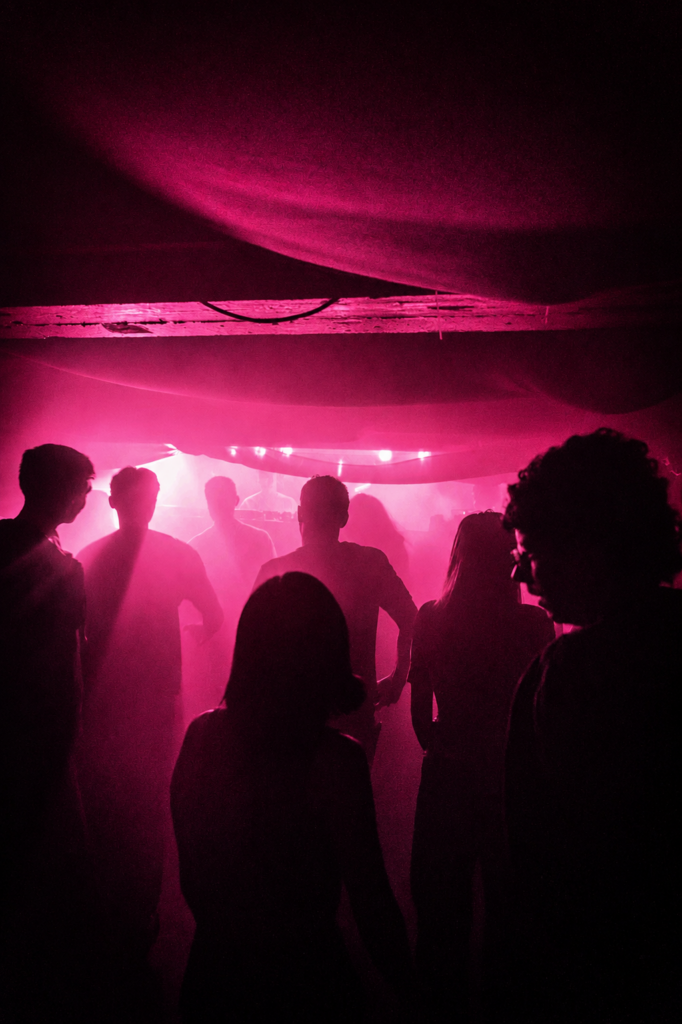
A new space to dance is the promise of new memories, and Dublin’s been waiting 17 years for something like that. The last time the city got a new purpose-built nightclub was in 2009, and in the meantime, iconic clubs like Hangar, and more recently Izakaya, have played their closing tracks.
Something is changing in Dublin. In pursuit of progress in a city stagnated by a lack of new nightlife infrastructure, collectives such as LOVE FREQUENCY, SCARLET and FRAME are taking matters into their own hands. If you think you know Dublin’s nightlife? I challenge you to attend one of their parties.
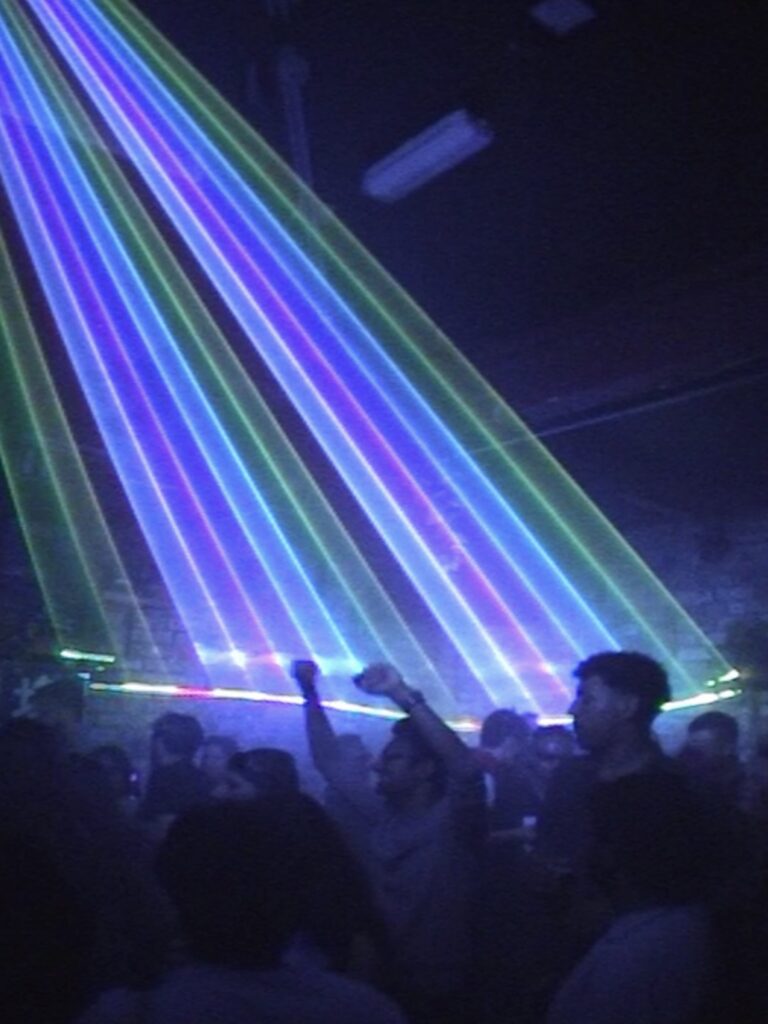
If you live in Dublin and like dance music, all I need to do is say the words red light and the plant to you — and you’re thinking about one place: Tengu. It’s a venue known well and loved dearly by many. But when LOVE FREQUENCY took over the space with Danish DJ Courtesy last month, it looked and felt very different.
“We custom programmed lasers to an area of the room to take focus off the booth and open up the feel of the space,” founder Tom McGrath-Mahon, whose DJ alias is Suckerfish, told District. The team also installed custom lighting in the smoking area to make the entire venue feel unique.
“We custom programmed lasers to an area of the room to take focus off the booth and open up the feel of the space”
LOVE FREQUENCY’s entire operation is centred around using carefully considered light manipulation, projection, colour, haze, and bespoke installations to transform spaces into something fresh and unfamiliar. Aside from Tengu, LOVE FREQUENCY have also transformed the infamous industrial Wigwam basement, by draping pink voile fabric across the low ceiling, and using a smoke machine and pink light for a soft, anonymous feeling for dancers.
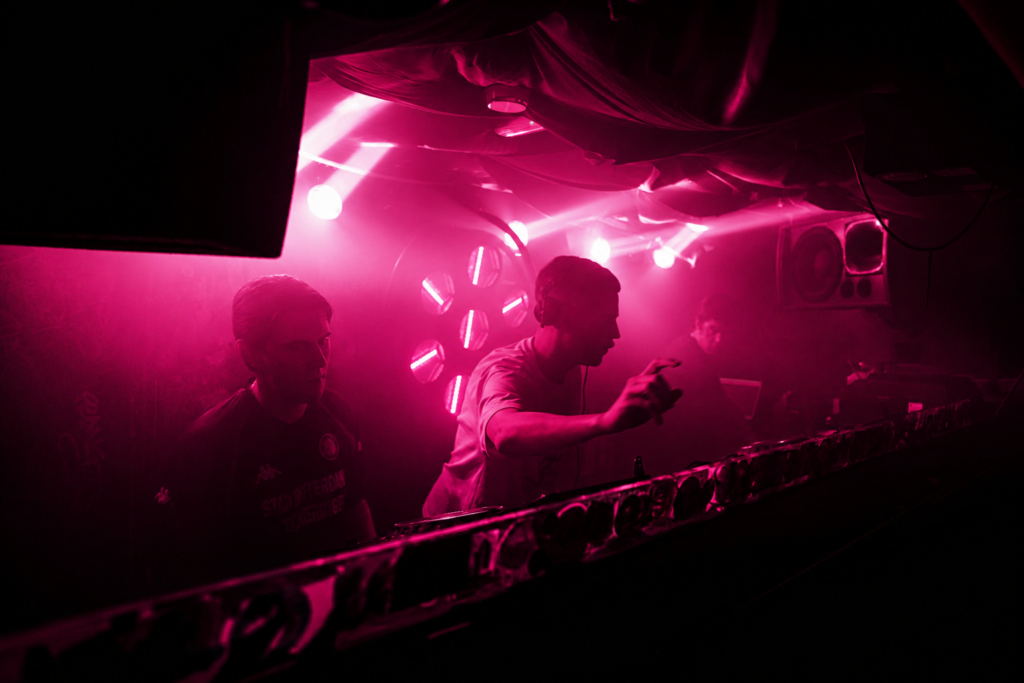
“We believe in providing our community with visual environments of the highest quality, matching the standard of the music we curate,” McGrath-Mahon told District. “Our goal is to create environments that feel unexpected and new for our partygoers. The city has an incredible calibre of artists and crowds, and if new spaces aren’t emerging, we will transform existing ones into entirely new experiences.”
“The city has an incredible calibre of artists and crowds, and if new spaces aren’t emerging, we will transform existing ones into entirely new experiences.”
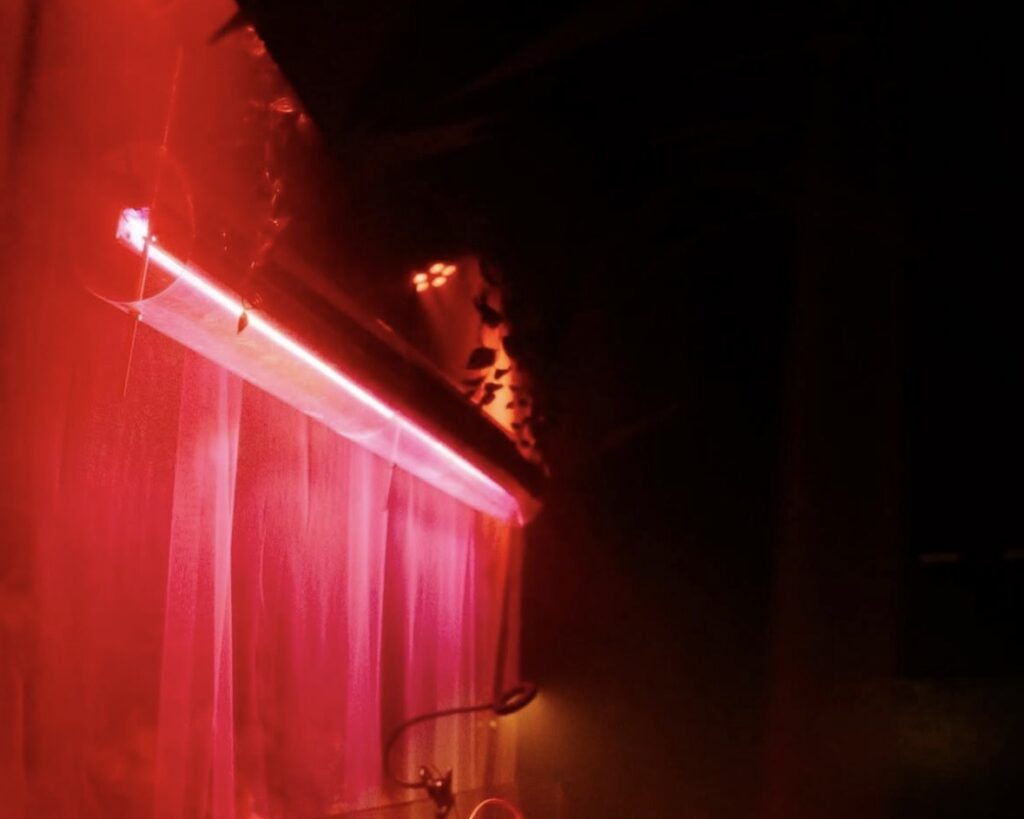
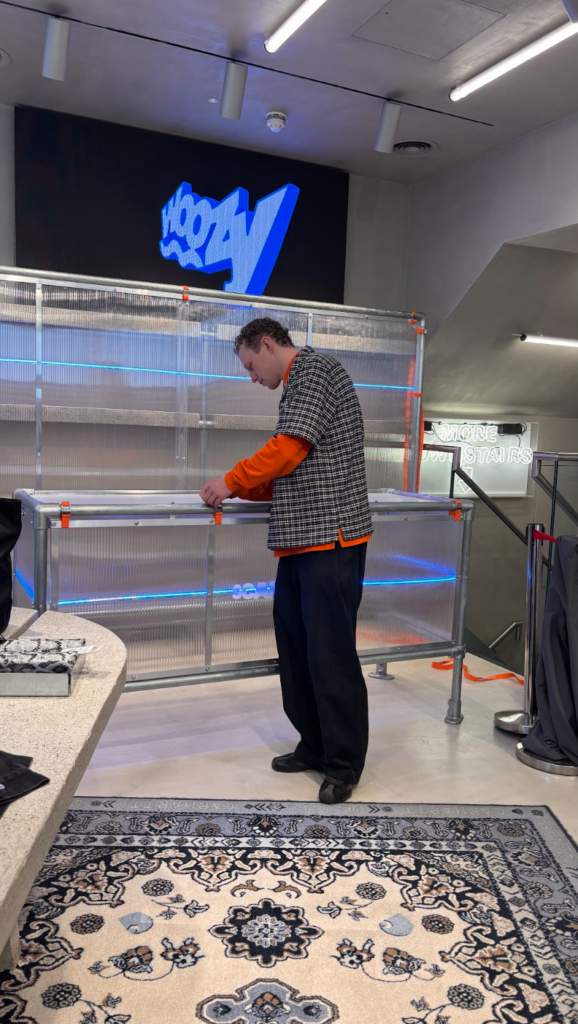
SCARLET, a Dublin-based construction collective & party series, has been focussing on transforming the atmosphere of both traditional and DIY venues since January last year. Between changing a lighting palette, introducing their signature drapes and podiums, or simply rearranging the room, everything is about atmosphere and flow.
“Where people enter, where they naturally gather, and how they move through the space all affects how our events feel,” James Ackerman, Founder, Programmer & Head of Creative Direction at SCARLET, and DJ going by the alias ackerman, tells me. “It’s really about creating a coherent world for one night rather than decorating a venue.”
“It’s really about creating a coherent world for one night rather than decorating a venue.”
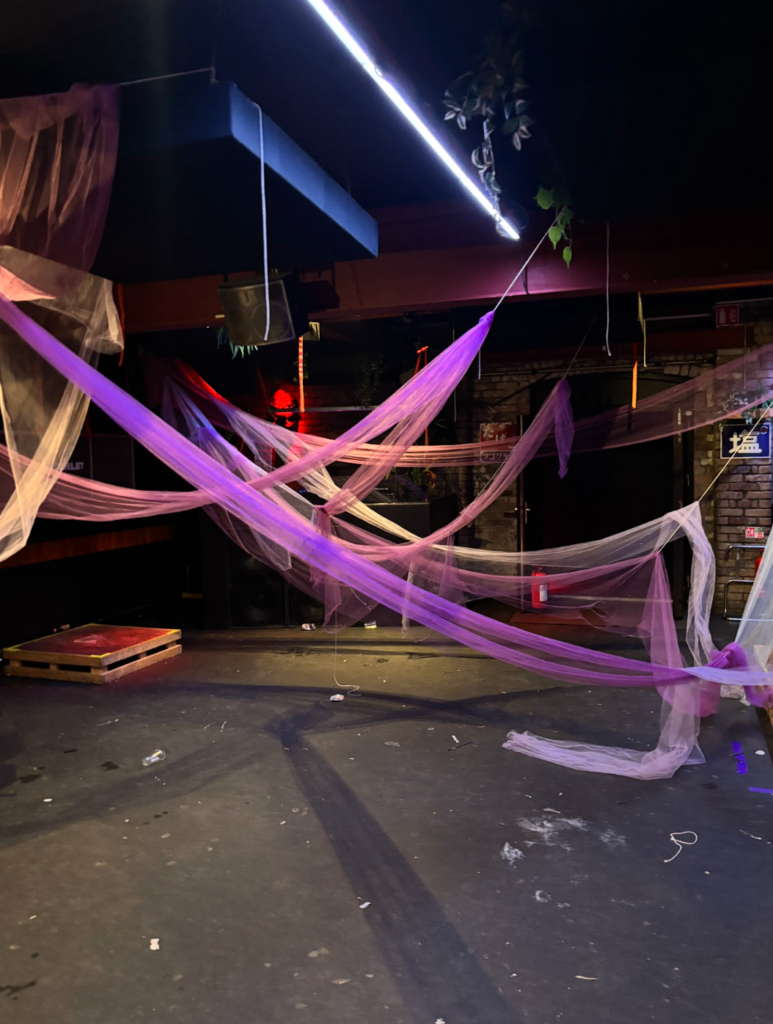
One particular party of SCARLET’s that stands out was their Halloween event in Daylight, a volunteer-run, member-funded cooperative arts space and social centre. As ever, hours of dedicated workshop hours, endless measurements, and a huge group logistical effort went into transforming the small, whitewashed room into something entirely different. Glossy plastic sheets hung in doorways to guide you to a glowing dancefloor, with elevated podiums to dance on and the walls and ceilings cloaked with iridescent material.
Whether it’s transforming spaces we know, or scouting new sites as part of the DIY scene, experimentation is a huge part of everything SCARLET does. “Sometimes that means introducing an entirely new space, and other times it’s about taking a venue people already know and changing its flow, layout, atmosphere and energy with custom installations so it feels like they’ve stepped into something more than what’s on the poster.”
For Ackerman, the reason for all this additional effort is simple. “It’s philosophical,” he tells me. “Club culture has always been about transformation. People don’t just come to hear music, they come to step outside everyday life for a few hours. If the environment feels too familiar, it’s much harder to get that sense of escape.”
“Club culture has always been about transformation. People don’t just come to hear music, they come to step outside everyday life for a few hours. If the environment feels too familiar, it’s much harder to get that sense of escape.”
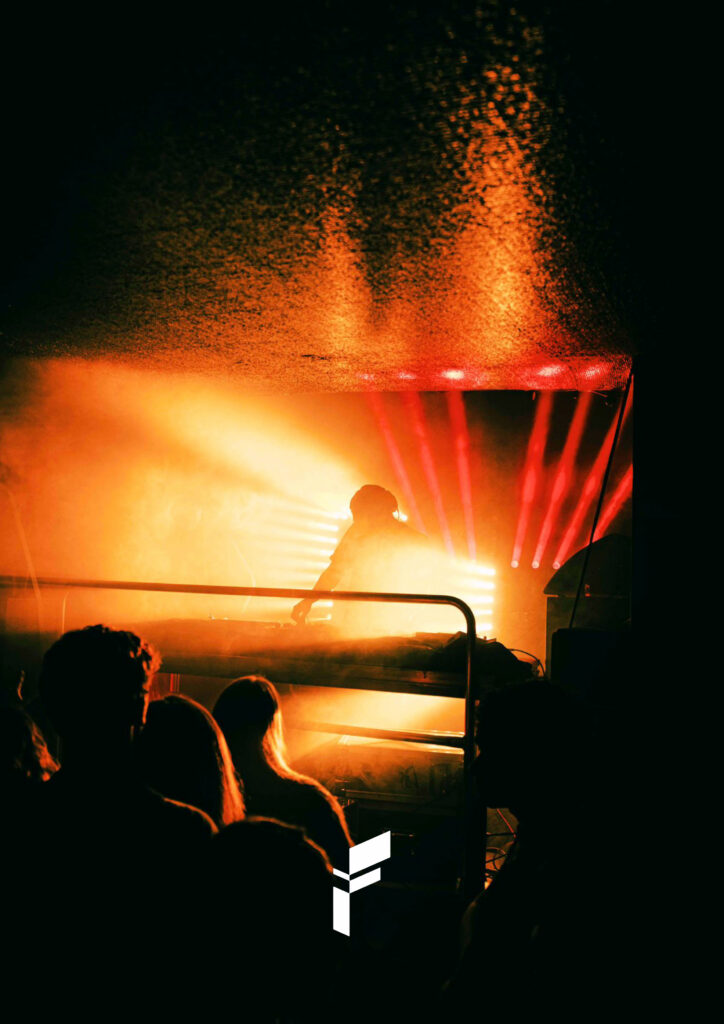
FRAME is another collective with transformation at the core of what it does, and describes its very existence as a protest against the lack of purpose-built nightclubs in Dublin. Underneath the high ceilings of the Grand Social main room, the collective utilises around 48 square metres of UV-resistant HDPE fabric (the same stuff used on fences at building sites) to physically lower the roof above the dancers.
“The focus is really on building a space where partygoers can lose themselves in music for a few hours,” founders Billy Menelaou and James Staines tell District. “The more commercialised dance music gets, the harder it is to keep spaces purely focused on this.”
“The more commercialised dance music gets, the harder it is to keep spaces purely focused on this.”
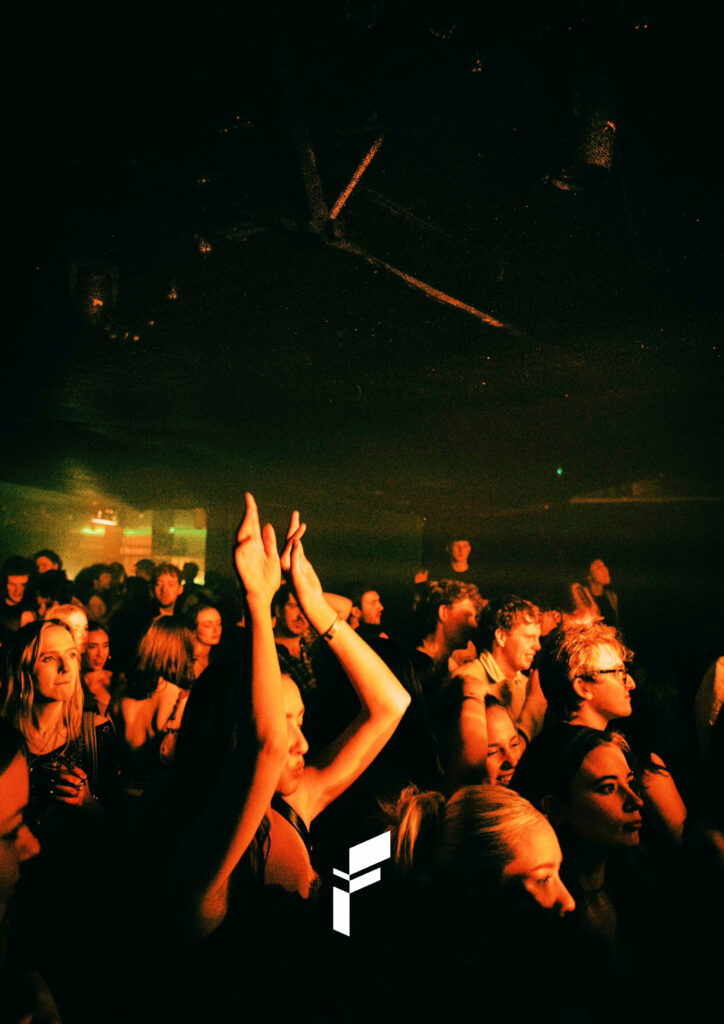
For the FRAME founders, it all comes back to that feeling I described at the beginning of this piece: novelty. “I think we can all remember our first experiences of clubbing, both in Ireland and abroad. Recreating that novel feeling consistently in Dublin, where we are seeing an increasingly smaller number of spaces, is definitely challenging. However, it has given us great inspiration when it comes to changing and freshening up the look of the dancefloor.”
Collectives such as LOVE FREQUENCY, SCARLET and FRAME demonstrate that while the government continues to neglect the nighttime economy, creativity and a dedication to providing new experiences on our dancefloors will prevail. But grassroots energy can only push the scene forward for so long. As dancefloors become more and more commercialised, the Irish government must step up to give the young people of Ireland the space to dance, meet new people, and let go. It’s a rite of passage we all deserve.