This Exhibition Documents Ladies’ Gaelic Football in Britain
Words: Seán Óg Ó Murchú
Historically, the Irish diaspora in Britain has been represented by the men who built the infrastructure of their new home place from beneath the earth to the skyline above. In the years following the Second World War, in a Britain that was in desperate need of redevelopment following the destruction of the Blitz, masses of working men found labour East, across the Irish Sea, in the famous Buck Navvies, a symbol of masculinity, strength, power, and hard graft.
An often-overlooked fact, however, is that between 1951 and 1991, significantly more women than men moved from the Republic of Ireland to Britain. While these women shared the economic hardships plaguing pre- (and post-) Celtic Tiger Ireland, this pressure was compounded by a strict, oppressive, clerically designed society that used shame and chastisement to strip them of agency over their careers, bodies, and newborn children. The female diaspora was escaping not just poverty, but also the same fate which met their mothers. And if the Navvies built Britain following the war, the ladies healed it, with nursing the predominant profession of choice; 11 percent of nurses in Britain by 1951 were Irish.
Regardless of gender, a crucial element to the survival and eventual prosperity of the Irish diaspora in Britain has always been a strong sense of community. And while famous Irish strongholds in Kilburn and Cricklewood are no more, and gone too are dance halls like the Galtymore, and pubs such as the Crown, one traditional method of maintaining connection exists still- the Gaelic games. Exiles, a new exhibition by London-based photographer Daragh Drake, seeks to highlight and celebrate the place women hold within this tradition, specifically in football.
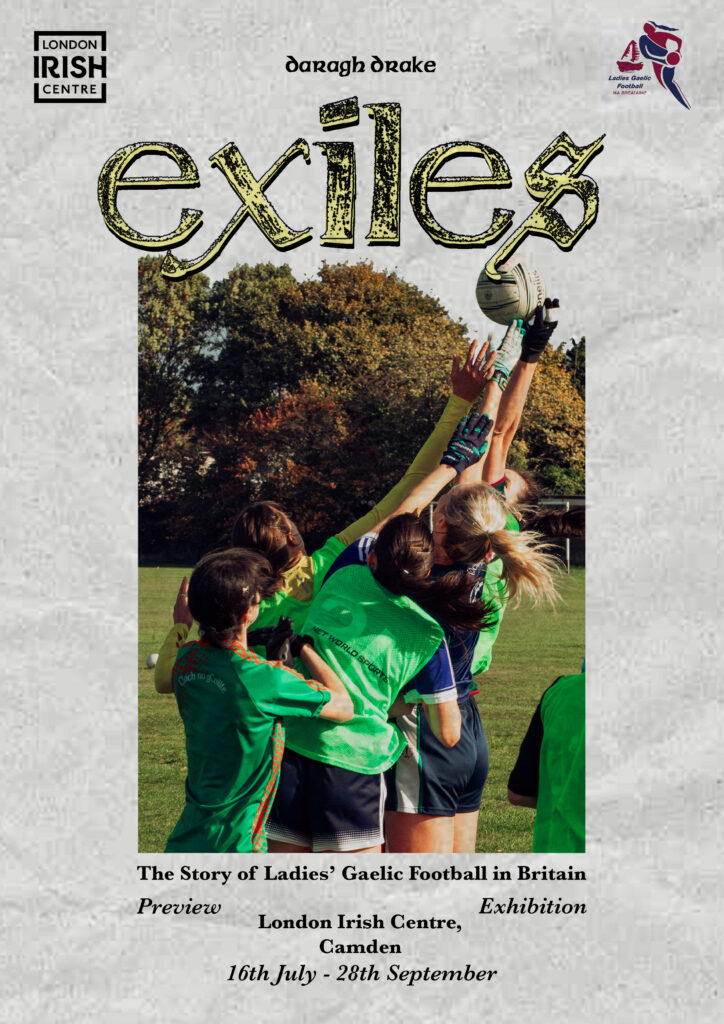
The exhibition, which opened yesterday (Thursday 16th) in Camden’s London Irish Centre, acts as both a preview and fundraiser for a wider documentary project, with a film and photo book set to be released in 2027 in collaboration with Dublin-born filmmaker Emma Broderick, also based in London. I asked Daragh about the origins of this work,
“A couple of years ago I went on a drinking sabbatical … I had an extra six or seven hours in my week that I never thought of having before. So, there was a GAA club down the road from me in Tottenham, and I just thought, right, I’ll go down there and just watch a match like. And then, you know, being a photographer, brought the camera along and started photographing it.”
“A couple of years ago I went on a drinking sabbatical … I had an extra six or seven hours in my week that I never thought of having before.” – Daragh Drake
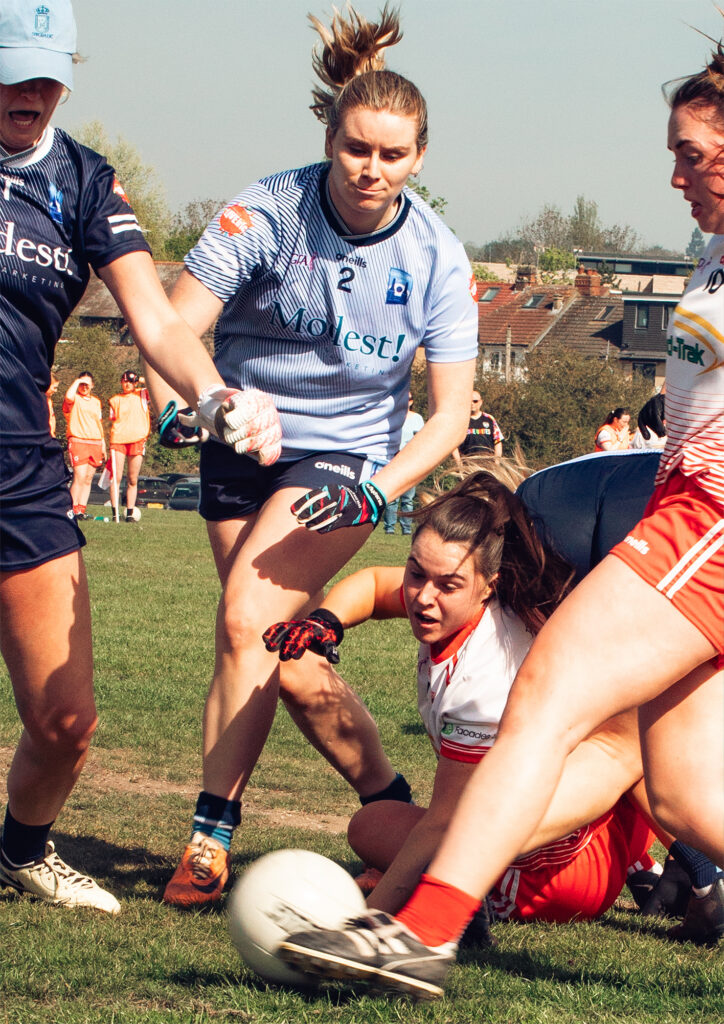
The next week came along, and I went down there and photographed it again. And then a little project started building. As I started photographing Ladies’ Gaelic football, camogie and handball across London, it became apparent quite quickly the lack of representation in the women’s game compared to the men’s. And as a photographer, as someone who works in the creative space, I have the opportunity to raise the profile of the ladies’ game.”
This differentiation in the representation of and support for women in the games is nothing new, but as Sinéad Lyons, president of Peil na mBan, or the Ladies’ Gaelic Football Association (LGFA), in Britain told me, it is not the only challenge she faces in her role “I suppose in Britain, traditionally, a lot of ex-pats have played football, which makes the community itself quite transient, so I think momentum can kind of shift a little bit for ourselves”, she tells District.
“I suppose in Britain, traditionally, a lot of ex-pats have played football, which makes the community itself quite transient, so I think momentum can kind of shift a little bit for ourselves” – Sinéad Lyons
“Obviously, you’ve got the usual disparities between male and female sports, that’s well documented, but I suppose, in terms of how we really dig our own foundations and make it grow stronger, it’s all about youth and growth that way, and retention and homegrown players. Particularly in London and bigger cities like Edinburgh or Cardiff, you get a lot of people flying in, maybe studying, going through their careers there, and then maybe flying around the world, or back to Ireland, so to hold that momentum, and hold that growth, can be very difficult- it swings so often.
Financial support is also a barrier.”You have to attract attention, you have to grow independently”, she continues. “People want to invest in you, what you’re about, and what you’re achieving. That’s a big challenge, trying to get our brand, as such, out there and have people see us, so when Daragh approached, it was a complete no-brainer. You know, someone who wanted to invest time into what we’ve been doing and what we want to do in the future. To document that like he is, it’s an amazing opportunity for the LGFA in Britain.”
The exhibition’s host is a significant element too. The London Irish Centre is another reflection of the power and importance of community for the diaspora and their wellbeing as families and individuals. It’s stood at the heart of Irish community in London for over 70 years, also working as a community centre, charity, and support service.
“What’s particularly exciting about Exiles is that it looks at a side of Irish life in London that isn’t often documented as much”, Rebecca Dorothy, Culture and Education Officer at the centre tells District. “I think we often hear a lot about how music, literature and other forms of ‘traditional’ culture are ways of bringing people together, but sport is just as important in creating community and maintaining connections to home.”
“What’s particularly exciting about Exiles is that it looks at a side of Irish life in London that isn’t often documented as much” – Rebecca Dorothy
However, this isn’t just an exhibition about sport. “What’s particularly important about Exiles is that it highlights how vital community is in a city that can often feel isolating and lonely. It shows how spaces like Ladies’ Gaelic Football clubs can offer connection, support and a sense of belonging when people are far from home. It also feels significant in the context that we are often more familiar with men’s Gaelic games being documented, so seeing women’s football being celebrated is really important. By focusing on that, the work doesn’t just document a team, it shows that community is something actively built and sustained and that it is possible, even in a place like London.”
“What’s particularly important about Exiles is that it highlights how vital community is in a city that can often feel isolating and lonely. It shows how spaces like Ladies’ Gaelic Football clubs can offer connection, support and a sense of belonging when people are far from home.” – Rebecca Dorothy
Staging the exhibition in The London Irish Centre rather than a gallery is significant, particularly to Daragh. “It caters to people who don’t have mobile phones. It caters to people who have only moved here last week. It caters to people who have no interest in the arts, necessarily. So, it hits a demographic that a gallery can never have. I think historically as well, the Centre has been this true hub, and place of celebration of Irish culture. Not just in London, but within Britain as a whole. To have this preview exhibition for the whole of the project and documentary- the Irish Centre is the ideal spot for it.”
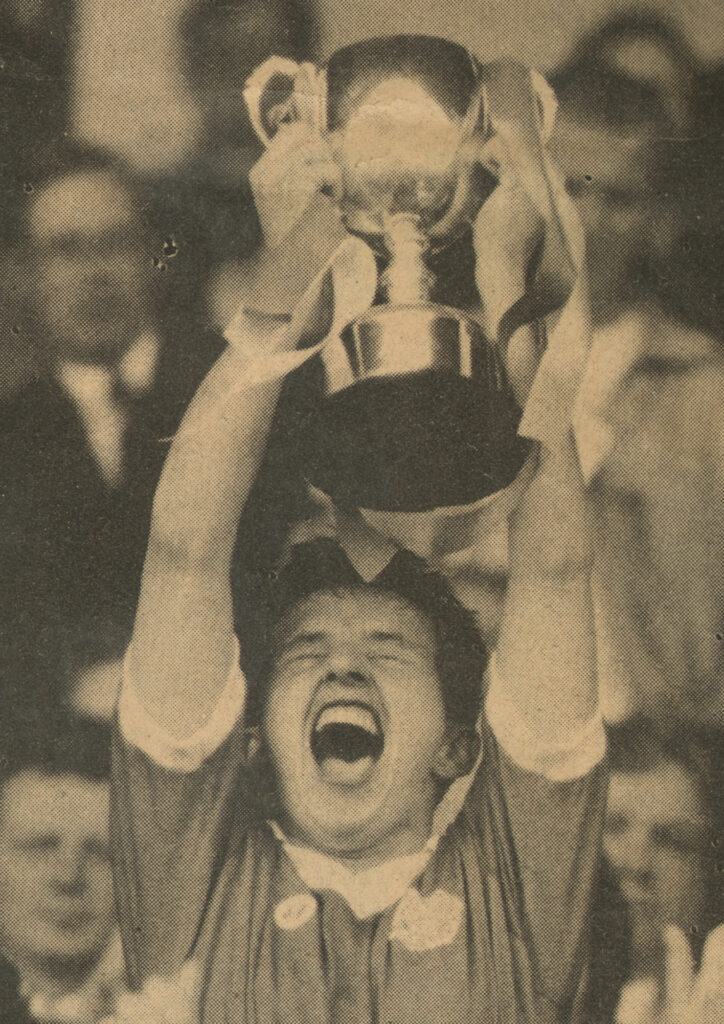
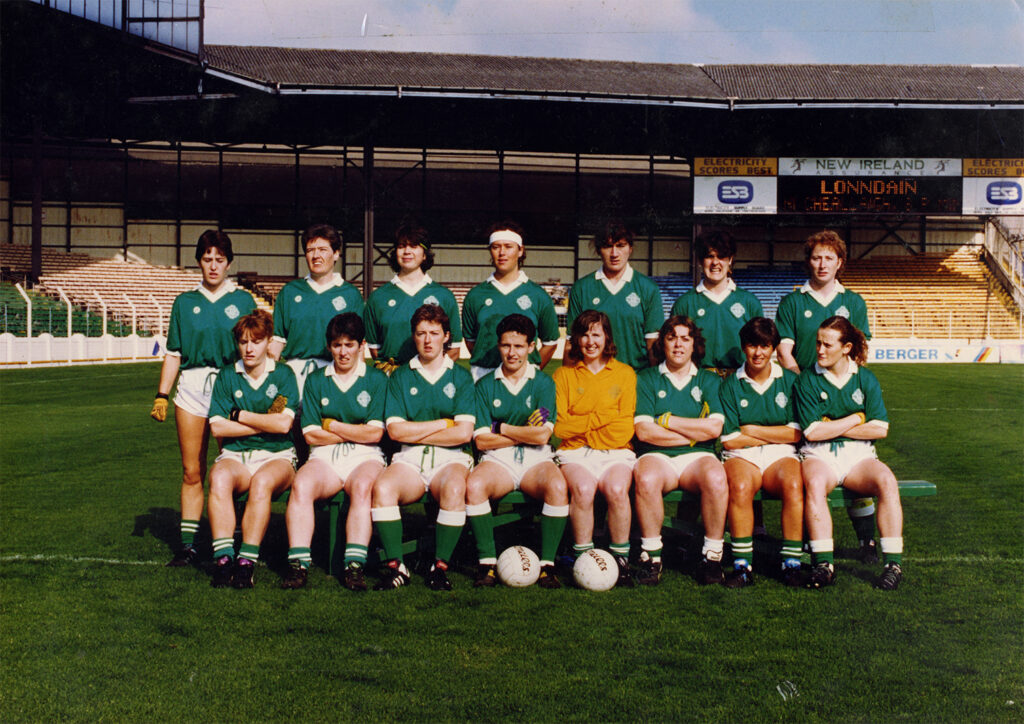
Exiles features a collection of Daragh’s photographs, which he has been working on for two years, alongside archival material donated by former inter-county London Ladies’ Football manager and former county board chair, Tommie Donohue. Excerpts from Hayley Kilgallon’s book, Unladylike: A History of Ladies Gaelic Football, will also feature. Daragh’s photographs will “chronicle the game” and provide “the visual landscape of the direction both for the documentary itself and the photography project.”
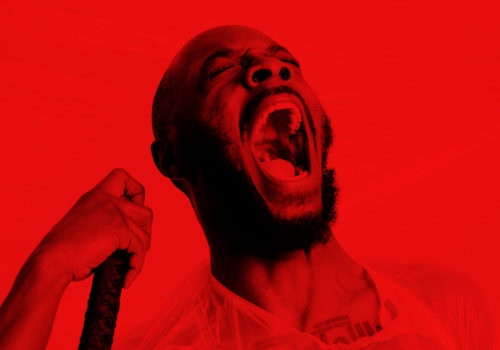
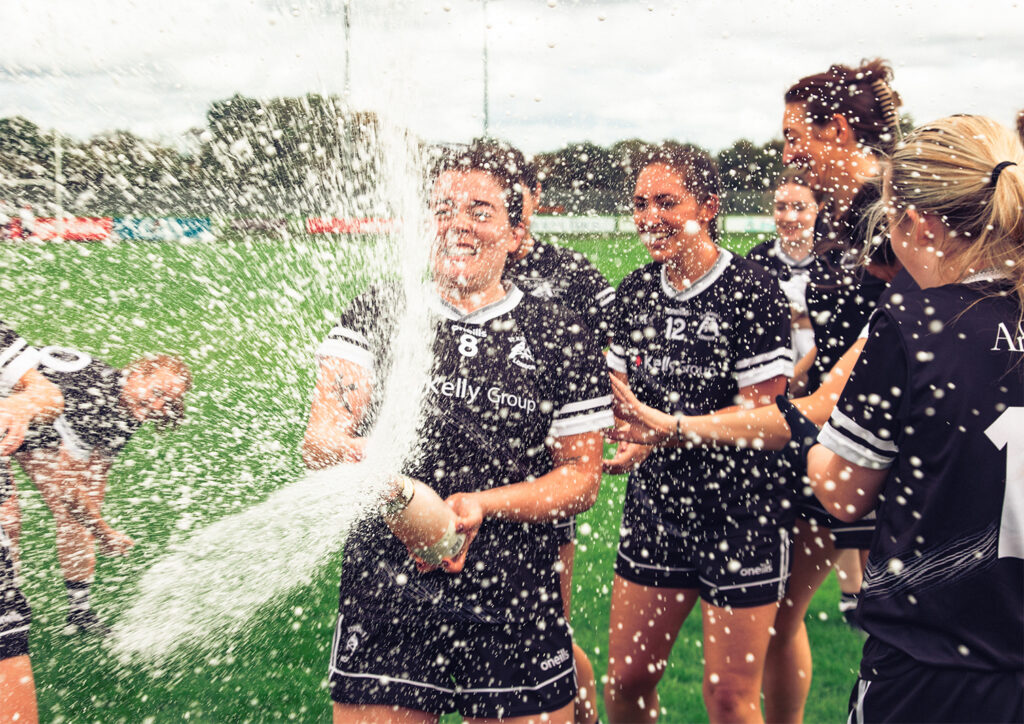
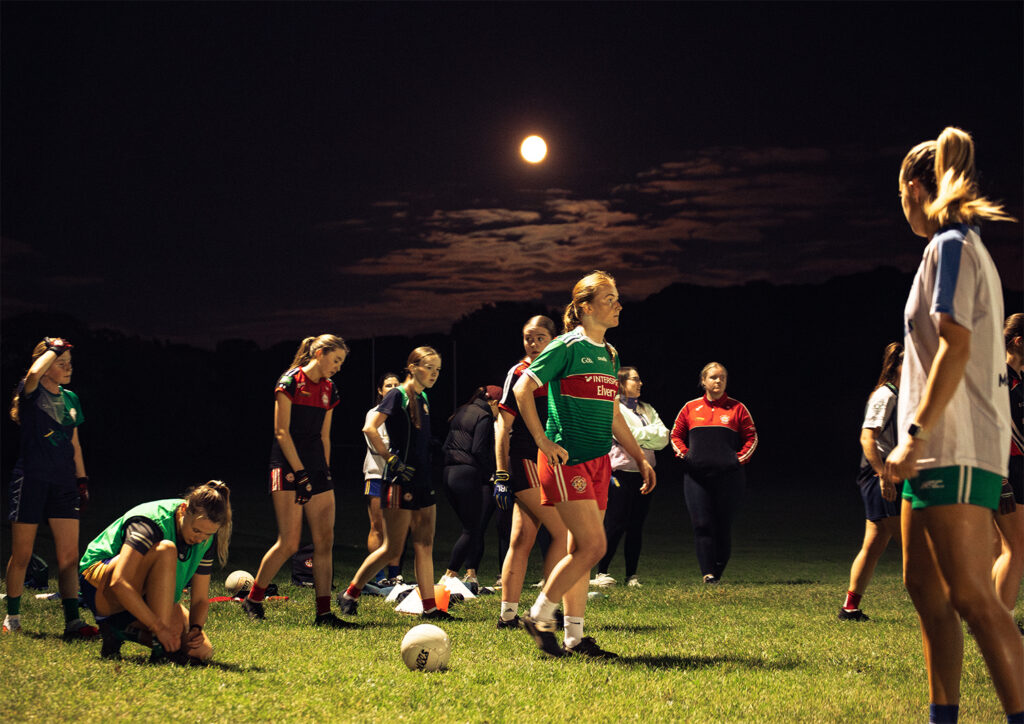
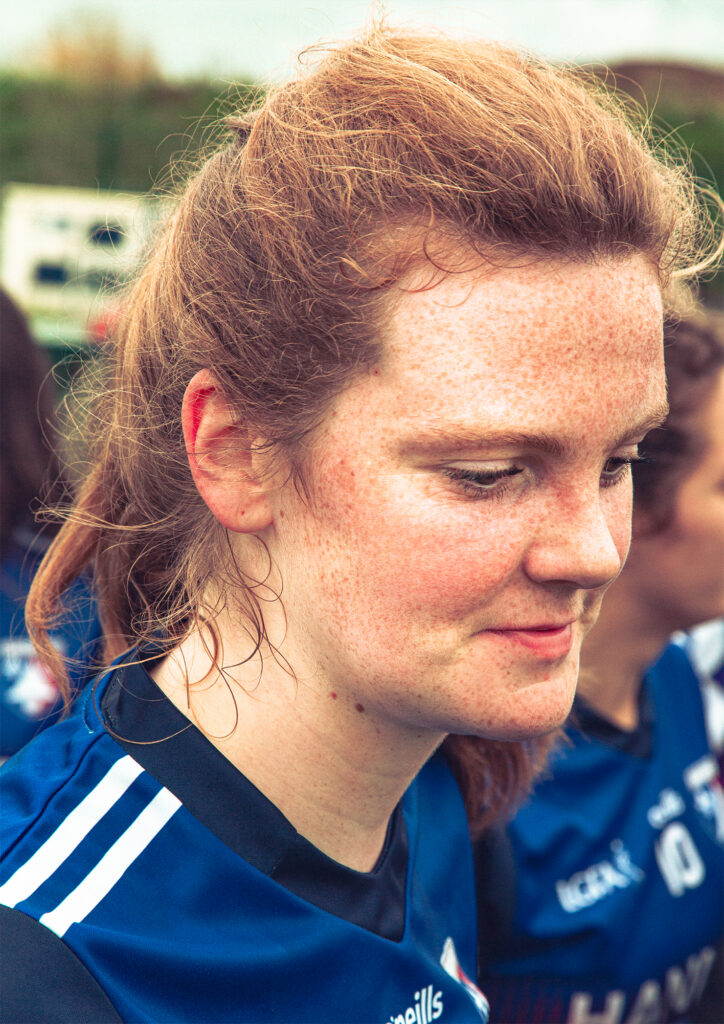
On the imagery of the work, he tells District, “Generally, when I’m photographing matches, I’m looking for unfiltered emotion. Like, there’s a lot of masking that goes on in society for people just to fit in … but in a sporting environment, those rules go out the window. You’re allowed to display that pent-up anger, frustration, or joy, and that’s what I’m trying to photograph. Whether it be celebrations post-match, or warm-ups, people concentrating, players in the huddle, players in the dressing room, that kind of stuff.”
“Like, there’s a lot of masking that goes on in society for people just to fit in … but in a sporting environment, those rules go out the window. You’re allowed to display that pent-up anger, frustration, or joy, and that’s what I’m trying to photograph.” – Daragh Drake
Exiles provides a raw, gritty showing of femininity, humanity, and belonging. Through Daragh Drake’s work, the women he has photographed, and the women highlighted from the past, are now the symbols of strength, power, and hard graft. And it is highlighted too that these women are like any other player of the Gaelic games; amateur athletes giving blood, sweat, and tears for their communities.
Exiles opens in the London Irish Centre, NW1 9XB, 6-10 PM. You can donate to the documentary project here.