Skaters are Feeling Dublin’s Public Space Crisis in Real Time
Text: Philip Theiss
Header Image: Cata Tomoiaga, photographed by Conor Kenny
If you want to understand the state of Dublin’s public space, talk to a skateboarder. Few groups feel the impact of public land being sold off, the introduction of defensive architecture, and rigidly curated plazas as immediately as skaters do.
Skateboarding is a cultural barometer. Skaters move through every ledge, corner, of skateable public space in the city. They are a medium, telling the story of how public spaces change. Every jump, grind, and slide maps what the city allows and what it takes away.
Portobello Square was once Dublin’s most egalitarian skate spot. It wasn’t designed for skating, nor was it ever technically allowed, but that was exactly why it worked. Ledges of solid, high-quality stone rose at the perfect height, their edges worn smooth by countless tricks. Stumbling upon the square in its prime, you could find dance classes, couples eating their lunch al-fresco, and of course the unmistakable scrapes and smacks of skateboards.
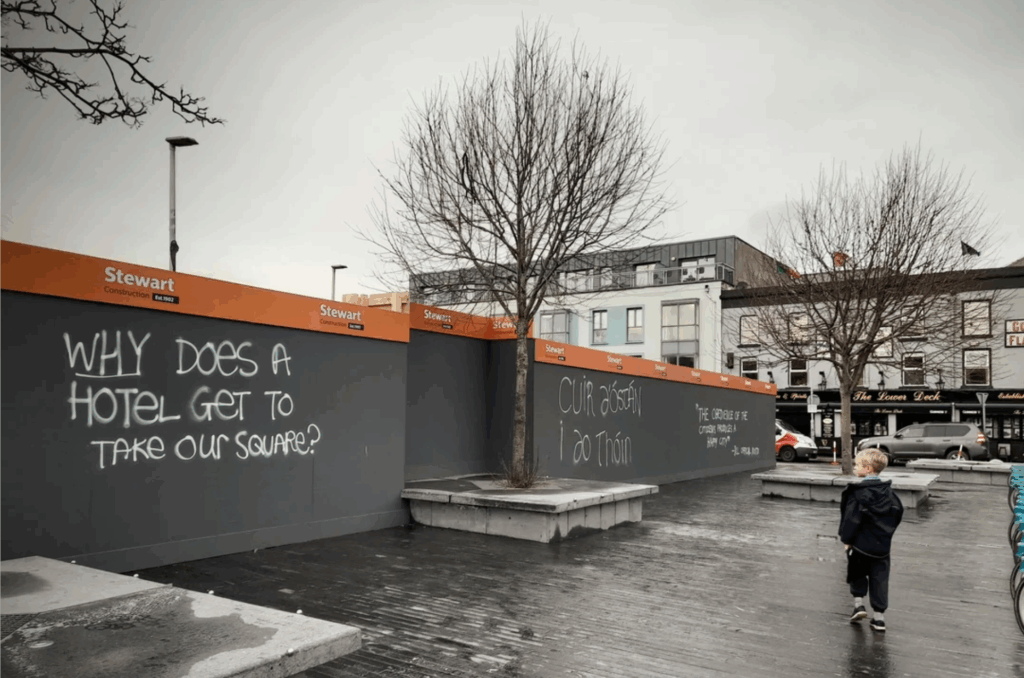
This golden age has long passed. Since then, half the square has been swallowed by a glossy private hotel development that left little room for anything else. The leftover space drifted between construction hoardings and hotel parking, unused and unseen. Today, construction boards once again block much of the remaining space, behind which a new park is finally taking shape after seven years of persistence from local residents and councillors.
Phili Halton started skating at Portobello when he was twelve, drawn in simply because it was close to home and he saw other skateboarders using the space. “It inadvertently just became a great skate space because of its open layout and high-quality materials,” he recalls, “and its proximity to the city center offered itself up as a meeting space for skateboarders. It was a bit of a hub.”
The pushback against skating is almost as old as the square itself. In 2004, within months of its opening, the city council added defensive architecture in an attempt to discourage skating. “Despite the skate stoppers, we continued to use it as our social hangout space,” Phili says. Over time, skateboarders even took it upon themselves to remove some of the barriers, since the community largely accepted their presence. For the next decade, Portobello remained a functioning hub for Dublin’s skate scene, mostly unchallenged by local businesses, and accepted by residents
In 2009, Portobello hosted the Kings of Concrete, an event sponsored by DC Shoes that brought professional skaters from abroad. The council allowed temporary changes like removing skatestoppers and adding rails, and when they never reversed them, those upgrades stayed. More importantly, it showed that Portobello was no longer just a local hangout. It had gained international attention and helped put Dublin on the map as a real skate city. A global brand choosing this square proved the culture was strong enough to be noticed.
“This isn’t just for skateboarders. For people living in cramped inner-city housing, sometimes even without a back garden, spaces like this become essential.”
The significance of Portobello became clear again in 2021. During the first summer after the initial COVID lockdown, it was one of the few viable public spaces in Dublin where people could socialise outdoors. Large crowds gathered along the canal to drink and meet when pubs were closed, creating vibrant energy that underscored just how essential flexible, open spaces are in the city. “This isn’t just for skateboarders,” Phili notes. “For people living in cramped inner-city housing, sometimes even without a back garden, spaces like this become essential.”
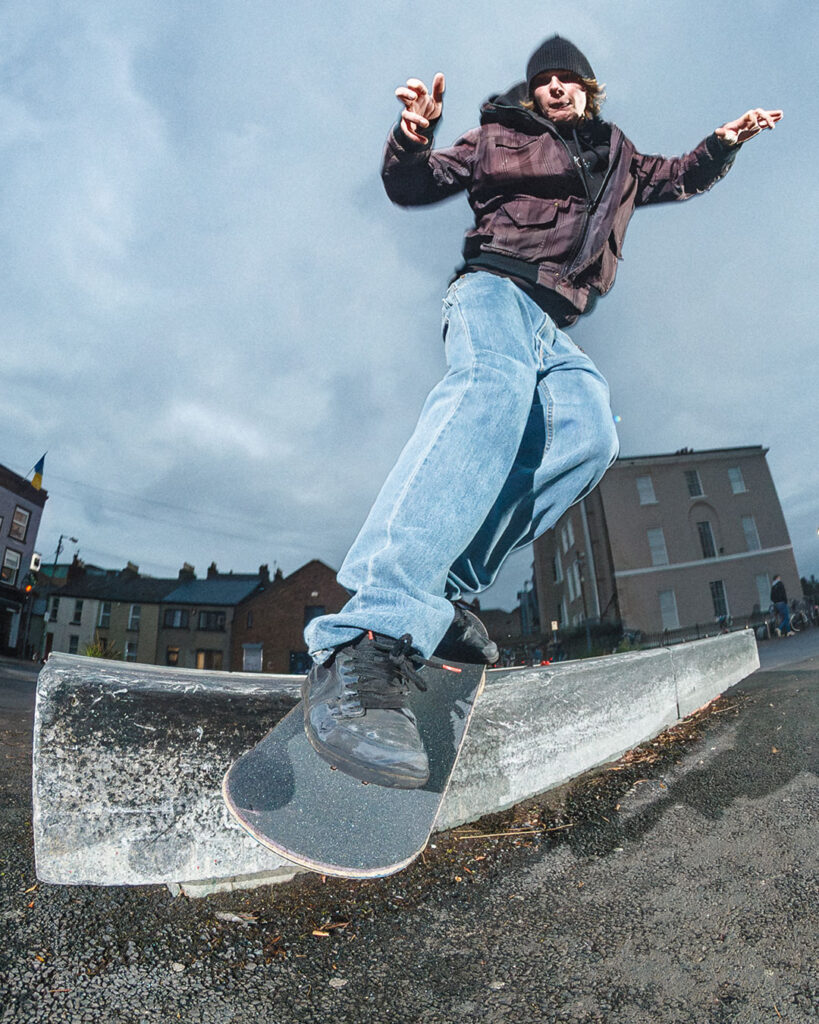
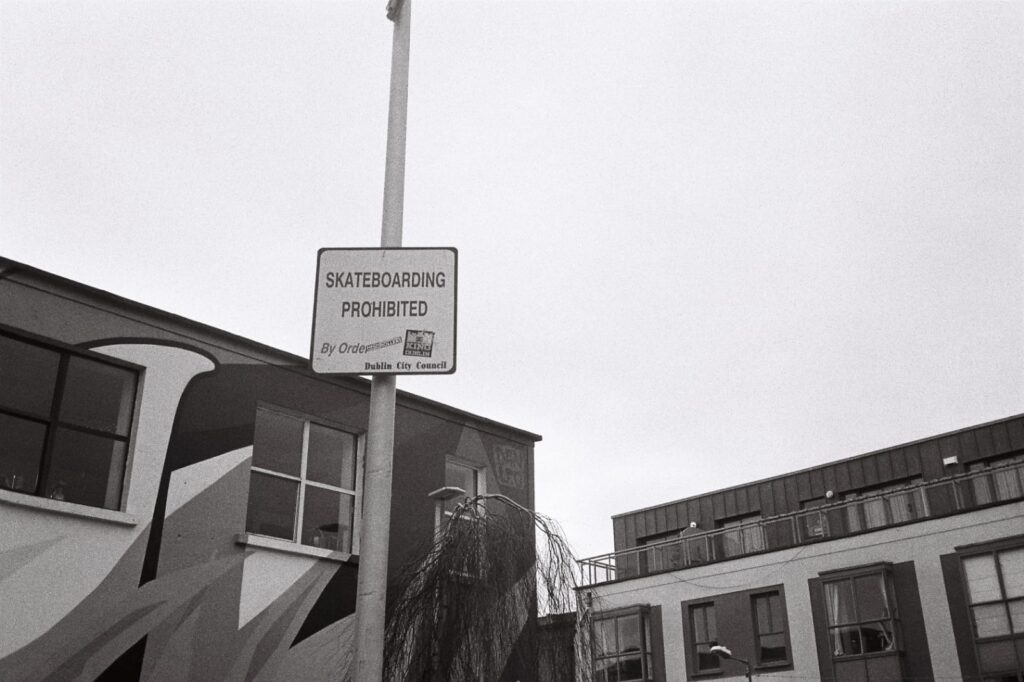
Portobello is just one example of a wider pattern across Dublin. The city is dotted with spaces that are technically “public,” but often feel anything but. Many squares and plazas are tightly controlled, fenced off at night, or designed in ways that discourage active use. This impulse culminated in the form of temporary fencing that was erected along the Grand Canal in the summer of 2024. It was a measure taken by the city to prevent tent encampments, which had the immediate effect of making the canal banks inaccessible to the public. It was a stark lesson in the public’s desire for open space. The barriers, which diminished the space for everyone, drew prolonged peaceful protest. Eventually, with no official action taken in response, the public reclaimed the space as protesters tore the fences down. Even when new parks are built, they are often highly curated: polished surfaces, carefully managed plantings, and signage dictating what is and isn’t allowed. What they might gain in safety and order, they lose in the ability for people to make the space their own.
Phili Halton has seen this pattern repeat across Dublin. “Places like Weaver Park are great for learning and practicing tricks,” he says, “but skating is fundamentally DIY and street-based. You can’t really build that kind of community in a formal skate park.” Similarly, many of the city’s newer public squares, while technically open to everyone, are designed with a purpose in mind. “They’re polished, controlled, and come with rules. They don’t invite people to hang out, experiment, and figure things out themselves. That’s what’s missing in Dublin.”
In a city facing densification, a housing crisis, and rising privatisation, the question is not just whether there is public space, but whether the city is cultivating spaces that allow people to exist on their own terms. In neighborhoods like the Liberties especially, where gentrification has intensified and public space is scarce, the pressure on the few remaining streets and public spaces, like Weaver Park, is especially acute.
“It’s all about creating spaces where people can connect physically, in person. That’s really important.”
Phili has looked beyond Dublin for inspiration. Through his work as the founder of Goblin 13, which started in 2018 as a way to capture and connect Ireland’s skate scene, he’s seen how skateboarding can thrive when cities make space for it rather than just manage it. “We’ve done everything from making videos and magazines to hosting events, building DIY spots, even proper government-registered skate parks,” he says. “It’s all about creating spaces where people can connect physically, in person. That’s really important.”
Phili sees lessons in other parts of Ireland, particularly in rural communities where public space is scarce and creativity is essential. “Historically, people have had to take abandoned spaces and just see what they could do with them,” he says. This goes beyond skating, it applies to social spaces in general, from small raves to local tracks and even festivals.
One of the most striking examples came in 2022 on Inis Oírr. With just a few hundred residents, locals still were eager for a skateable space. Phili and his team at Goblin fundraised, sourced materials, and spent a week building a mini ramp in one of the most exposed, geographically challenging locations in Ireland. Despite wind, storms, and isolation, the ramp thrived. “If an island with 350 people can sustain a skate scene, it can work anywhere,” he reflects.
For Dublin, the lesson is clear. The city has more people and more resources, yet the public spaces that remain are increasingly either auctioned to the highest bidder, or are left to be over-managed to the point of sterility. “Dublin isn’t necessarily lacking parks,” Phili says, “it needs better quality parks. Places that invite people to use them creatively, not just follow rules.” Phili’s project in Inis Oírr proves that when people are given freedom, spaces can spark connection and community, no matter how harsh the conditions.
Curbs, near the Convention Centre, is one of Dublin’s few examples of a successful DIY skate space, and Phili sees it as a reason for hope. “I have way more hope in things like Curbs, with people taking initiative and doing things themselves,” he says. Unlike Portobello, Curbs is more focused. People go there to skate, not just hang out. “You don’t really get random people showing up and just hanging around,” Phili notes. But that doesn’t mean it’s unwelcoming. It shows that when people build their own spaces, they become places worth going to.
Its location is what amplifies the difference. Curbs is tucked away in the North Docks, a stretch of largely inactive office blocks. “The North Docks is a ghost town,” Phili says. “There’s not even a pub nearby. There’s no real reason for anyone else to go there, so it’s very different from somewhere like Portobello, which was central and naturally drew a mix of people.” Despite this isolation, Curbs thrives, and with minimal oversight, showing that unscripted, DIY spaces can flourish when communities are given freedom. It may lack the social magnetism of a central square, but it demonstrates that people will create vibrant, self-directed public spaces if they are allowed to.
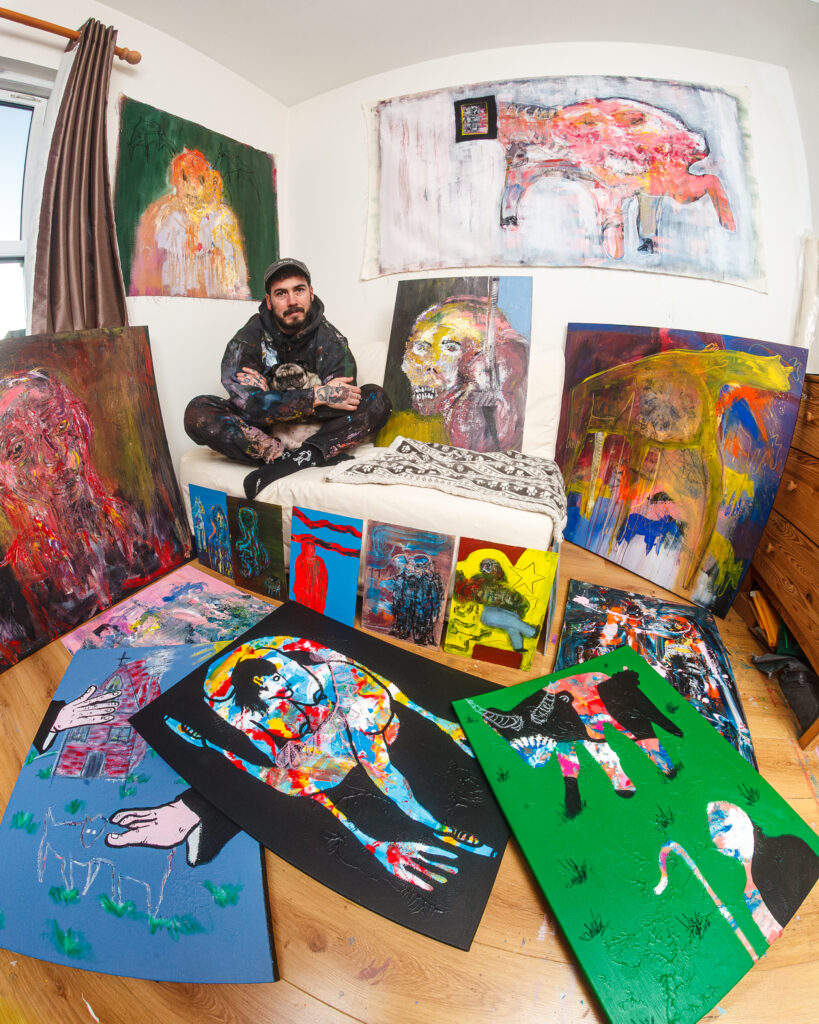
When I asked Dublin skateboarder and visual artist Michael McMaster what his ideal skate spot would be, he didn’t hesitate. “I’d make more pedestrianised streets,” he said, “and put in some cool sculptures that are also skateable. It’s a great way to get artists involved as well.” His answer reads almost like a sketch of a healthier city. Skaters instinctively know when a space works: when cars are pushed back, when there’s room to move, when objects invite curiosity instead of warning you away. If a space can handle a skater moving freely through it, it can handle anyone.
“I’d make more pedestrianised streets, and put in some cool sculptures that are also skateable. It’s a great way to get artists involved as well.”
Portobello, Curbs, and other corners of the city show what’s possible when communities take initiative. Skateboarders, artists, and everyday city-dwellers can turn overlooked spaces into places that matter. When the city gives people room, the city comes alive. Curbs, Inis Oírr, and what’s left of Portobello show what’s possible: vibrant, self-directed places that pulse with life because people are allowed to make them their own. If Dublin embraces that approach more broadly, the city will feel more open, more connected, and more itself.