Irish Designers Are Playing By Their Own Rules
Words: Izzy Copestake
Lead Image: Pellador
[This article was originally published in November 2025, as part of the District: 10 Years of Chaos print edition]
For years, Irish fashion designers faced a cruel choice: if you want success, leave. It’s a paradox that put Ireland on the map as the birthplace of some of the world’s most visionary designers, just not a place they could stay.
For a country with a population smaller than most capital cities, Irish talent is dominating. The current undisputed king of fashion is a Derry man: Jonathan Anderson. He was recently crowned sole creative director of Dior, overseeing every corner of one of the most powerful brands in the world, all while continuing to lead his label, JW Anderson. Simone Rocha’s powerful yet romantic designs and references to her heritage have made her one of the most distinct voices in contemporary fashion. And now, Seán McGirr, a Dubliner, is the new creative director of Alexander McQueen, perhaps the most emotionally charged label in fashion history.
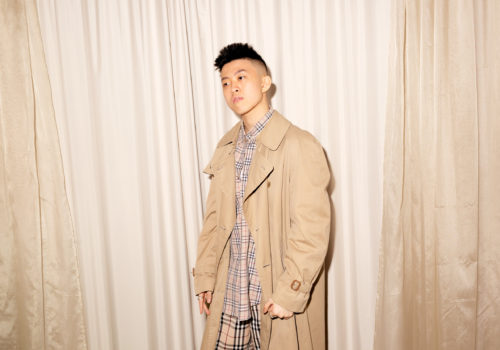
For these designers, to be successful is to be in exile. This was the crux of a chat I had with Robyn Lynch last year. Lynch’s vibrant, tech-inspired collections, and if-you-know-you-know references to Irish sportswear, have made the eponymous brand one of the most exciting to come out of Ireland. Vogue compared her skill and innovation working with deadstock materials to legendary Japanese designer Junya Watanabe, and her work has been repped by the likes of Fontaines DC’s Grian Chatten and Central Cee.
Despite launching her label while living in Dublin, the lack of infrastructure forced Robyn to move to London. “I couldn’t find seamstresses,” she told me. “I couldn’t find the raw materials to make something that wasn’t overpriced… the infrastructure is just not really here.” Robyn applied for support from various Irish funding bodies to help get her label off the ground but was unsuccessful, “so I just migrated over and started to get funding from the British Fashion Council.” Whether it’s a question of labour, materials, or financial support, Ireland has a history of pushing emerging designers out of its borders.
“I just migrated over and started to get funding from the British Fashion Council.” – Robyn Lynch
Fashion is not seen as an art in Ireland, at least by the government. Designers cannot apply for funding from The Arts Council, as fashion is not recognised within its remit. Instead, it’s seen as a commercial venture, and so funding is overseen by the Design and Crafts Council. While the DCCI does offer some support, the scale and grants are significantly smaller.
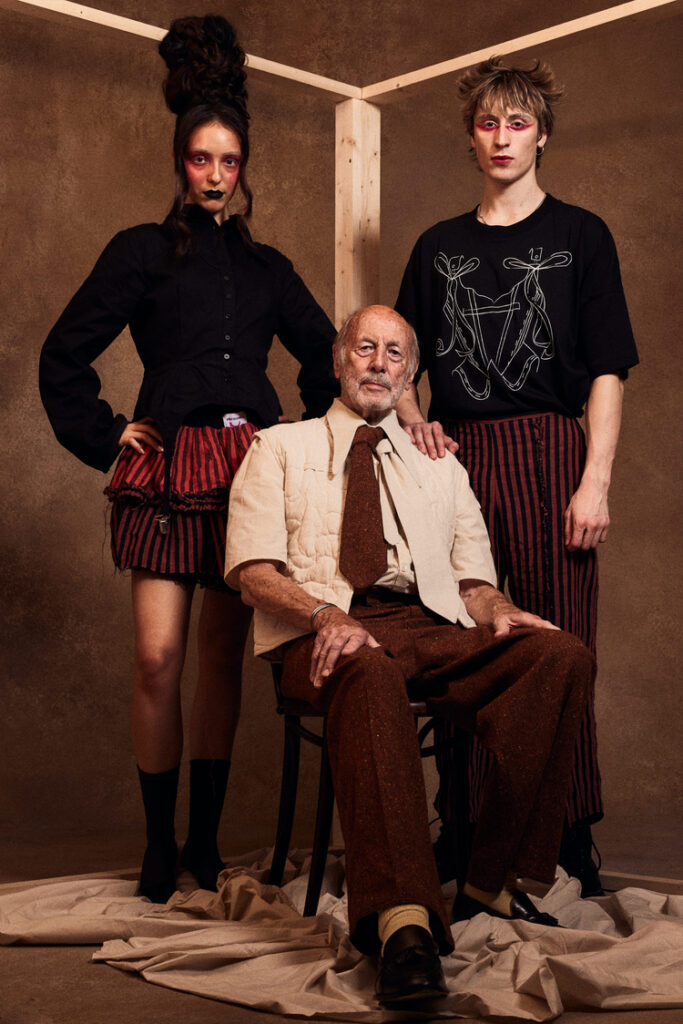
Fashion designer, stylist, and co-founder of Dublin Independent Fashion Week Ríon Hannora was not eligible for the basic income for artists pilot programme because she is “not an artist.”
“The argument has been made that due to the fact that the DCCI funds fashion that they do not need to, yet architecture is funded by both the DCCI and the Arts Council,” she tells me.
“The argument has been made that due to the fact that the DCCI funds fashion that they do not need to, yet architecture is funded by both the DCCI and the Arts Council,” – Ríon Hannora
“Within architecture, there are certain limitations to who can apply. Architectural practice framed as cultural and artistic gets funded but commercial architecture does not. I believe this same system could be put in place for fashion.”
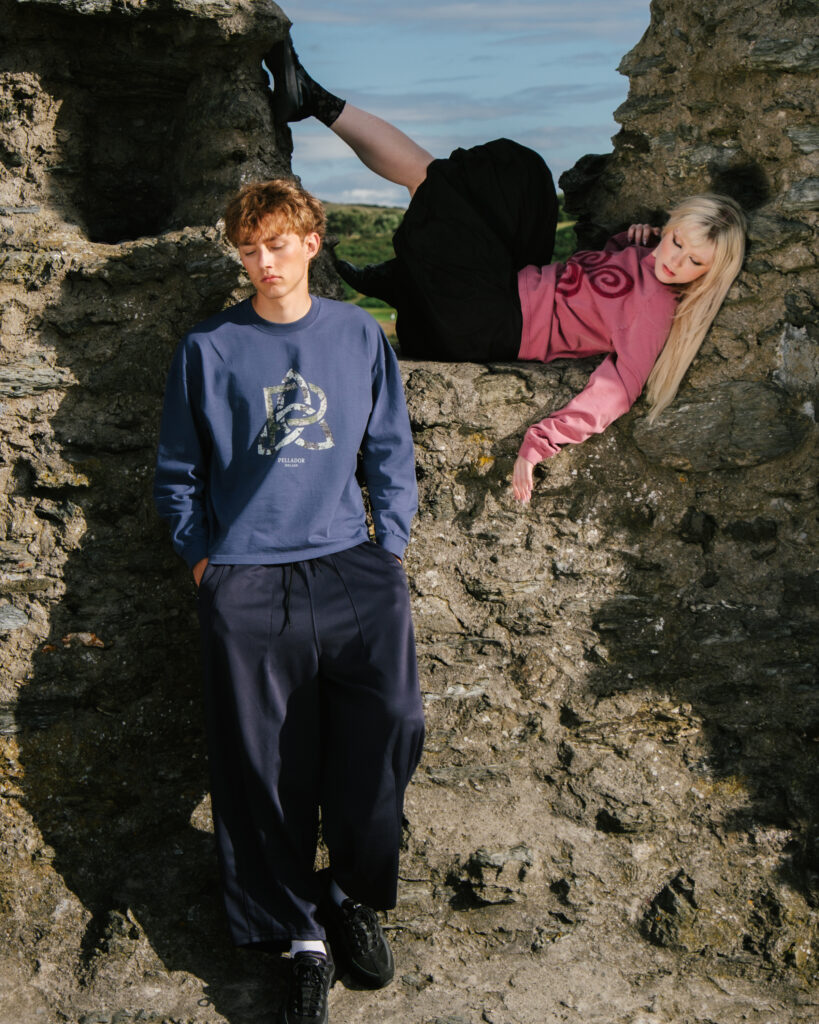
Although Irish designers have long had to leave in order to succeed, many of those who’ve gone global are, paradoxically, paving the way for something new at home. Their success abroad has sparked a renewed sense of possibility and urgency among the next generation here. Rather than wait for recognition or funding which is long overdue, Irish designers at home are taking matters into their own hands, and this time, on their own terms.
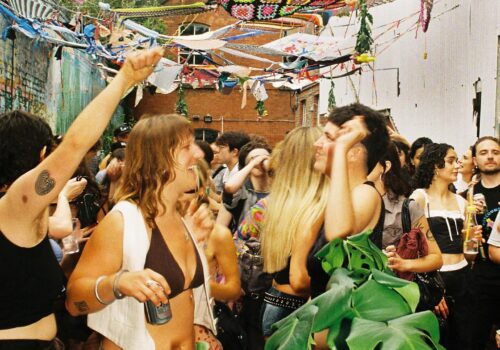
Nowhere is this more evident than Dublin Independent Fashion Week. What began three years ago as a chat amongst friends working in the fashion industry has grown into a massively ambitious undertaking which, this year, saw over 60 events happening across the city. Most crucially, this happened organically with zero corporate sponsorship, and it shows in the designs.
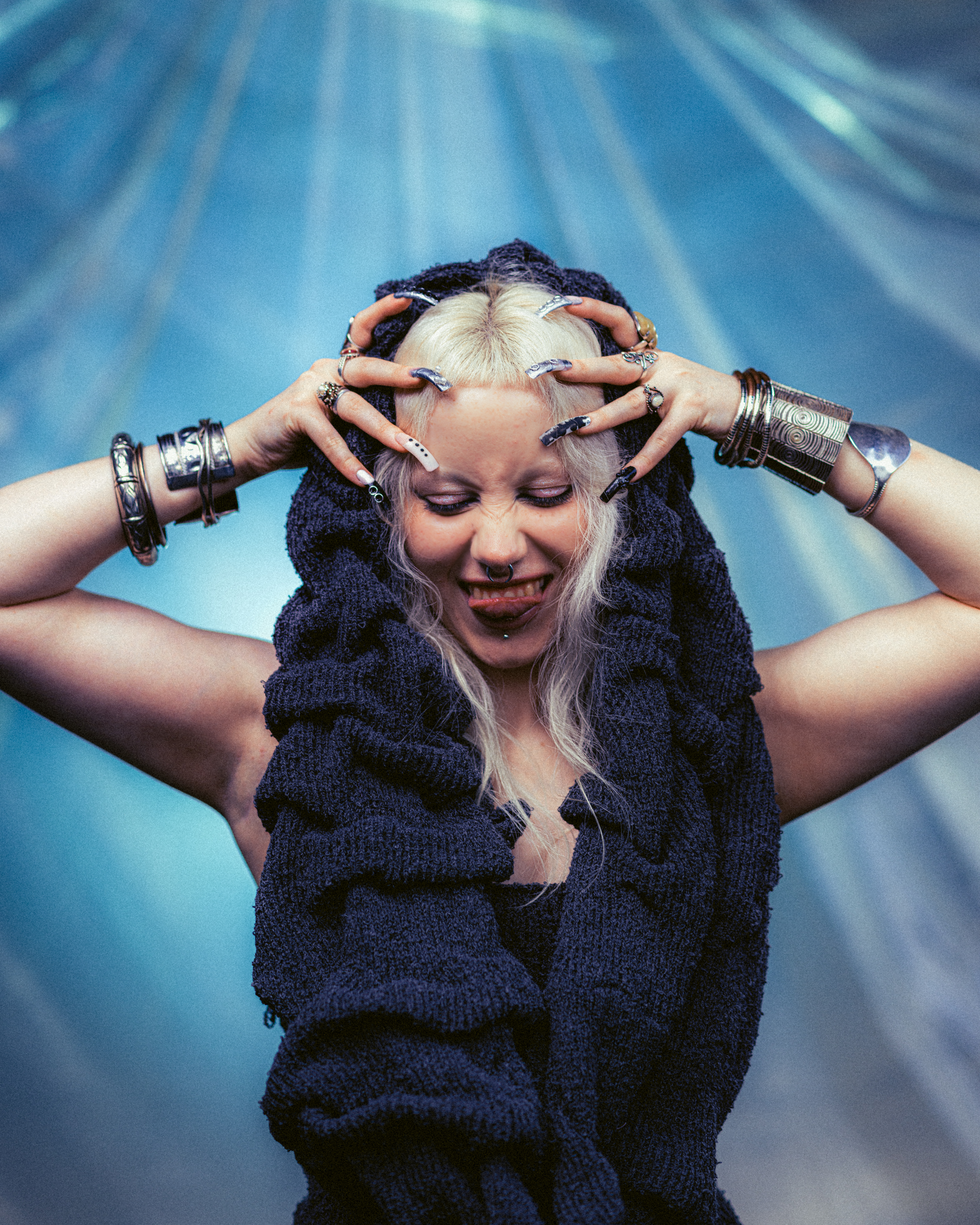
“It’s mad that a lot of Irish designers have to go abroad to show their collections. We wanted to change that,” Megan McGuigan, co-founder of Dublin Independent Fashion Week and the designer behind Seeking Judy and Solstice by Seeking Judy , told me during a chat we had in the run up to this year’s event. “Not everyone can or wants to leave Ireland. We want to give them a platform here, not just celebrate Irish designers once they’re successful abroad.”
Not everyone can or wants to leave Ireland. We want to give them a platform here, not just celebrate Irish designers once they’re successful abroad.”
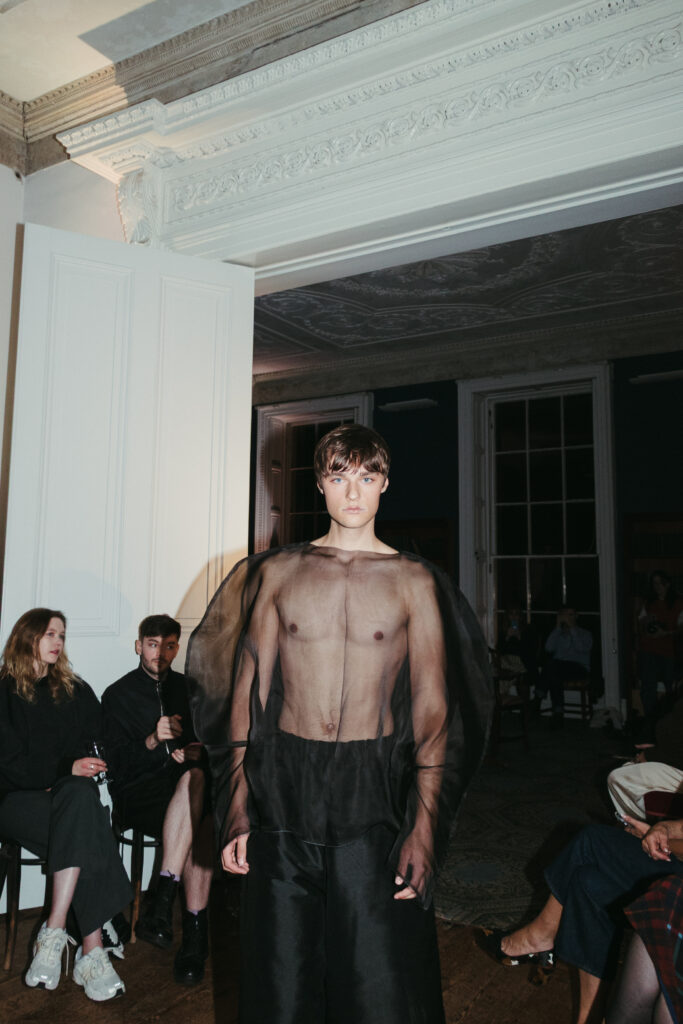
It’s exactly this kind of freedom which has the power to make fashion interesting. Not the big name corporate backing or glossy brand dinners, but the urgency to make something new, even if no one knows what to do with it yet. Pellador added to their beloved football knits and sent a Roy Keane bikini (Roykini) down the runway to the shriek of delighted onlookers, Mar Knitwear blurred the lines between clothing and art with a life drawing session which invited audience members to draw the models and clothes, and Conor O’Brien’s Phantom Thread saw models floating down the runway in structural silhouettes and immaculate tailoring.
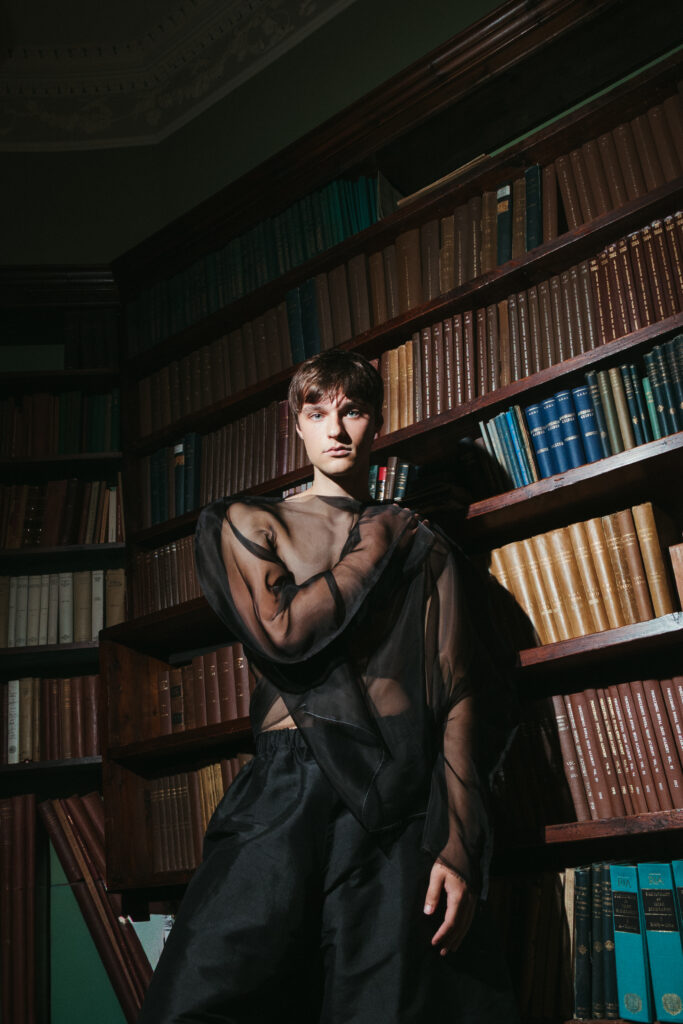
The designers involved in Dublin Independent Fashion Week know the system is broken, and they’re not buying into the old rules. Elsewhere, corporate investment has hollowed out fashion weeks, turning what were once radical, disruptive showcases of creativity into sleek marketing platforms for influencers and brands alike. Just look at London, what was once the home to some of the most experimental names on the runway, like Alexander McQueen and Galliano, now looks like a well-oiled PR event. The pressure to turn a profit has pushed many of the most innovative designers of today, like Jonathan Anderson himself, to skip the official schedule entirely. Industry wide, super skinny runways are back in full force in 2025, despite years of supposed progress in diversity. Meanwhile, LVMH continues to strangle emerging talent by hoarding creative directors across its houses and swallowing up potential independent voices before they can find their own footing. The result? A creative ecosystem that rewards safety, sidelines experimentation, and leaves little room for anyone without connections or capital.
This has made showcases like Dublin Independent Fashion Week a haven for precisely what bigger fashion weeks have lost: authenticity. Without corporate money shaping the agenda, the shows naturally blend music, performance, and fashion in a way that feels true to the city it’s representing. Zeda The Architect directed a joint show from Aisling Duffy, The Zero Waster, and Seeking Judy at The Complex, which featured live sets from cult favourites Vatican Jail and Fortune.
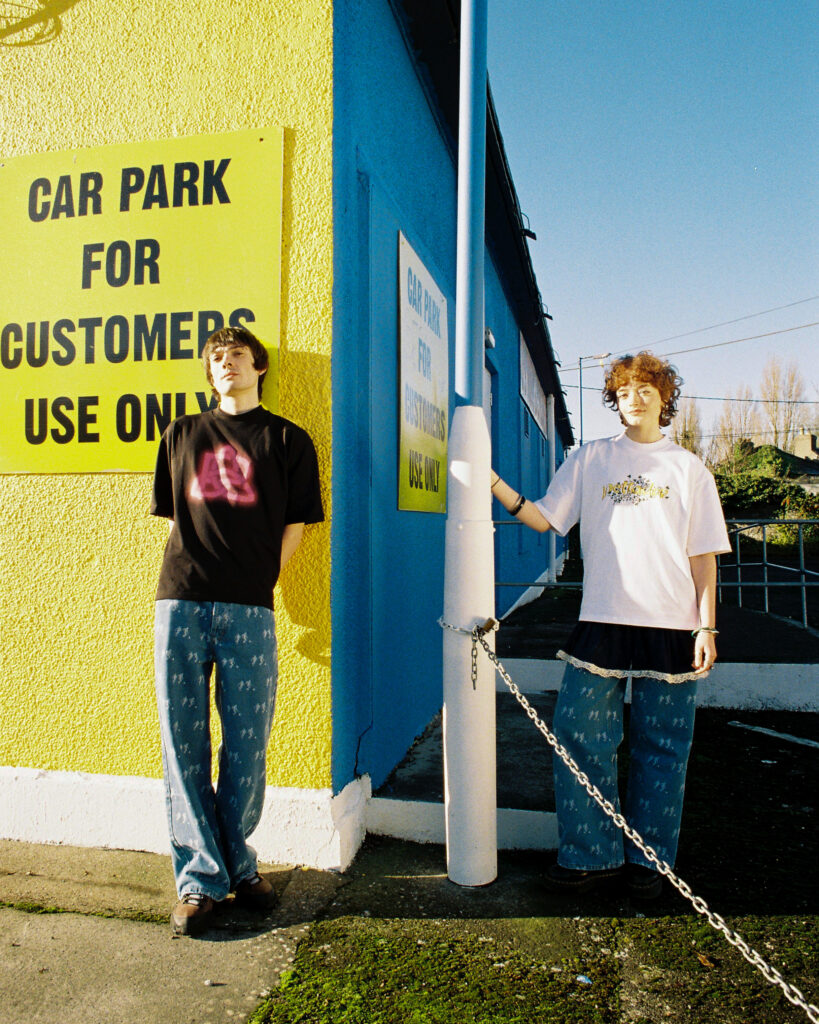
Meanwhile, Pellador’s runway was a perfect example of how designs deeply rooted in place can effortlessly tap into the underground scene at home. Lil Skag walked and played the afterparty. Just like Pellador’s pieces, Skag’s witty lyricism leans heavily on local slang and references that only make sense if you’re from here. At the afterparty, he was joined by familiar faces from Ireland’s thriving underground music scene, Curtisy, DeathtoRickey, and Sloucho, aligning with designs which make no attempt to translate their Irishisms.
As Megan McGuigan puts it, “If we have any extra money, it’s going towards having musicians play, not taking influencers out for dinner.” This connection to local culture comes naturally because these designers live and work here, they’re part of the community and they’re building something for everyone.
“If we have any extra money, it’s going towards having musicians play, not taking influencers out for dinner.” – Megan McGuigan
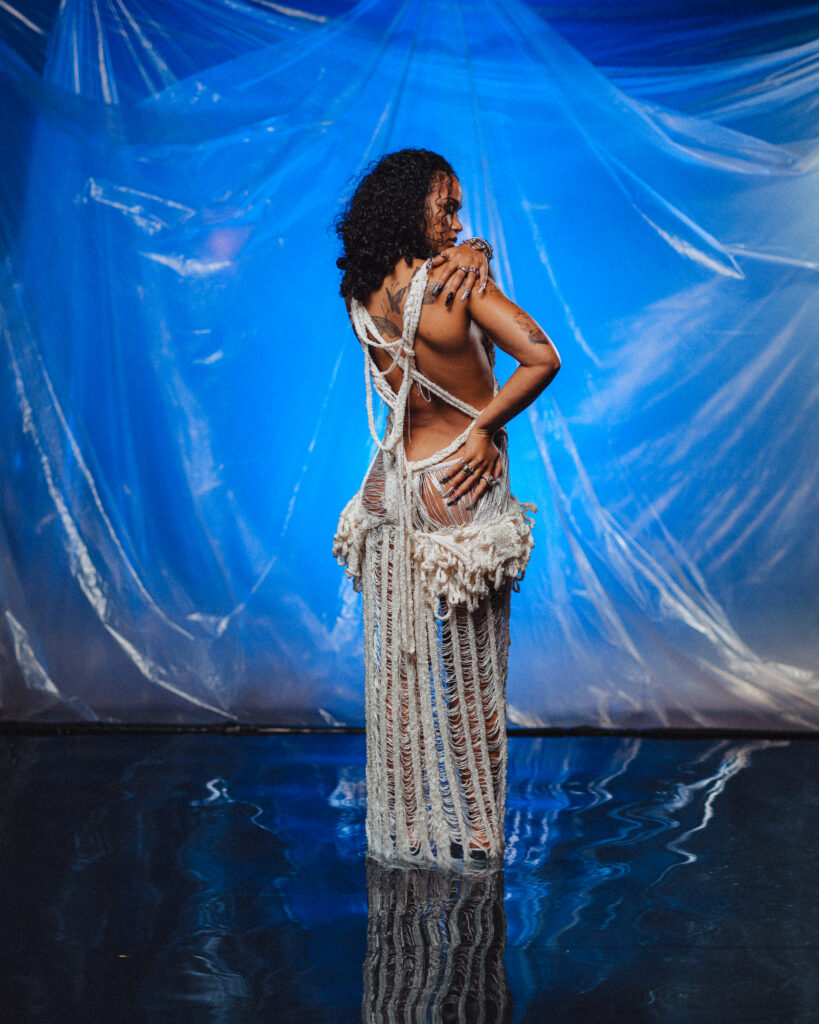
What’s happening in the Irish independent fashion scene is rare. With little to no infrastructure, designers are creating space for each other, putting on shows, blending fashion with art, music, and performance – proving that you don’t need corporate institutions to validate your work when you have a community that believes in it.
But this kind of momentum isn’t endless. Creativity thrives on freedom, but this kind of freedom also needs support. Right now, most of that support is coming from within: friends helping friends, artists pulling together favours, and small teams doing the work of entire institutions. Without proper public investment, that energy risks being stretched too thin, or worse, co-opted by big businesses looking to cash in on authenticity without actually backing it. There are always strings attached to private money, the kind that limit risk, dilute vision, and exploit the very culture they claim to support.
It’s a fashion tale as old as time. We saw it with the emergence of punk in 1970s Britain as a highly political anti-establishment movement led by figures like Vivienne Westwood and Malcolm McLaren, but it was quickly stripped of its political edge and repackaged by mainstream fashion as a marketable trend. It’s happened more recently with streetwear, which grew out of skate culture and from Black communities as a powerful expression of identity and resistance, only to be co-opted by luxury brands eager to cash in on its cultural credibility while ignoring its roots. Even designers like Martin Margiela, who built their names on resisting fashion’s spectacle, saw their visions diluted once their brand got absorbed into bigger systems.
The truth is, real change won’t come from waiting on big investors or outside validation. It needs to come from Ireland itself, through real government support, genuine investment in infrastructure, and a commitment to nurturing the creativity that’s already here to keep the sharks at bay. The most successful designers in the world today are Irish, and countless others are creating remarkable work at home. It’s time the cruel choice offered to Irish designers is turned back on the government: provide real support, or watch yet another generation of Irish talent leave.