This Irish-Owned Lesbian Bar Is One of the Last of Its Kind in New York
Text: Sarah Keogh
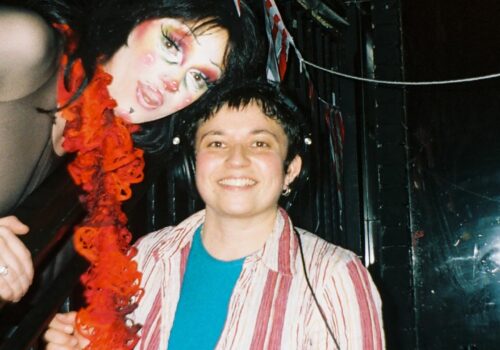
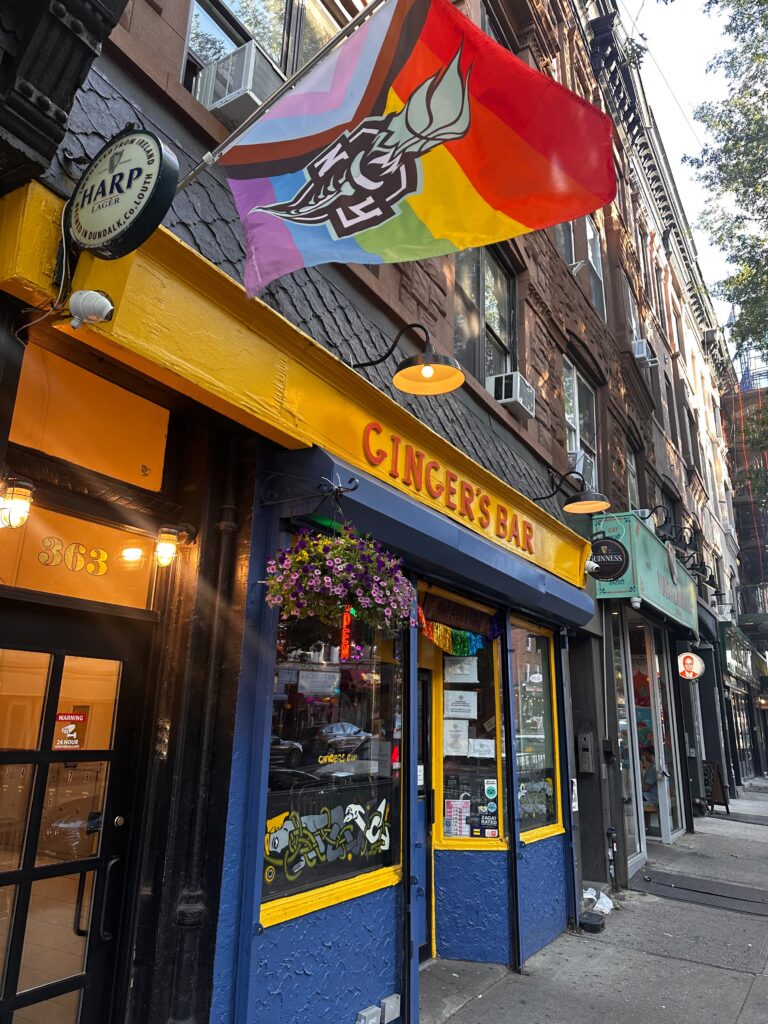
On a busy corner in Brooklyn, Ginger’s looks much like any neighbourhood pub. Pints are poured, pool games are underway, and regulars chat across the bar. Before you’ve even ordered a drink, someone is asking if you’d like to play the winner at pool. But at a time when LGBTQ+ rights are once again under political pressure in the United States, places like this have become much more than somewhere to spend an evening.
In the 1980s, the United States was home to more than 200 lesbian bars. Today, that number has recovered slightly from its pandemic low to around 36 nationwide. New York is now home to around seven dedicated lesbian bars, but spaces with the history and longevity of Ginger’s remain exceptionally rare.
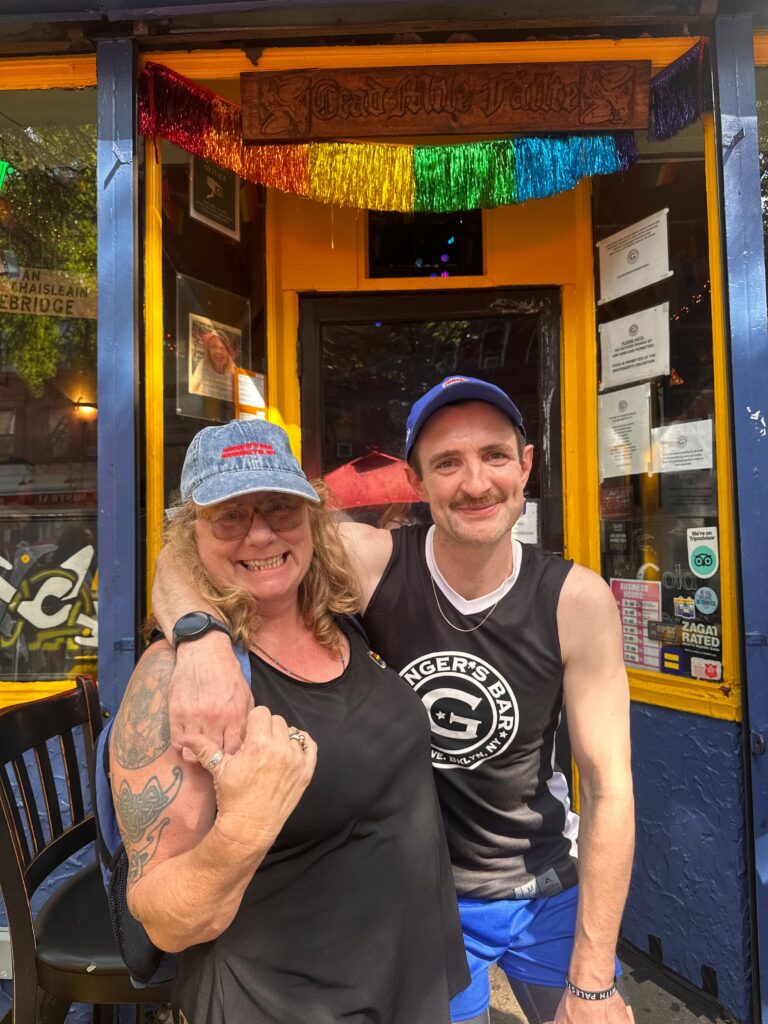
Opened by Irish emigrant Sheila Frayne on St Patrick’s Day in 2000, Ginger’s is the city’s only openly Irish-owned lesbian bar and a lasting fixture of New York’s queer nightlife. Its survival, however, has never depended solely on nostalgia. It depended on people.
“It’s always had an ethos of openness and warmth,” says co-owner Brendan. “Sheila’s idea of what a queer pub should represent has always been front and centre.”
“It’s always had an ethos of openness and warmth”
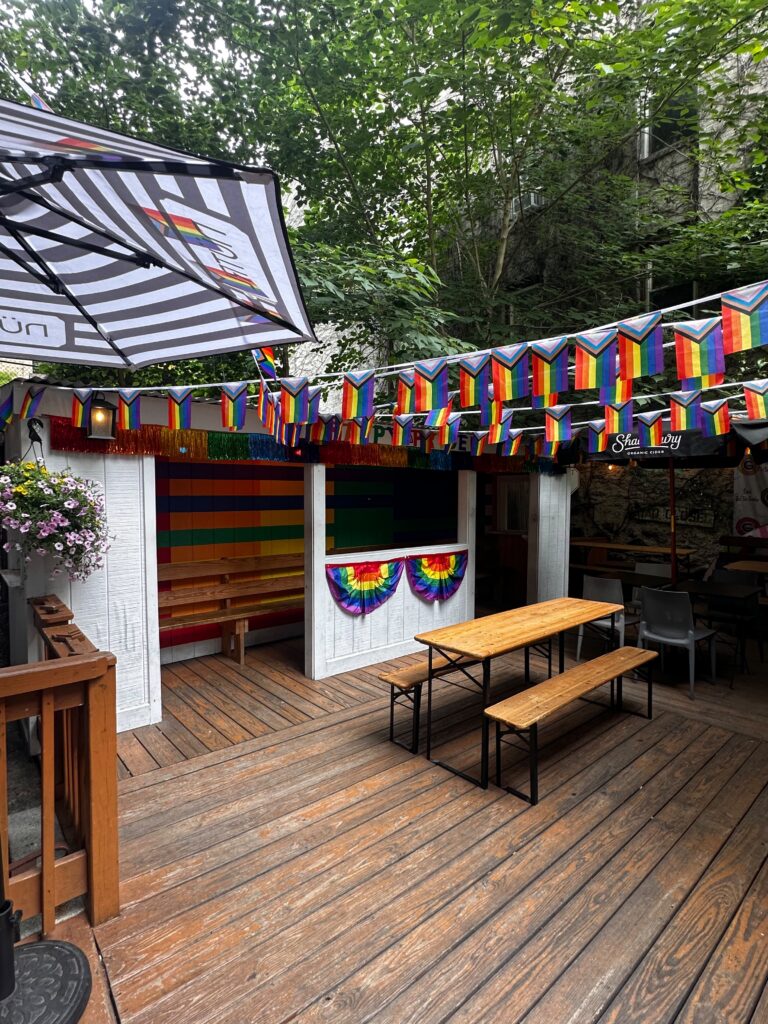
Hospitality runs through both Brendan and Sheila’s backgrounds, but here it has evolved into something much bigger than pulling pints. Ginger’s has become a public house in the truest sense of the phrase: somewhere queer people arrive, meet friends, organise campaigns, celebrate milestones and, often, begin entirely new chapters of their lives.
“You see someone walk in on their own,” Brendan says. “They might have just moved to New York. They might not know another queer person. Then someone asks, ‘Can I play the winner at pool?’ Six months later they’re still coming back because they’ve made friends. That’s the biggest reward I could ever have.”
“Six months later they’re still coming back because they’ve made friends. That’s the biggest reward I could ever have.”
For many Irish emigrants, there is another layer of familiarity. Most people grew up with an Irish pub at the centre of their community. Discovering one that is unapologetically queer carries its own emotional weight.
Brendan explains that growing up in Ireland, the local pub was often the centre of community life. But for many (especially before the country’s rapid social changes of the last decade), those spaces didn’t always feel like they belonged to them. Traditional pubs could be places where people stayed quiet about who they were, or where being yourself required a second thought.
Ginger’s turns that experience on its head and shows that Irish hospitality becomes something even more meaningful when it’s offered in a place where queerness isn’t simply accepted but assumed.
That same philosophy shapes everything Ginger’s does.
Rather than curating nightlife from the top down, the bar lets its community shape the calendar. New York Liberty watch parties sit comfortably alongside Dyke Drag, Dyke Mic, karaoke, trivia, fibre arts evenings, board game nights, queer Irish trad sessions at GAYLI and the storytelling night Queer to Tell. Community fundraisers happen as naturally as happy hour.
GAYLI, a queer céilí night that transforms the bar into a dance floor, is one of the pub’s most joyful fixtures. Since 2018, the collective has challenged rigid ideas of Irish performance culture by opening it to all bodies and identities, and reclaiming Irish tradition through inclusion.
“The pool table moves over,” Brendan laughs. “Suddenly everyone is jumping around the room trying their best at Irish dancing.”
“Suddenly everyone is jumping around the room trying their best at Irish dancing.”
Traditional Irish music, dancing and pub culture have long been held up as symbols of national identity, yet for generations many queer people experienced those spaces as places where they had to shrink parts of themselves. The traditions themselves were never exclusionary but the social attitudes surrounding them often were.
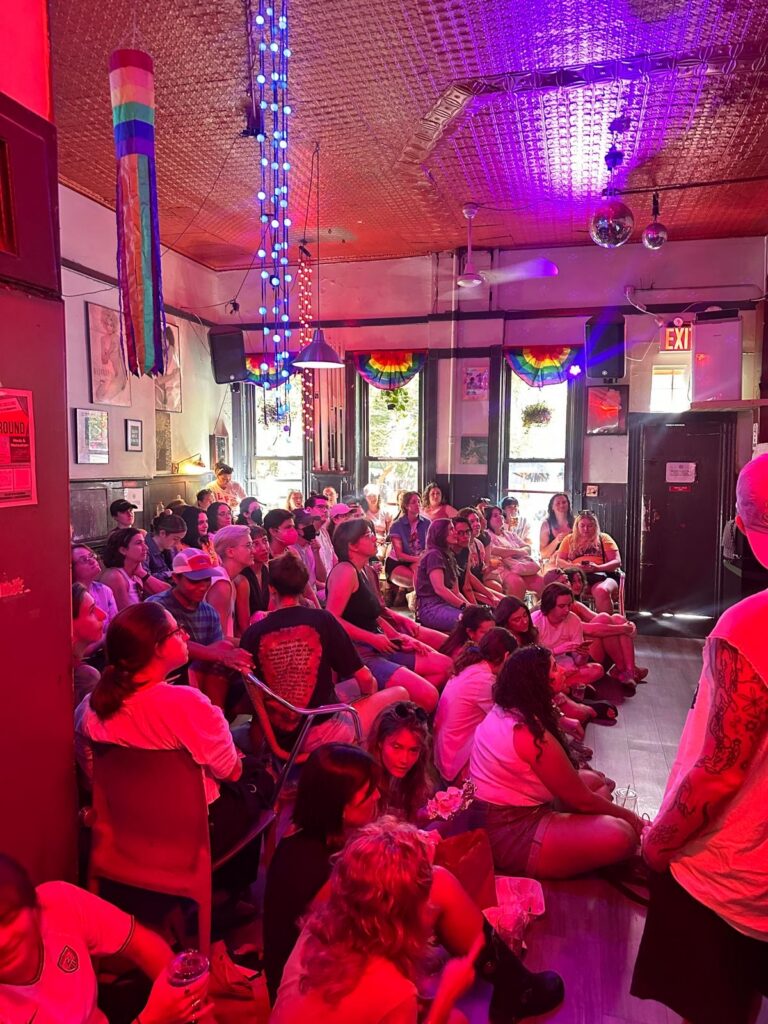
At Ginger’s, those same traditions are given room to breathe differently. Céilí dancing becomes something everyone can join regardless of gender or identity. Rather than abandoning tradition, the bar demonstrates that tradition can evolve and expand.
That same openness extends beyond entertainment. Ginger’s has hosted Palestinian fundraising nights alongside events organised with Jewish Voice for Peace, whilst sitting in the heart of one of Brooklyn’s largest Jewish neighbourhoods. Rather than retreating from political questions, the bar has long understood community as something that extends beyond its own walls.
For Brendan, whose Irish background has shaped his understanding of solidarity, that feels entirely natural. Ireland’s longstanding public support for the Palestinian cause resonates with many in the Irish diaspora, and Ginger’s has become one of the places where those values are expressed through practical acts of community care.
That culture changes the people who work there too. Bartender Carrigan says that, over time, Ginger’s helped them become more comfortable in their own identity.
“It sounds really deep and serious,” they laugh, “but you’re just doing bar work every day and suddenly feeling a little bit more comfortable. A little bit more like, ‘Oh… that’s who I am.'”
Twenty-six years after opening its doors, Ginger’s remains proof that bars can still function as genuine public houses: not just a place to drink, but a place to genuinely belong to a community.
For an Irish-owned queer bar thousands of miles from home, that kind of belonging is no small thing.