The Year Belfast Got the Fleadh
Words: Seán Óg Ó Murchú
Images: Malachy McCrudden @mal_photo_
A city held back for so long, through tragedy, violence, and oppression, had been set free (at least culturally), and is now flying forward, slingshotted into a future full of potential, optimism, and hope.
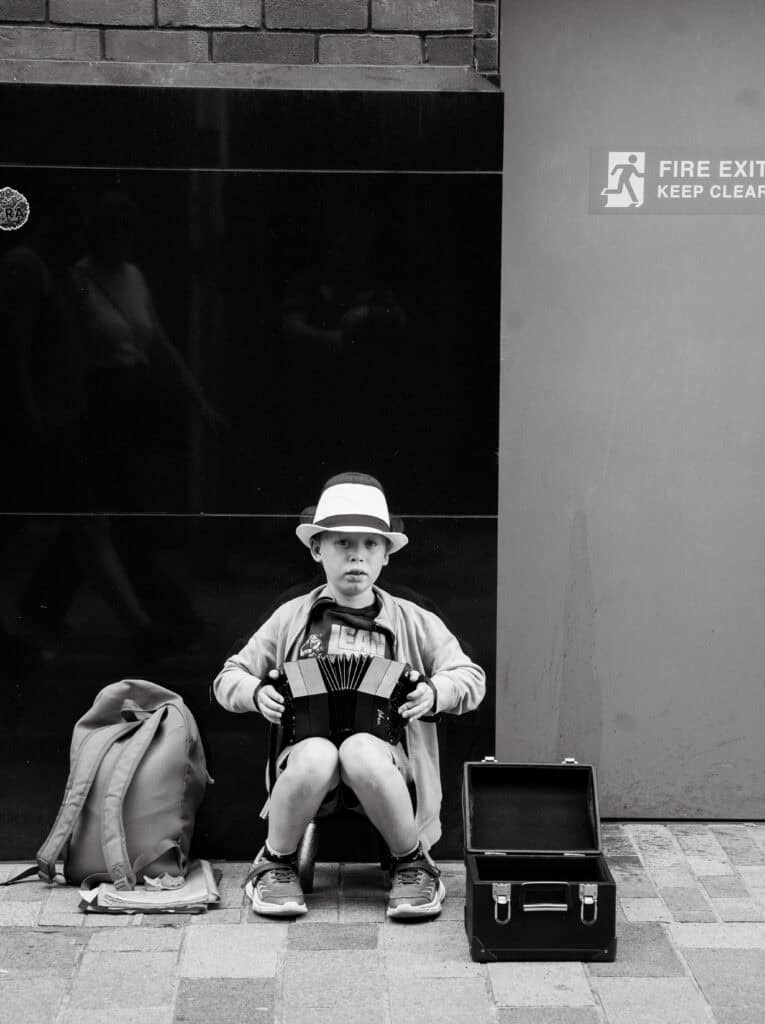
I was three years old when I was first brought to Belfast in 1999, the year following the signing of the Good Friday Agreement. One of my earliest memories is set around the Lisburn Road, when my mother would take time to prepare and remind me that while we were out of the car, my name would not be Seán, but John instead. This anglicisation is technically erroneous, contrary to popular belief, as John is in fact an English translation of Eoin. However, hostile elements of the so-called shared society in Belfast at that time would have been none the wiser.
Practices like changing your name, muting your first language, and not wearing certain clothes or colours to protect oneself in Belfast is nothing new to Gaels living in the city. While the peace agreement was signed nearly thirty years ago, Irish culture right up to recent times has been made to feel unwelcome. Road signage featuring translations as Gaeilge was only installed in Belfast for the first time in July of this year, the Glider bus ceases in announcing stops in Irish when it reaches the city centre, and sections of the press and political class in the six counties continue to keep Gaeilge and the Gaelic Games under deep suspicion of being tools for terrorism. The point being, while the bitterness has eased somewhat since the end of The Troubles, Irish culture in Belfast, particularly in the city centre, has not been welcomed, but merely tolerated at best. This is the context that made this year’s Fleadh Cheoil na hÉireann so special.
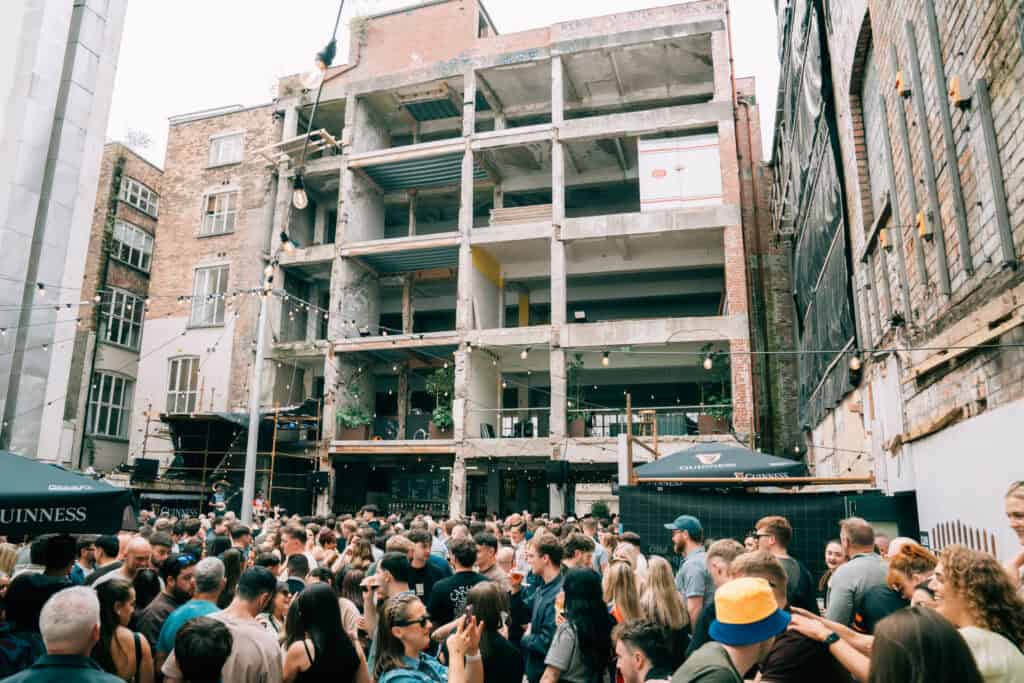
While activists in Republican strongholds in the west and north of the city have worked admirably to keep the language alive since as far back as partition, it was pubs like Kelly’s Cellars and Madden’s that ensured traditional Irish musicians could session safely throughout The Troubles, the latter of which still utilises the once-essential safety precaution of a buzzer to gain entry. It was both significant and heartwarming then, to see these pubs in particular packed to the rafters, with music and countless punters spilling in and out of them when Belfast got the Fleadh.
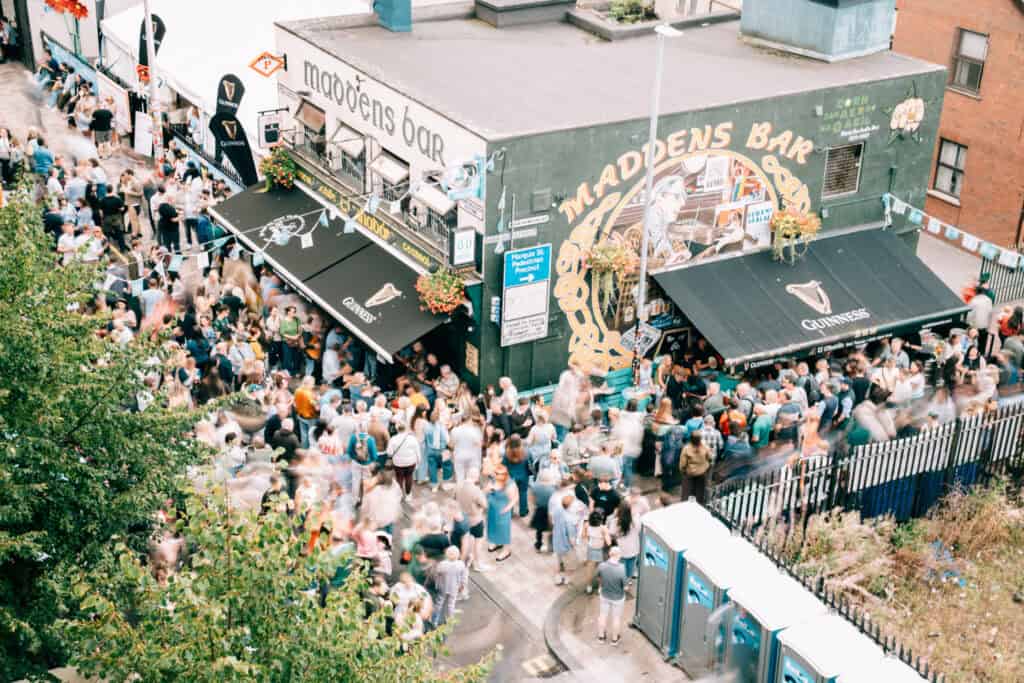
Of course, Kelly’s and Madden’s were far from the only beneficiaries. Virtually every bar, pub, and restaurant was rammed. Shops had queues out the door and food stall staff didn’t stop. Tens of thousands of people lined the streets each day, singing, playing, dancing, eating, drinking, and spending money.
“We took over the alleyway (where the shop is based) and made it more colourful and vibrant than ever,” Elijah Garrett, co-owner of Garretta Collective, a custom clothing brand and shop in Belfast City Centre told me. “Musicians pulled up to the shop and ran sessions outside. Our location is normally quiet with around a thousand people walking past every week, but with the Fleadh, this was every few hours. [It was] incredible for us!”
“Musicians pulled up to the shop and ran sessions outside. Our location is normally quiet with around a thousand people walking past every week, but with the Fleadh, this was every few hours. [It was] incredible for us!”
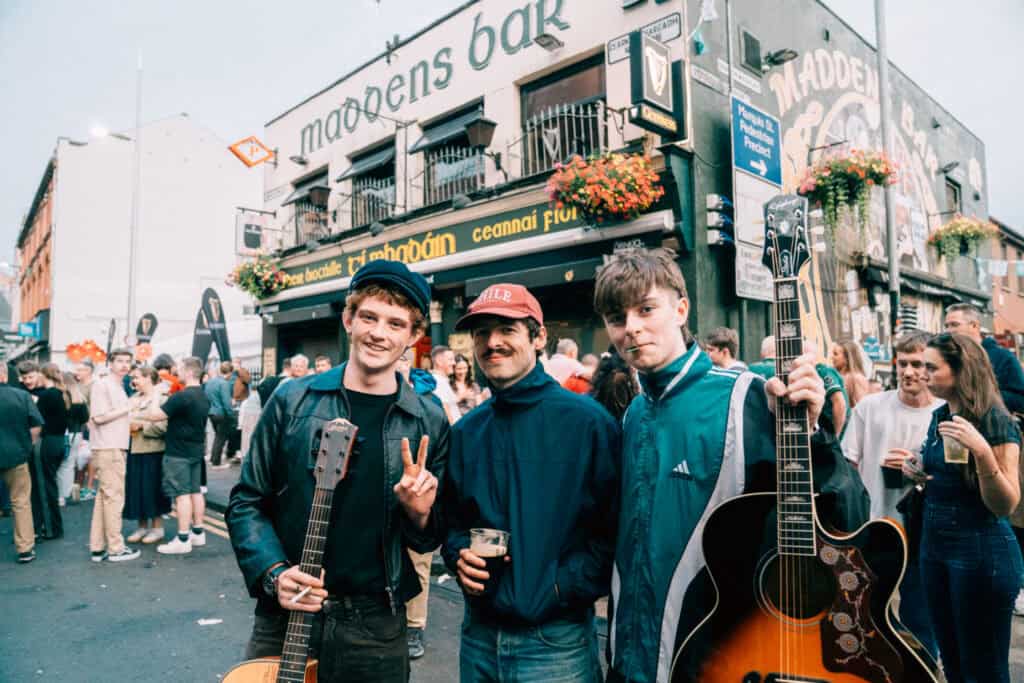
Figures published by Comhaltas show a total recorded footfall of 1,653,999 in Belfast City Centre during the week of the Fleadh, which, incredibly, more than doubles the initial 800,000 visitors anticipated. Compared to the same week in 2025, visitor levels were boosted by 89%. Just to emphasise the significance of these numbers, it is worth noting that the 800,000 prediction would have surpassed the 2025 Fleadh in Wexford, which brought 750,000 visitors. The numbers in Belfast were simply unprecedented, and they show not only a great success for the city, but for Fleadh Cheoil as well.
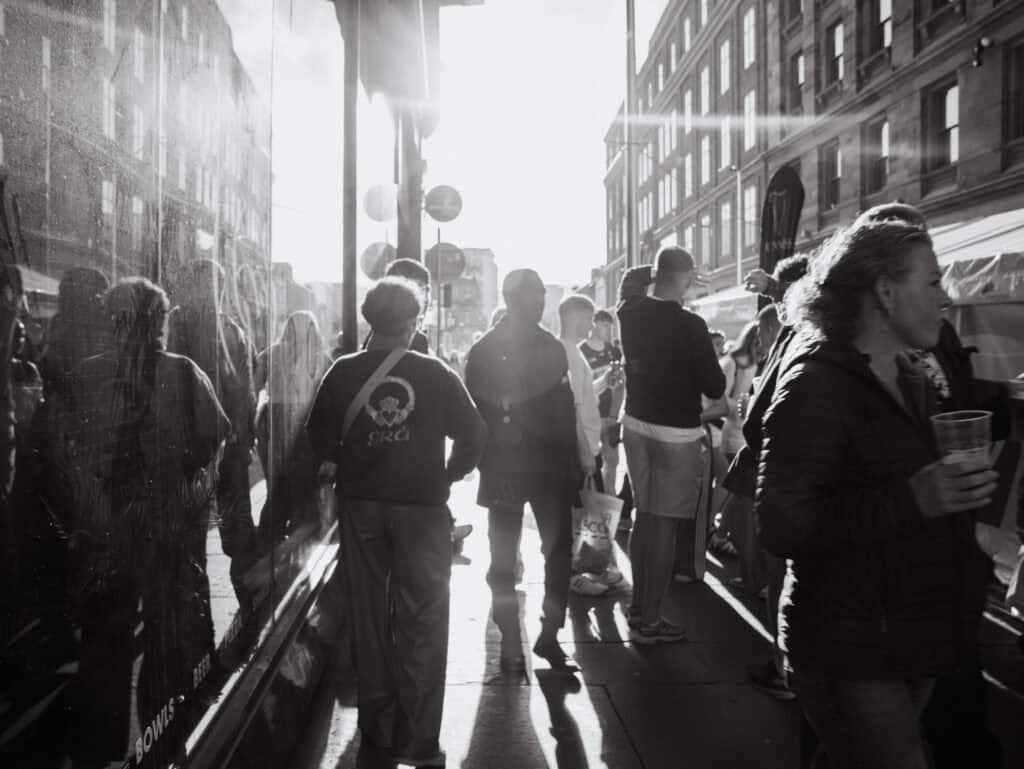
Bob McManus, who owns the Sunflower pub on Union Street, cleared around five hundred kegs over the week. “We have an insanely talented community of musicians and music organisations in Belfast and their contribution to businesses and the economy should be cherished”, he told me. “We should be platforming our local artists every day, not just for a week of the year. I hope local businesses recognise that and we all chip in to do our part to keep it going.”
“We should be platforming our local artists every day, not just for a week of the year.”
Bob makes a good point, the 2026 Fleadh shows the potential for Irish culture to support a struggling six county economy. The projected economic boost at the beginning of the festival was £53 million, a figure which was ultimately surpassed. By just how much we are yet to learn but based on the figures above, the final number could potentially be over £100 million. Compared to this, the festival itself only cost Belfast City Council between only £5-6 million and the Department for the Economy just £1 million.
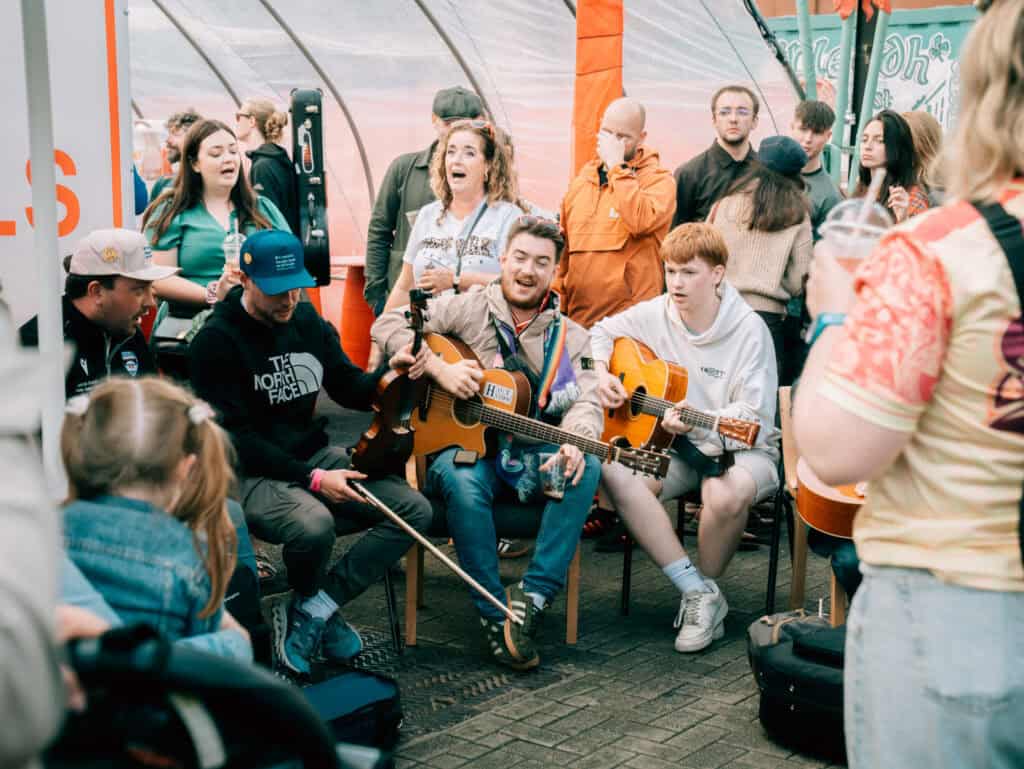
Between the financial impact and the cultural and political significance, on the week Belfast first got the Fleadh the joy was thick and palpable. There was a sense of beauty, and freedom, and meaning in the summer air. With the festival following a familiar period of riots, pogroms, and hate crimes, there was an overwhelming feeling that Belfast deserved the Fleadh after all it has suffered historically and continues to suffer today. A city held back for so long, through tragedy, violence, and oppression, had been set free (at least culturally), and is now flying forward, slingshotted into a future full of potential, optimism, and hope.