This Irish Artist Is Creating A Miniature World Of Abandoned Ireland
Nathan Wheeler has been using model making to portray the less picturesque elements of Ireland we may encounter every day. Through miniature dioramas, he connects audiences with architectural history and highlights decline in Ireland’s urban areas.
Q: Where did your love for dioramas come from?
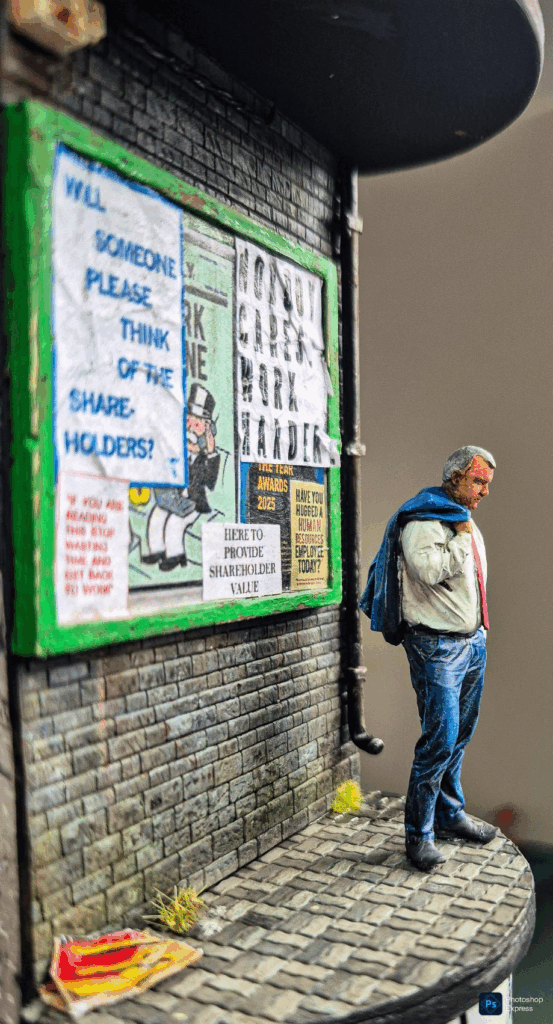
I’ve been fascinated by model making for as long as I can remember. At school, I joined a model-making club and quickly discovered that what really caught my imagination wasn’t cars or planes, but the buildings themselves. There was something about creating tiny versions of real structures that felt incredibly satisfying – it was like capturing the essence of a place in miniature. As I got older, life took over and I drifted away from it for a while. But in my late twenties, I picked it back up again and found the same spark was still there, if not stronger. Since then, it’s become much more than a hobby – it’s a way of connecting with architecture, history, and memory. Every diorama feels like both a creative challenge and a chance to tell a story through scale and detail.
Q: When did you decide to look at Dublin through a miniature lens?
My interest in Dublin’s buildings developed quite organically. I began by taking on commissions to recreate people’s homes, making small, intricate models that carried a lot of personal meaning for the owners. That work was enjoyable, but over time I found myself increasingly drawn to something less polished – the derelict and decaying buildings scattered through our cities. These are the places most people walk past without a second glance, yet they often hold complex histories: legal wrangles, stalled development projects, or simply years of neglect by landlords or councils. What started with a single building soon grew into five, then twenty, each one telling a very different story. Dublin, along with cities like Cork and Drogheda, is full of such forgotten spaces. By recreating them in miniature, I feel I’m documenting part of our urban story, while also encouraging people to reflect on why these once-vital buildings are left behind.
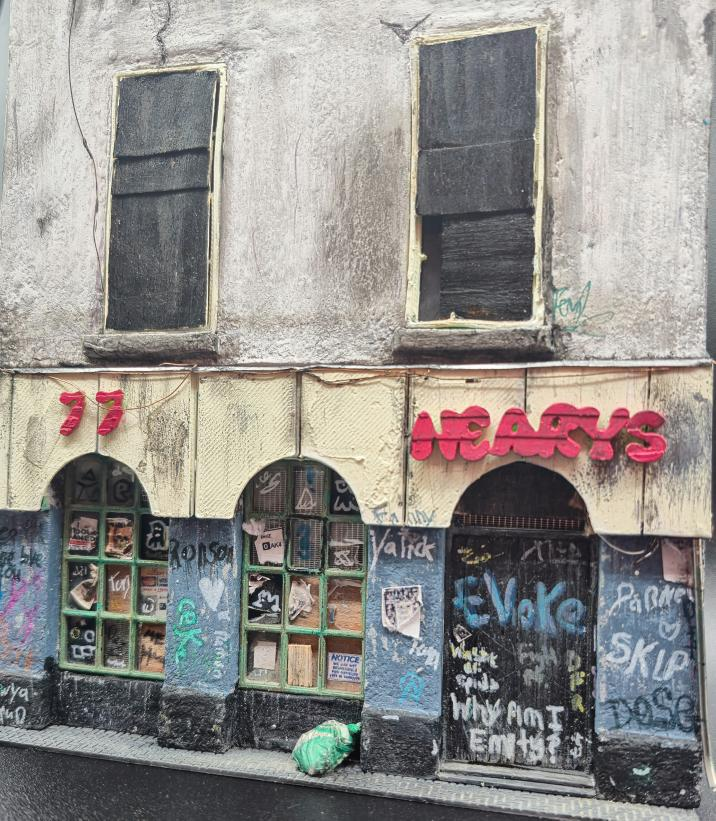
Some of Nathan’s most recognisable works include sites such as Neary’s pub, a structure that has been officially vacant for over two decades and lay home to anarchist art collectives.
Q: What does the art form of diorama give the audience compared to other art forms?
Miniature work is a very distinctive art form because it brings together elements of painting, sculpture, and even architecture, but in a way that plays with perspective and perception. A diorama isn’t just about looking at an object; it’s about being drawn into a small world that feels almost real. I love the moment when someone glances at one of my pieces and, just for a second, mistakes it for a photograph or a full-sized building. That instant of deception is where the magic lies – the eye has been tricked, and the mind has to pause and reassess what it’s seeing. It’s that interplay between reality and illusion that sets dioramas apart. The level of detail needed to achieve that effect is immense, but it’s also what makes the work so rewarding. Few other art forms can replicate that same blend of intimacy, surprise, and immersion.
Q: What are some of your favourite pieces you’ve created?
In the past, I put a lot of time into large-scale replicas of derelict buildings – even whole streets at one point. Those pieces were special because they captured something on the brink of vanishing, and the scale gave me room to really dive into the detail. More recently though, my focus has shifted towards much smaller, more intimate work. I’ve been creating pieces inside beer cans and cigarette packets, which has opened up a completely different way of telling stories. There’s something powerful about taking everyday objects – things we see, hold, and throw away without thinking – and transforming them into tiny containers for memory, emotion, or social commentary. These miniature scenes feel more immediate and relatable, because they’re literally built into the stuff of daily life. For me, those pieces strike a balance between playfulness and poignancy, and that makes them some of my favourites so far.
Q: Why did you decide to hone your work towards the grittier side of Ireland?
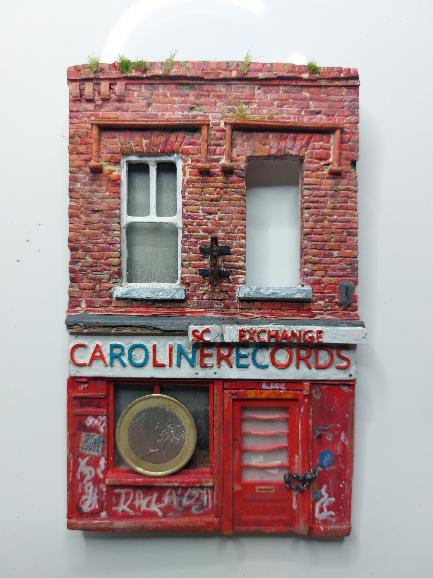
I’ve always been drawn to desolation and decay, both visually and intellectually. There’s something haunting yet beautiful about watching a building slowly collapse into itself, almost like it’s slipping into its own grave and being reclaimed by nature. The cracked plaster, broken windows, damp creeping through the walls, moss taking over – all of it gives the structure a strange kind of second life. It stops being just a derelict space and becomes a story in itself, layered with history and neglect. For me, this side of Ireland feels worth capturing because it’s so easy to overlook in our rush to modernise. On a practical level, it also pushes me further as an artist. Anyone can build a clean architectural model with practice, but recreating decay convincingly requires patience, subtlety, and a real eye for detail. That challenge is what keeps me hooked, and what makes the work rewarding.
Q: Why is your artform such a good vessel for activism?
The housing crisis is so complex and multi-layered that you could spend hours talking about just one aspect of it – from derelict properties to rising rents – and still barely scratch the surface. That scale often makes it feel overwhelming or abstract, especially for people who aren’t directly caught up in it. What I try to do with my work is shrink that enormity down into something tangible. By creating miniatures of derelict houses or spaces tied to homelessness, I’m turning a vast, almost impossible issue into something you can literally hold in your hand. That intimacy changes the conversation – it’s no longer just statistics or headlines, but a visual and emotional reminder of what’s happening on our streets. Dioramas bridge the gap between art and social commentary because they force you to pause, look closer, and hopefully think differently about problems that affect us all.