60 Design Projects to Celebrate 60 Years of Irish Design

Photography: Tim Hursley for Grafton Architects
Words: Aoife Murray
Sixty years ago, Ireland’s rich heritage of craft and cottage industries was only just beginning to adapt to a modern world, and the Kilkenny Design Workshops were instrumental in encouraging and supporting a young generation of creatives making that happen.
This year, inspired by that pioneering work, DCCI Irish Design Week is celebrating the many ways that design connects us. Guided by the theme, ‘The ties that tie, and the links that link’, Irish Design Week is bringing together this island’s designers and makers to celebrate collaboration, share ideas, and foster inter-disciplinary and global networks of design. To mark this occasion, we’ve curated sixty projects across a wide gamut of disciplines that illustrate the breadth of Irish design.
Ninety-Nine Words for Rain
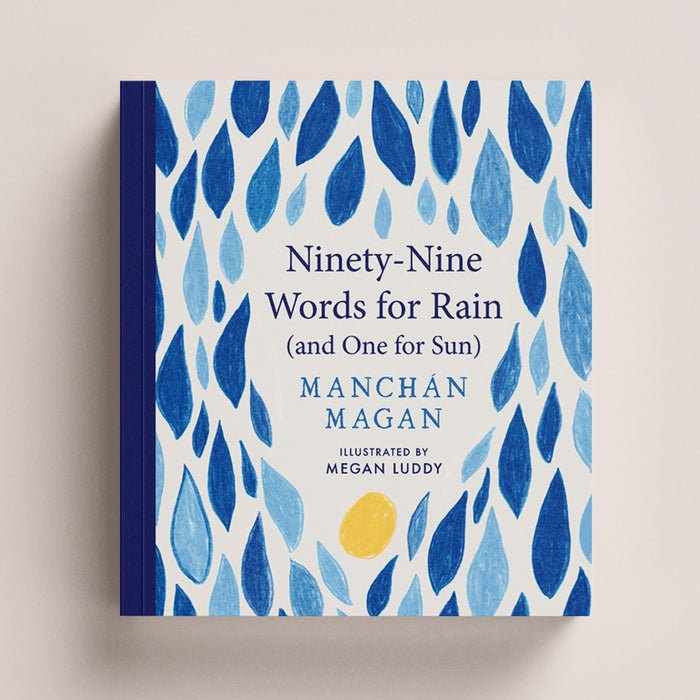
By: Manchán Mangan
Illustrated By: Megan Luddy (published by Gill Books)
How do you draw ninety-nine different words for rain? Megan Luddy’s folk-inspired illustrations harmonise perfectly with the language of late Manchán Mangan’s wonderful book, which collects the many ways we talk and think about Ireland’s wet weather. Luddy’s signature soft-edged style brings the book to life in shades of blue.
In The City
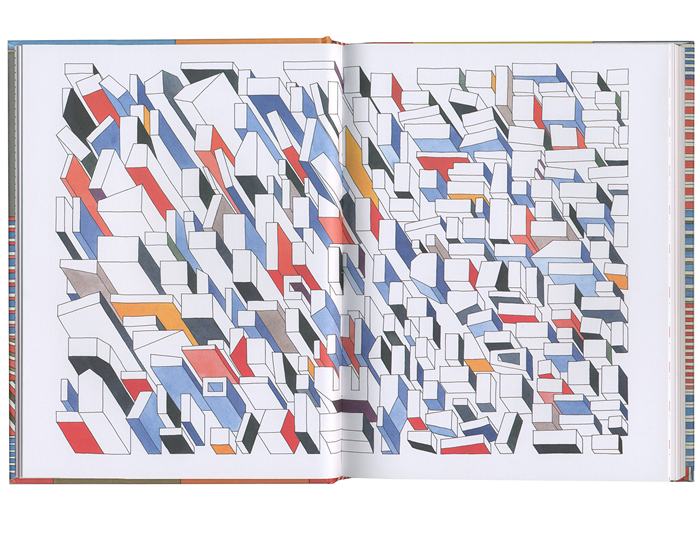
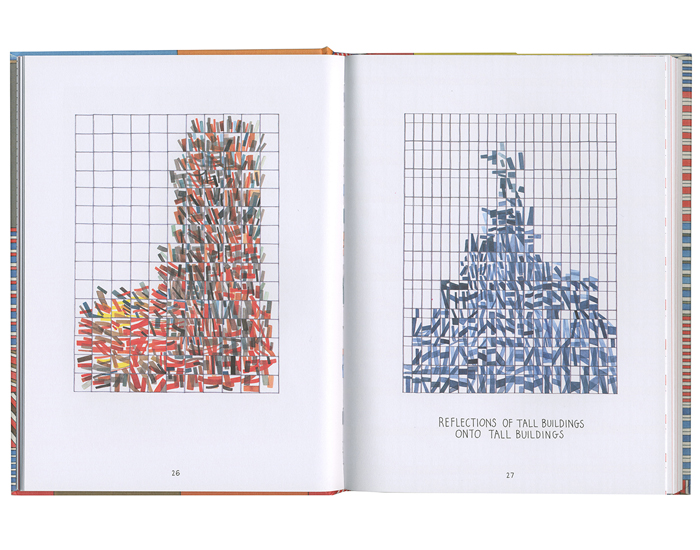
By: Nigel Peake
Nigel Peake’s book tries to make sense of the sights and sounds of a city, in contrast to the Irish countryside he calls home. Bridging the architectural and natural worlds through intricate, geometric illustrations, Peake’s precise marks record the minute details and patterns of cities like Antwerp and Istanbul.
The Witch of Kilkenny Zine
By: Aoife Cawley
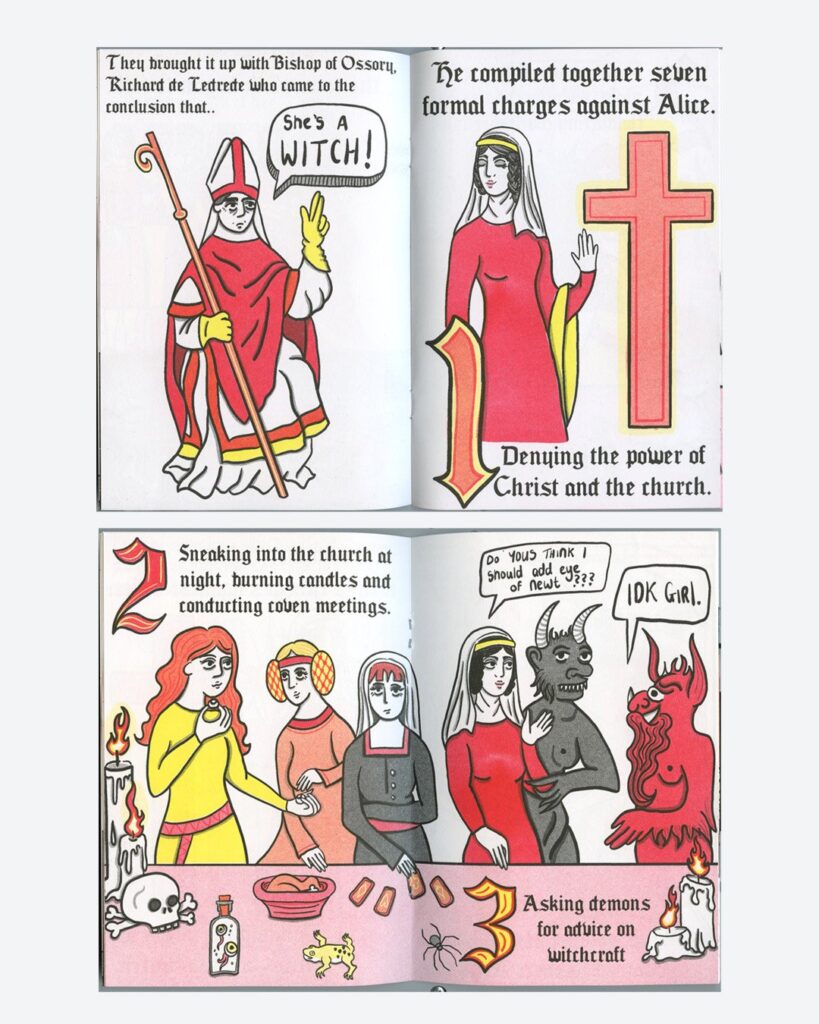
Printmaker Aoife Cawley works across print and textiles, reviving traditional medieval illustration with a contemporary sensibility. Last year, she designed, wrote and published a zine telling the story of Alice Kyteler – the woman at the centre of Ireland’s first witch trail. It was beautifully risograph-printed by Dublin’s Way Bad Press.
The Story of Tayto by Bobby Aherne
Designed By: Sarah McCoy (published by Lilliput Press)
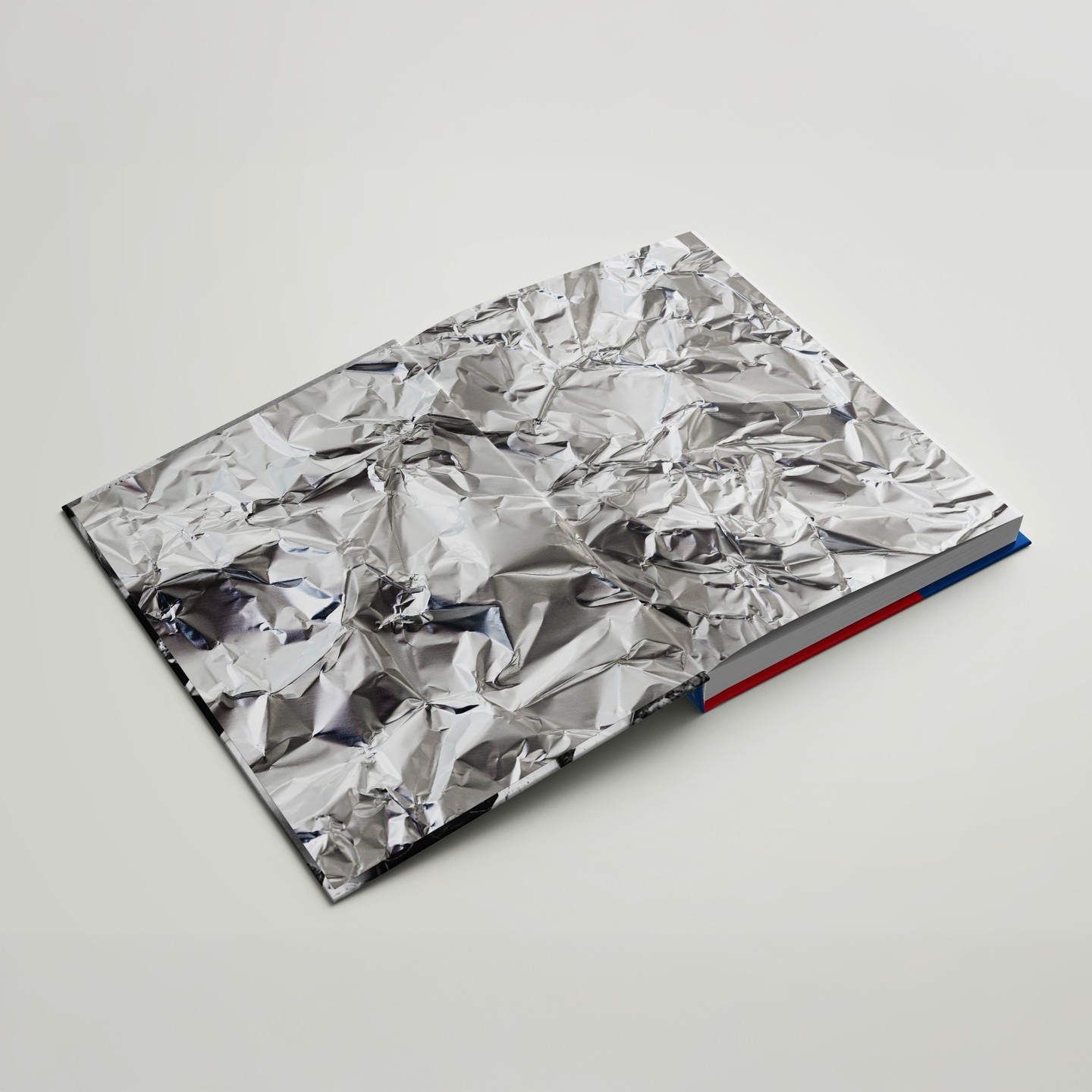
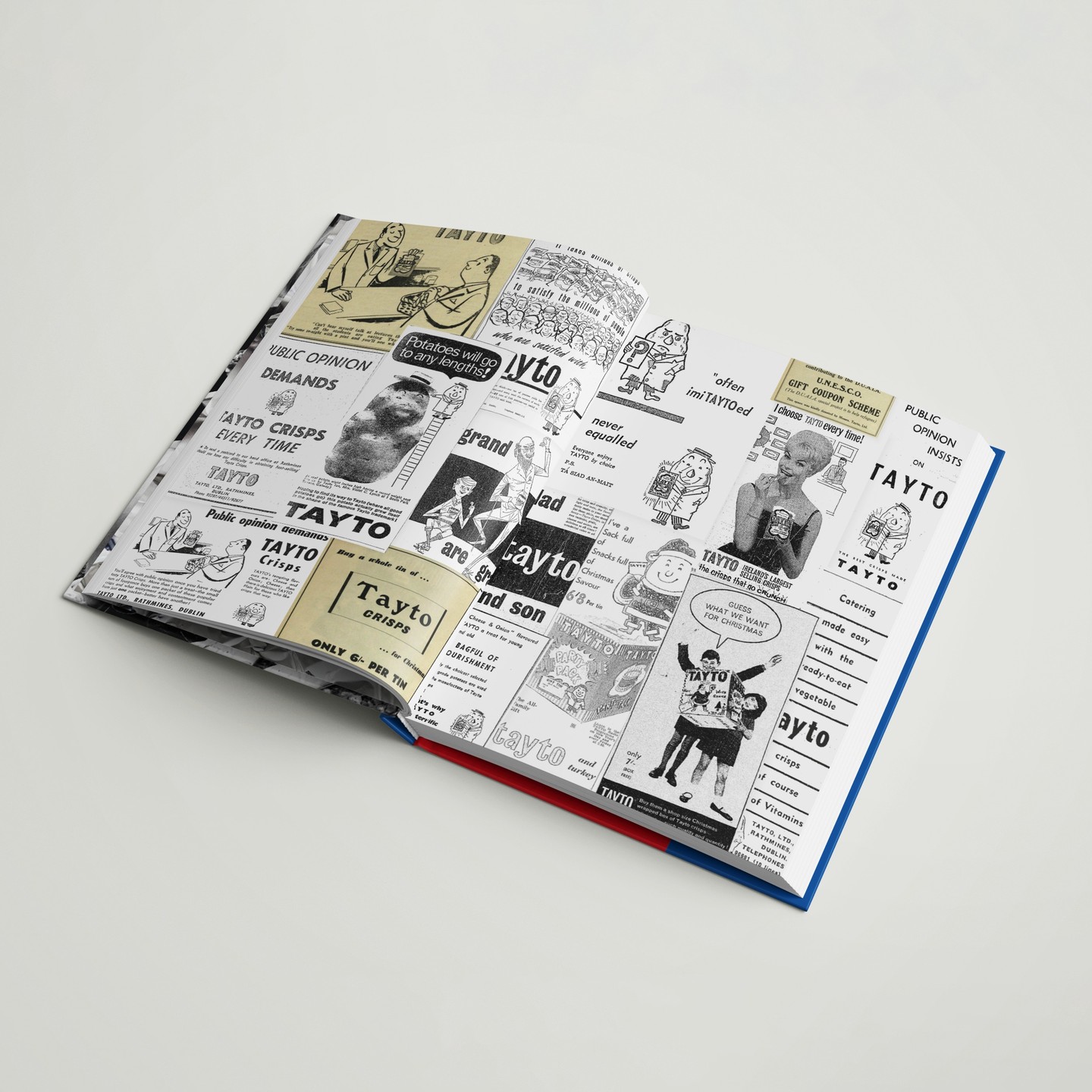
The story of Ireland’s crisp dynasty is told through a tasty mix of writing and archival imagery. Designer Sarah McCoy took cues from the iconic crisp packets themselves – the book’s inside cover mimics a crumpled foil lining, while page numbers are set against mini packets in the unmistakable yellow of northern Tayto.
Shh! We Have a Plan
By: Chris Haughton (published by Walker Books)
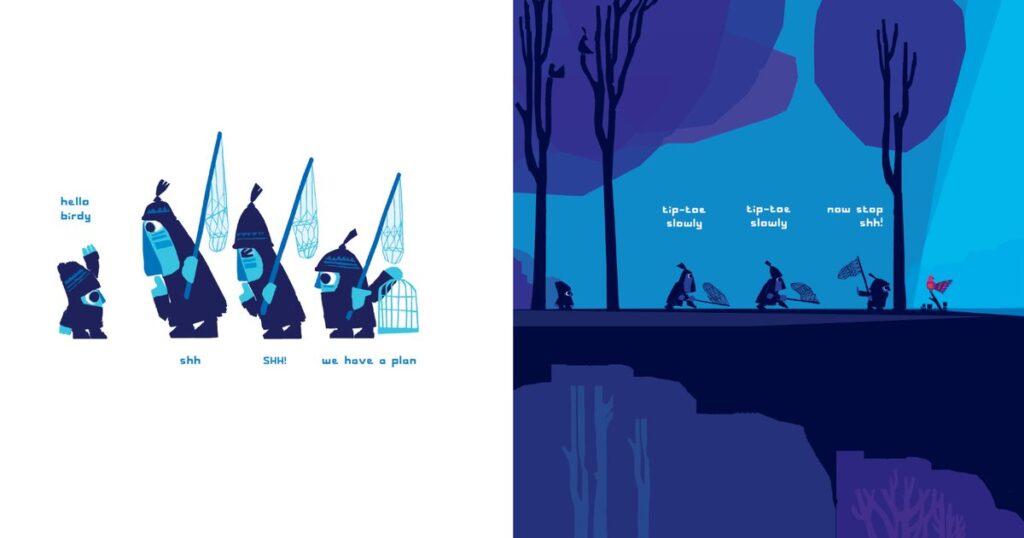
Author and illustrator Chris Haughton set out to tell a story that transcends spoken or written language. His award-winning Shh! We Have a Plan depicts hapless hunters in pursuit of a bird, printed primarily in atmospheric shades of blue. Its simplified, silhouette-heavy design was developed through paper cut collage.
National Gallery of Ireland Notebooks
By: Duffy Bookbinders
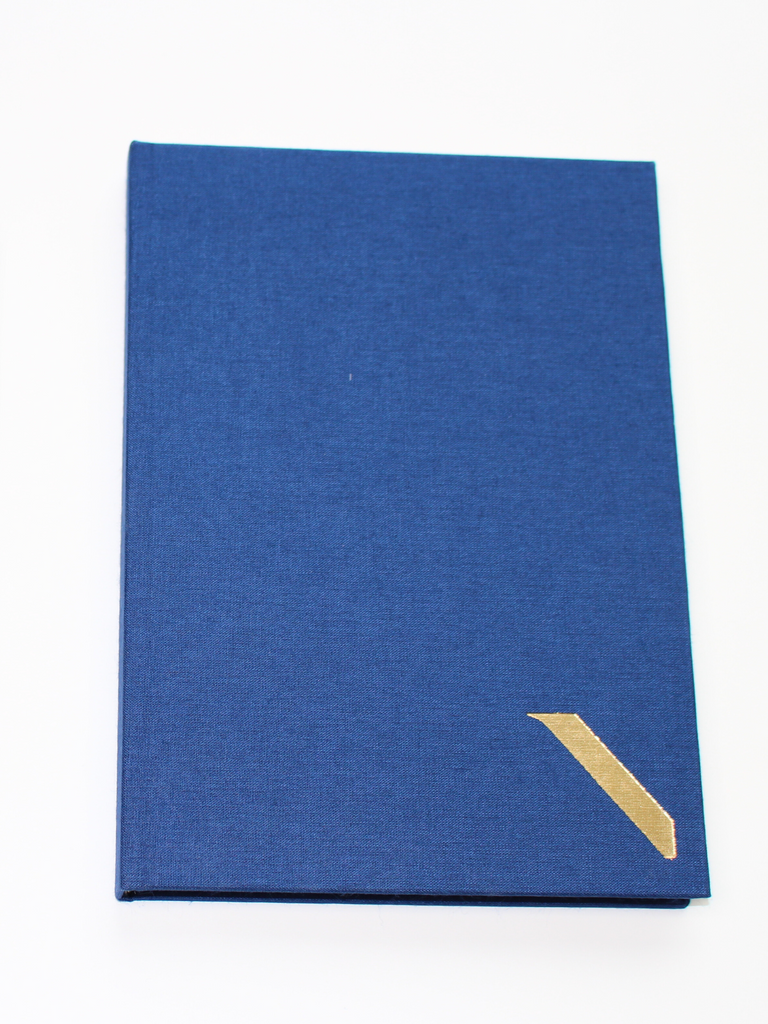
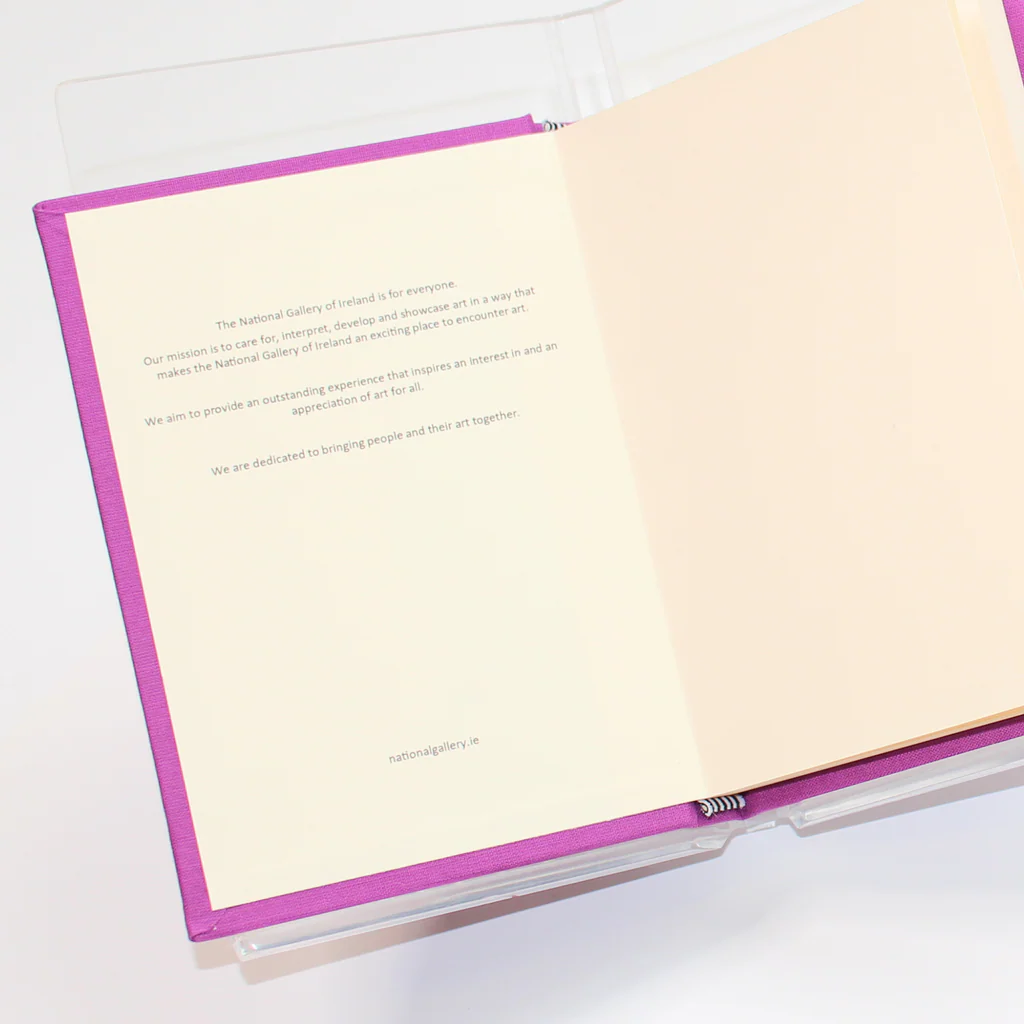
Ireland’s longest-running bindery is led by fourth-generation bookbinders, who carry on the traditional craft with precision and pride. They recently collaborated with the National Gallery of Ireland to create custom linen-covered notebooks, stamped with the gallery’s minimalist gold-foiled logo; a testament to their shared commitment to Irish craft and design.
Ireland, Design and Visual Culture
Designed by: David Smith and Holly Brennan
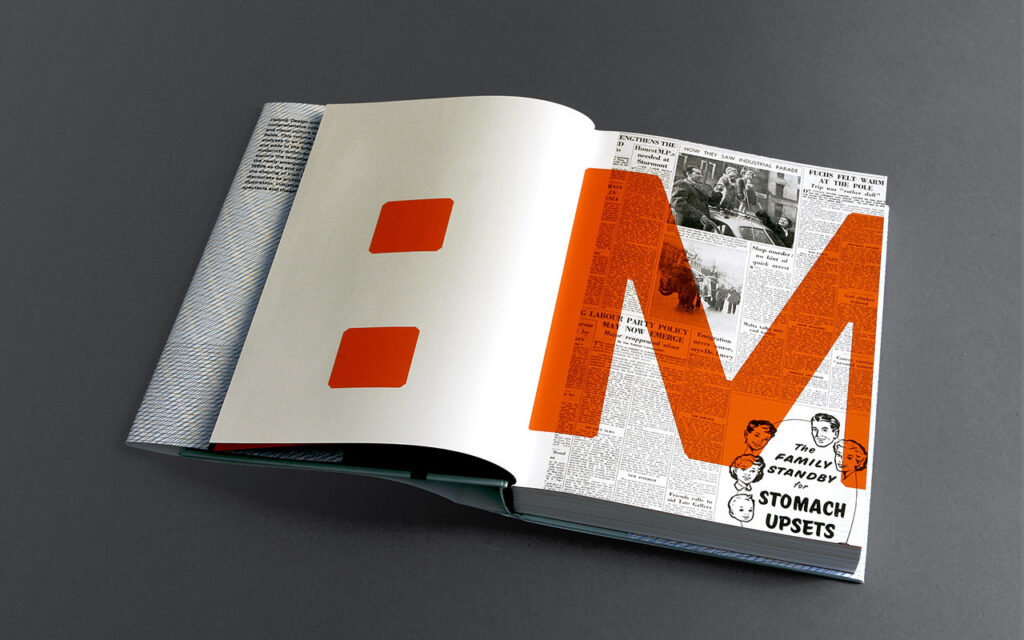
Form and content are perfectly balanced in this comprehensive essay collection on Irish design last century, boldly designed by David Smith and Holly Brennan. The layering of a bright orange colour and archival imagery balances the scholarly content of the volume, while the typesetting is lively but still clear.
Irelandopedia
By: Kathi Burke
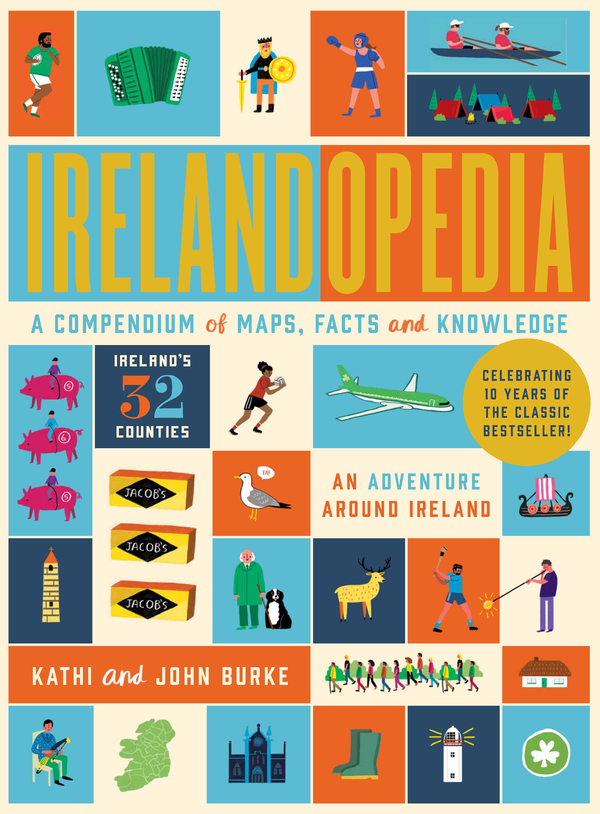
This lively cultural compendium is celebrating its 10th anniversary this year with an updated edition. Designed by Kathi Burke, aka Fatti Burke, and written by her father John, each detailed map illustrates the weird and wonderful culture to be found in the 32 counties.
The President’s Dog
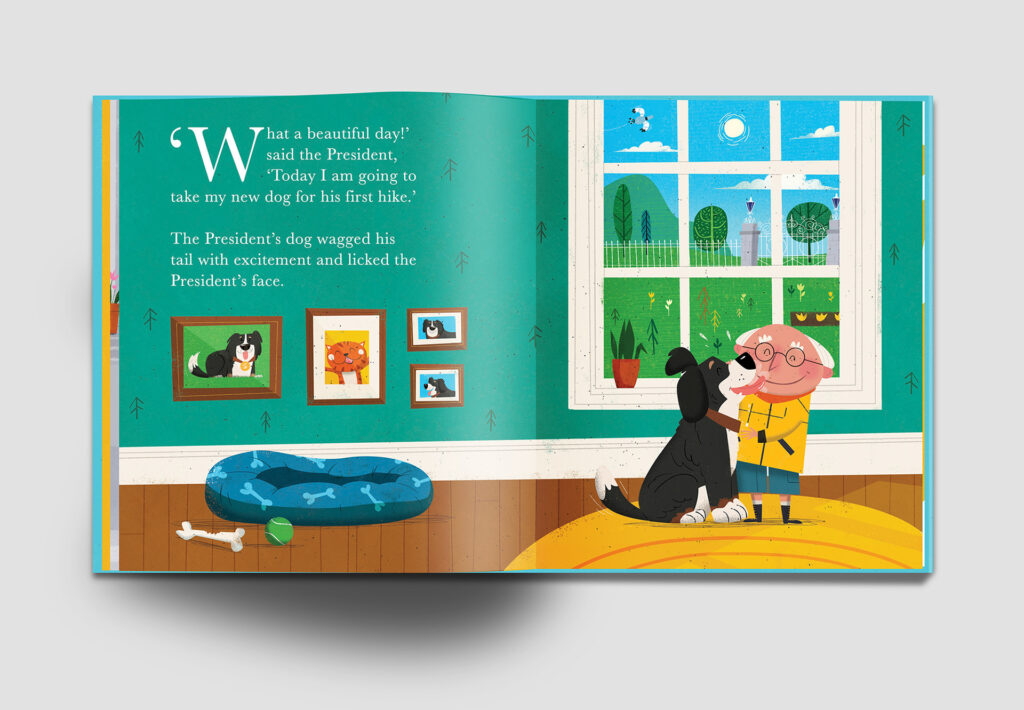
By: Peter Donnolly
Michael D Higgins may have handed over the title, but he’ll always be president in this cute children’s book. Written and illustrated by Peter Donnolly, who also designed Keogh’s crisp packets, it follows the (former) president and his Bernese Mountain dog on a hike through a forest drawn in a folk-inspired style.
Sea Tamagotchi
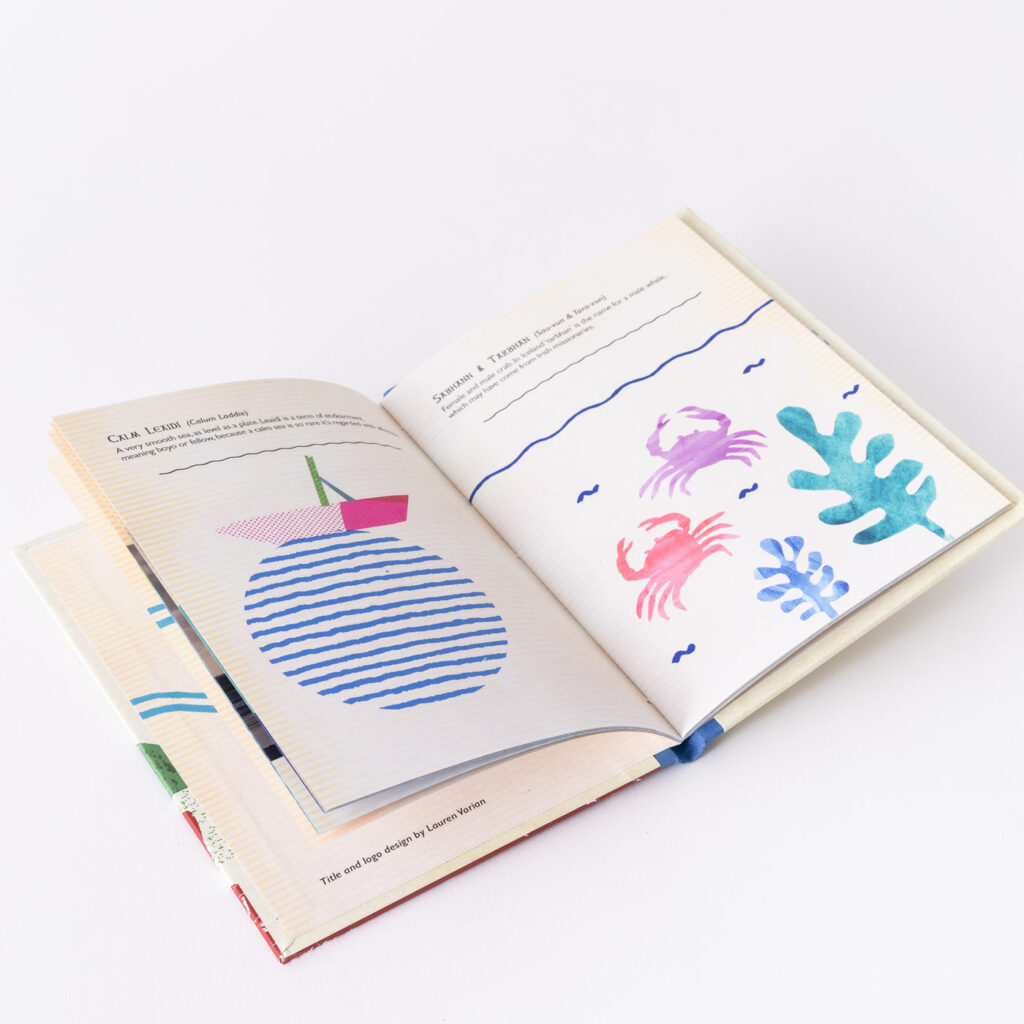
By: Antic-Ham and Red Fox Press
Achill Island-based Red Fox Press designed and hand-bound Manchán Mangan’s Sea Tamagotchi, a fitting collaboration for a book inspired by the coasts of the northwest. Filled with drawings, collages and photographs by Antic-Ham, the artist name of Hyemee Kim, who is one half of the duo behind Red Fox.
Memento Civitatem
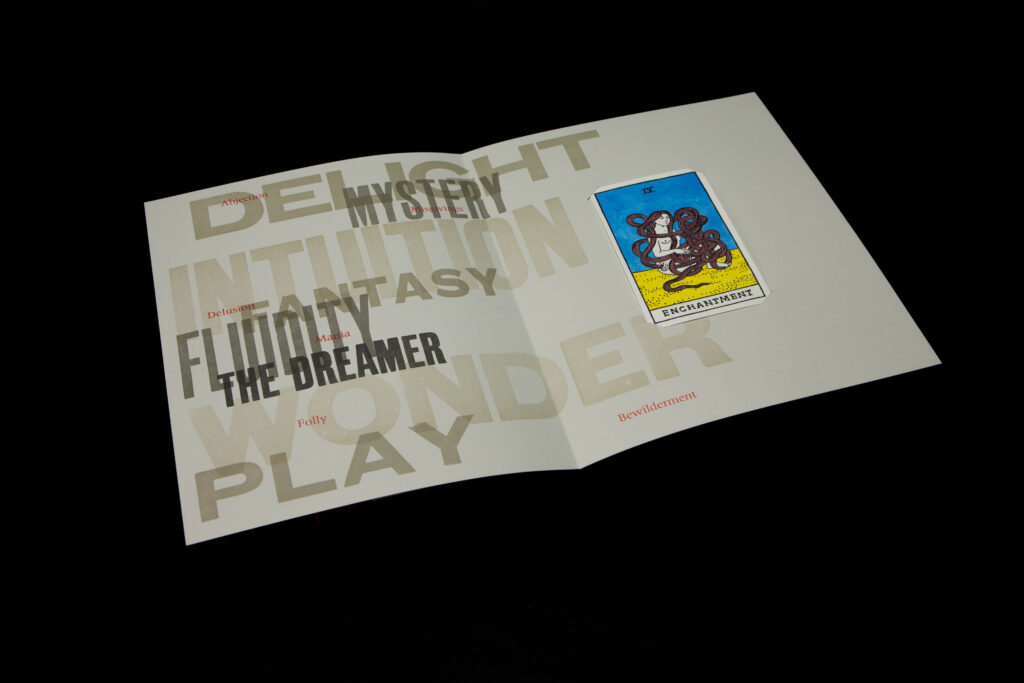
By: The Salvage Press and Alice Maher
This conceptual and craft-driven artists’ book was commissioned by the National Gallery for 2022, exploring the important connections between art and citizenship. Responding to six artists who lived through Ireland’s Decade of Centenaries, the unconventional book is presented as a sheaf of typographic pamphlets in a red cloth-covered box, with tarot-inspired visuals throughout.
The Abbey Theatre Logo

By: Steve Doogan
Re-designing the logo of such a national cultural institution demands collaboration across history, evolving rather than erasing the designs of 120 years ago. Steve Doogan’s illustration, debuted in 2024, honours the original image by Elinor Mary Monsell as a clear-eyed Queen Meadbh strides into the future, emerging from the ‘A’ initial.
Earth Prize AVA Defender
By: Studio AVA x The Earth Prize
This Wicklow-based studio converts classic cars like the Land Rover Defender into powerful fully-electric vehicles. Last year, founder of the Earth Prize Peter McGarry challenged them to redesign a Defender to make it more sustainable than ever. The redesign minimised waste and carbon emissions, without sacrificing performance or aesthetics.
Guinness Nitrosurge
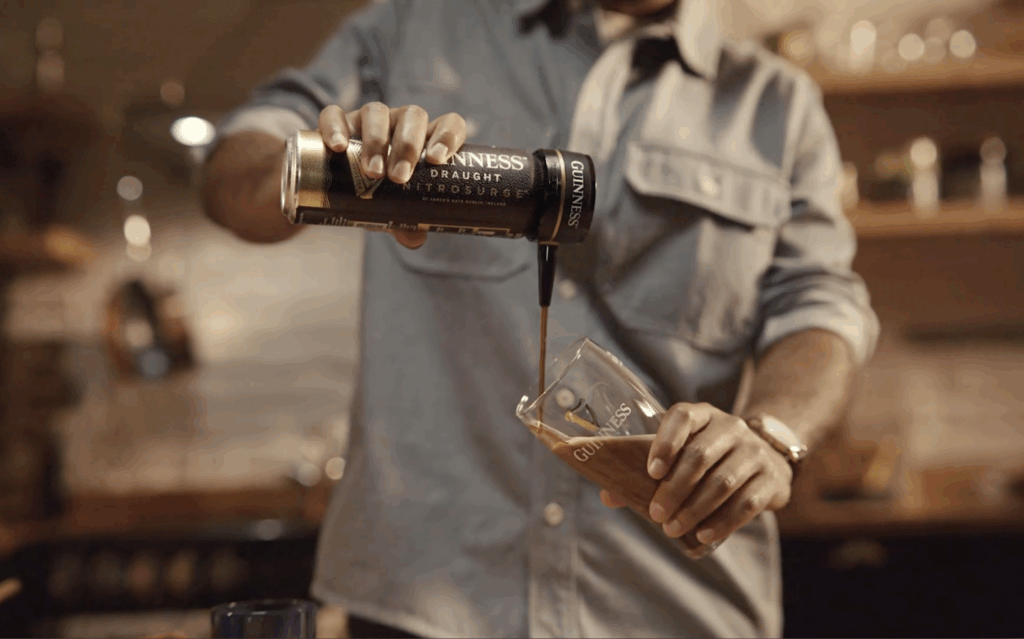
By: Dolmen
A particularly fine example of award-winning Irish product design, the Guinness Nitrosurge elevated home-poured pints. Dolmen developed an ergonomic design based on ultrasonic technology that recreates the nitrogen bubble-forming effect of a proper pub tap, but in hand-held and user-friendly format.
Bambú Hurley
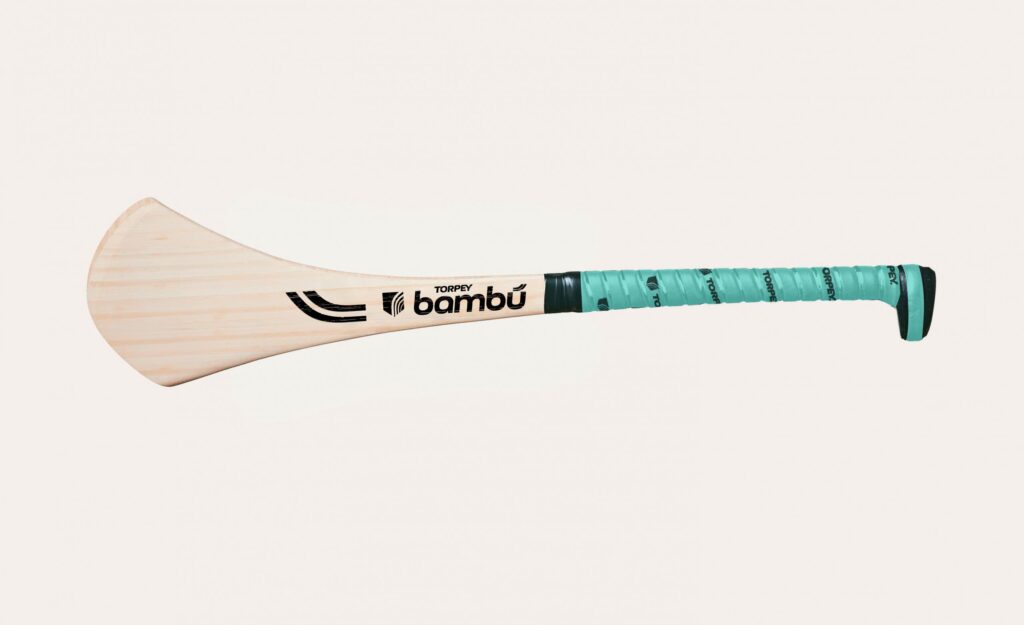
By: Torpey
The Torpey family business has been making hurleys, or hurls, for decades, honing an expertly balanced and weighted design. The Bambú is a new-generation iteration made from bamboo rather than traditional ash, which is in short supply. Introduced in 2020, the Bambú offers flexibility, durability, and sustainability.
Ponc Modular Shelving
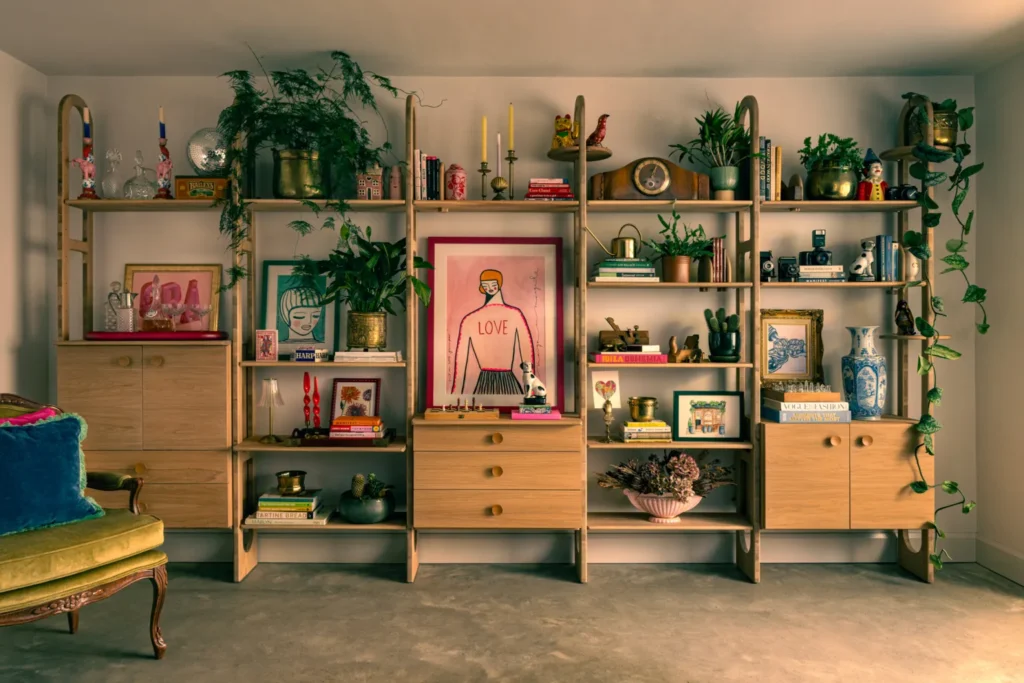
By: Knut Klimmek and Brian Tyrrell
The Ponc modular shelving unit is designed by collaborative duo Knut Klimmek and Brian Tyrrell, two seasoned designers and craftsmen who want to bolster furniture production in Ireland. Ponc is designed for customisation, its gently curved details and light finish able to adapt to any space, taste or need.
Logitech MX Vertical Mouse
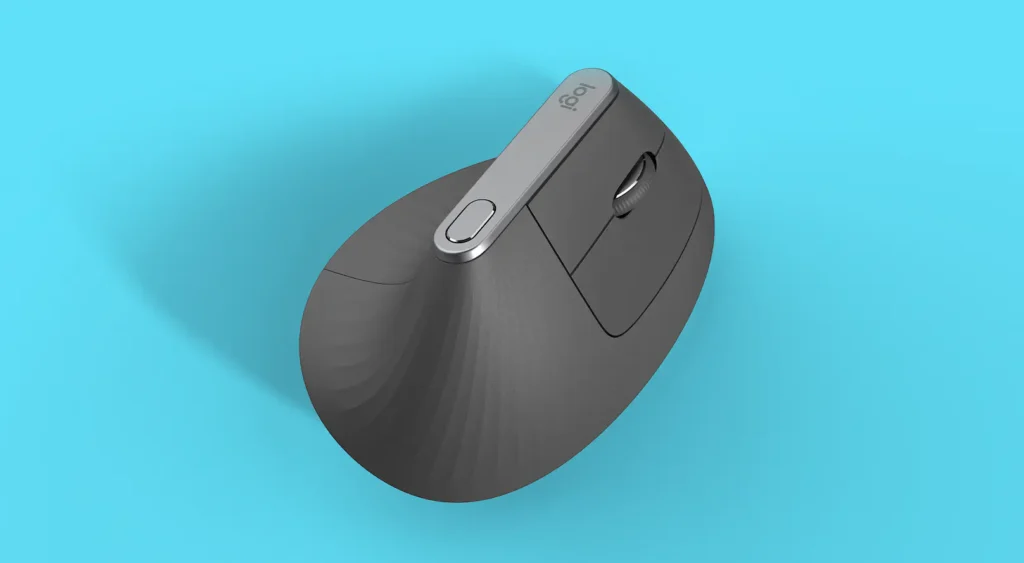
By: PA Consulting (Design Partners joined in 2022)
Developed by Bray-based firm PA Consulting, Logitech’s ergonomic computer mouse is optimised for user comfort. The vertical design minimises physical strain as it puts your wrist in a more natural position, while its sloping shape took inspiration from art and sculpture – designing an everyday tool that looks and feels good.
ANAM Stick Chair & Tablín Stool
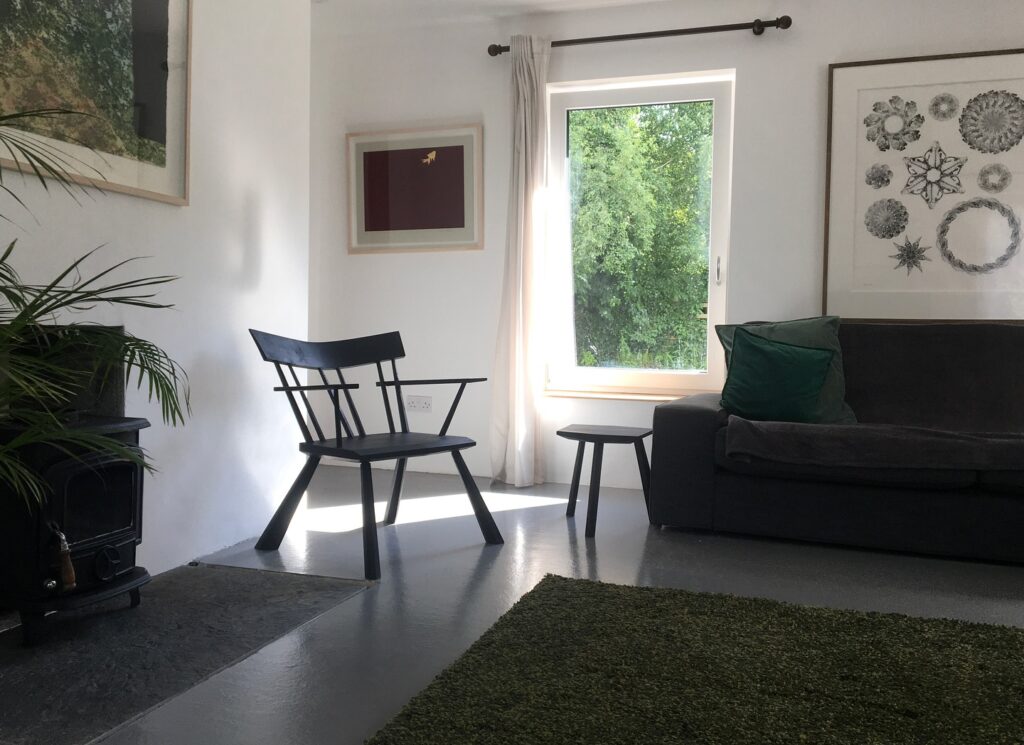
By: Peter Sheehan and Michael Murphy
Hand-made in collaboration with Wicklow woodturner Michael Murphy, designer Peter Sheehan’s vernacular furniture is beautifully simple. The Stick Chair and matching Tablín stool/table are designed to be sparse and steady, inspired by traditional Irish domestic design and made using locally-available wood.
BIO-Foam Wetsuit
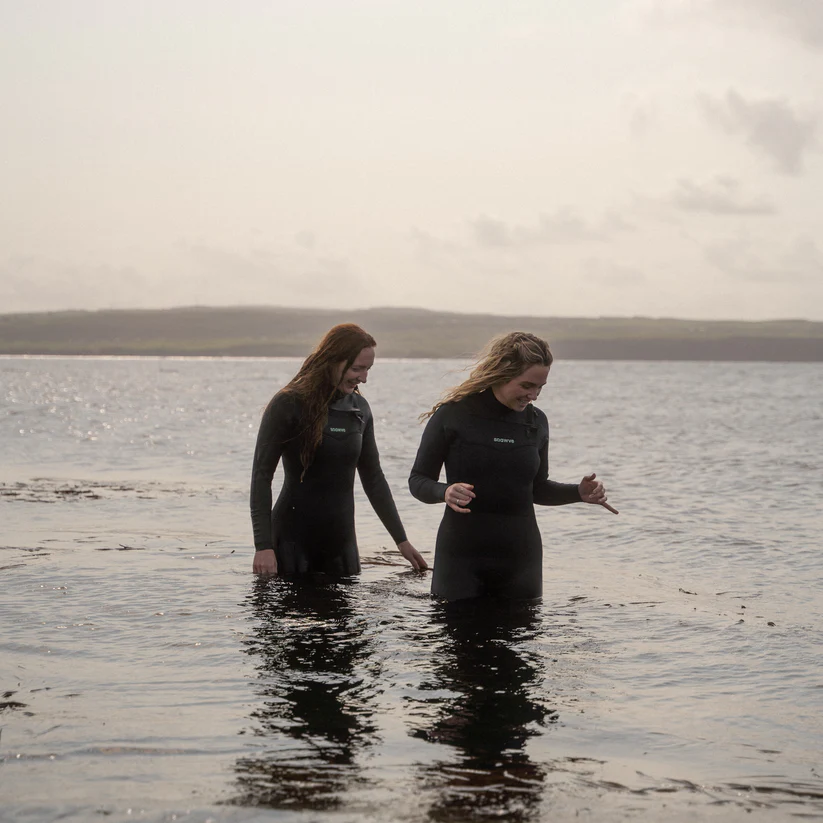
By: Snawve
This innovative Irish wetsuit brand grew out of a surfer’s desire for a more natural alternative to petroleum-based neoprene. Launched in 2023, Snawve wetsuits are made from a blend of oyster shell, sugar cane, rapeseed oil and FSC-certified natural rubber, and come in two different thicknesses to keep the cold at bay.
Enignum Furniture Series
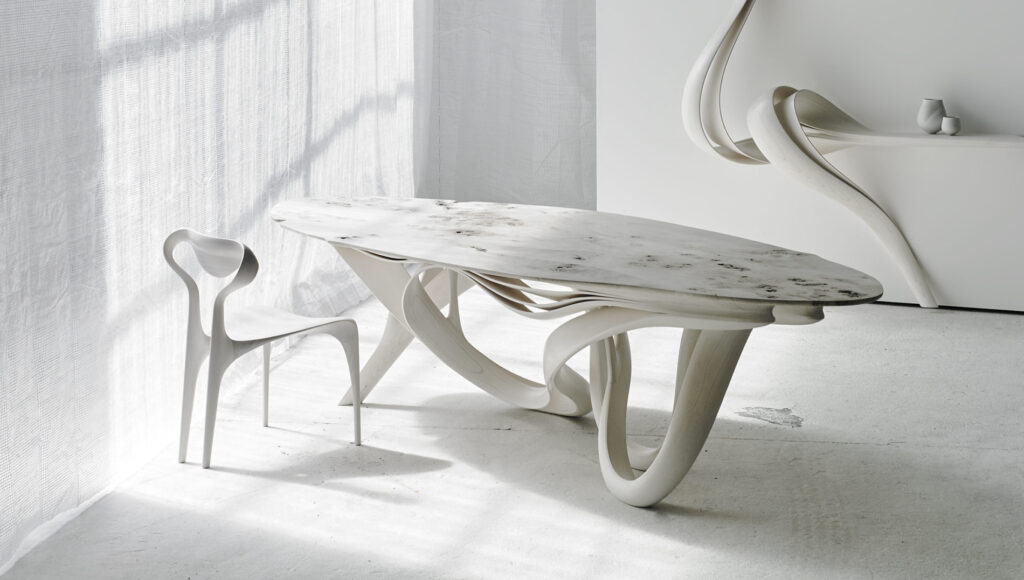
By: Joseph Walsh
Cork-based designer Joseph Walsh is a master of coiling, sculptural furniture influenced by natural growth patterns. His striking Enignum series is defined by curving forms with an innate sense of movement. The unique ‘Enignum X’ dining table sold for £316,000 at Sotheby’s auctioneers in 2018, almost triple its highest estimate.
ImPress Blood Collection Device
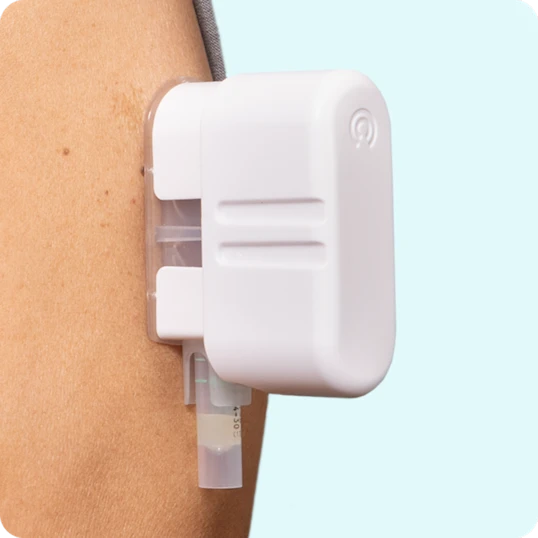
By: LetsGetChecked
Medical devices aren’t always what comes to mind when thinking about design, but Irish-founded company LetsGetChecked developed a design that offers an innovative alternative to traditional finger-prick testing. The result is an approachable blood-sampling device that is easy to use and relatively unobtrusive.
Modula

By: Boxclever
Industrial design agency Boxclever recently won an IDI award thanks to their streamlined modular wiring connector – not the most glamorous of design projects, but one that can have a tangible impact on the construction industry. Modula is intended to simplify electrical system installation through a simple, durable and highly adaptable design.
STATSports APEX 2.0

By: BIGsmall
The Republic of Ireland football team has been performing incredibly lately, and one of the IFA’s official partners is the sports performance analysis brand, STATSports. Dublin and Belfast-based studio BIGsmall helped design their Apex 2.0 kit, including the improved player pods worn by players to gather accurate data.
Stained Glass Lamp
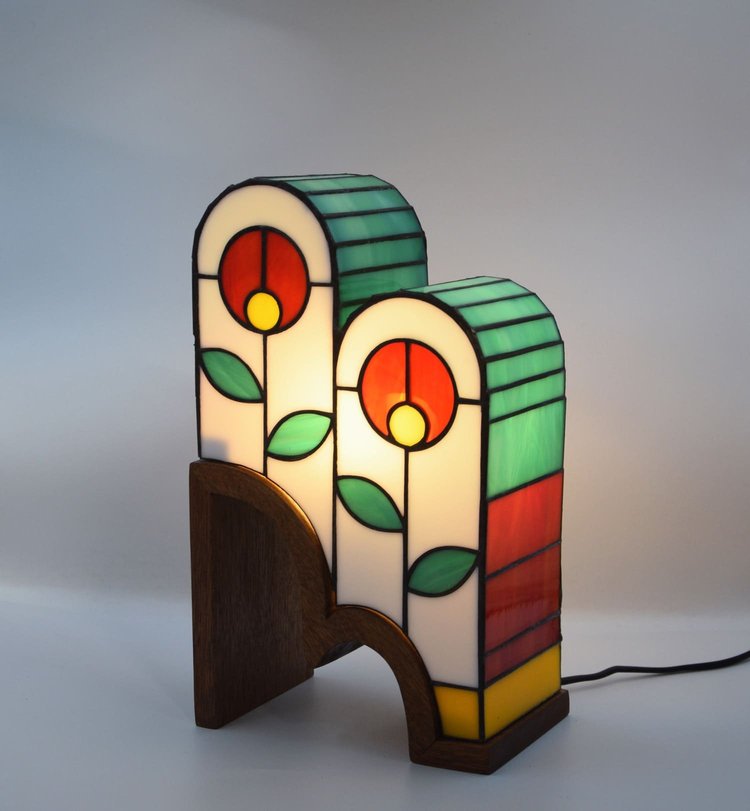
By: Eirlume Studio
Designed and crafted by husband and wife duo, Charlie and Vanessa, the Eirlume stained glass lamps aren’t just beautiful lighting fixtures – they represent a melding of Irish and French traditions dating back to the Middle Ages. Each lamp is made using glass from Cavan and a mix of reclaimed Irish and ‘exotic’ wood.
Woven Raffia Dress
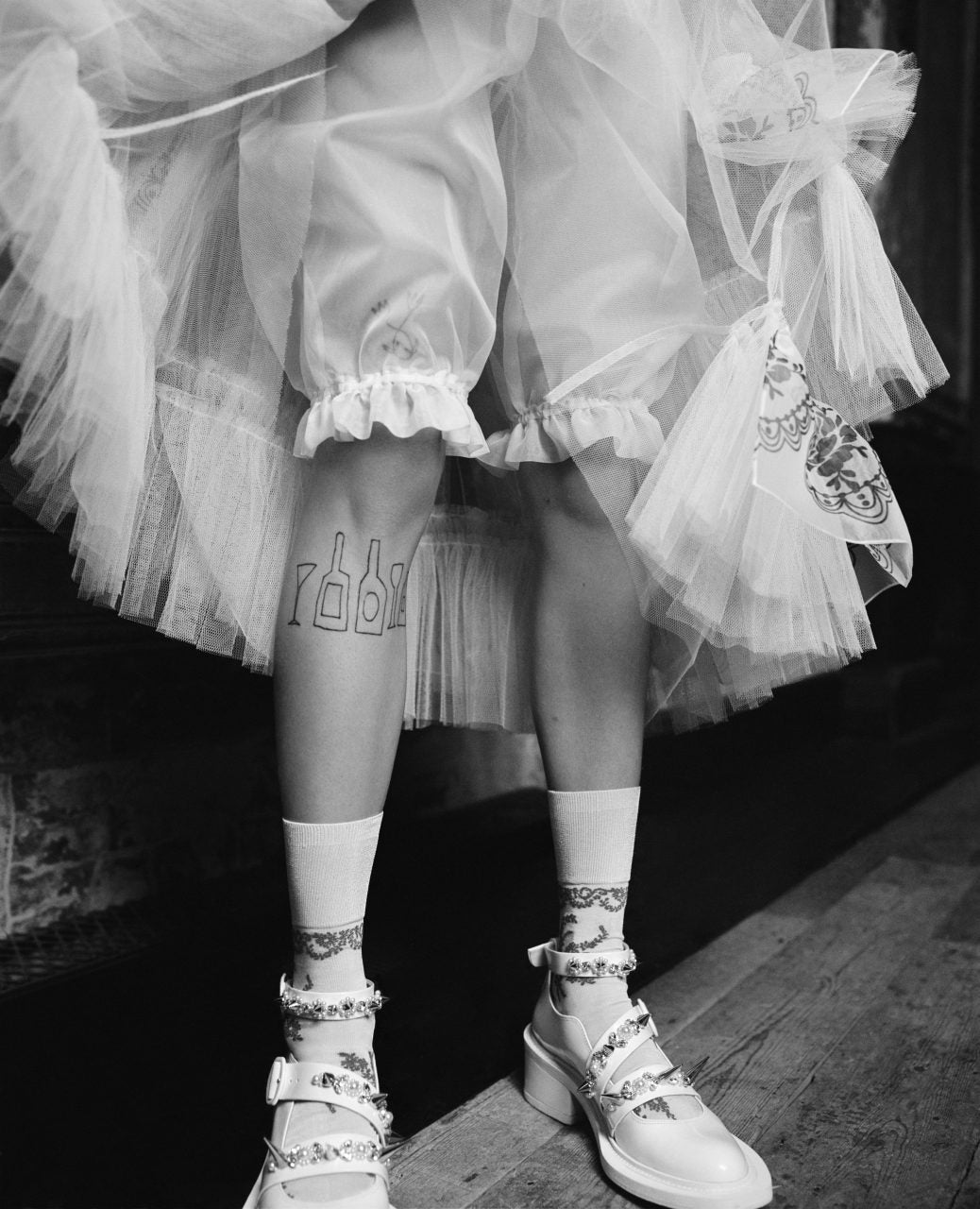
By: Simone Rocha
Simone Rocha’s label is beloved for its strength and softness, and the regular references to Irish cultural heritage from pagan rituals to Catholic sacraments. The SS20 collection was inspired by the folk custom of the Wren Boys, whose handmade straw costumes were translated into intricately woven raffia dresses and accessories.
The Repeal Jumper
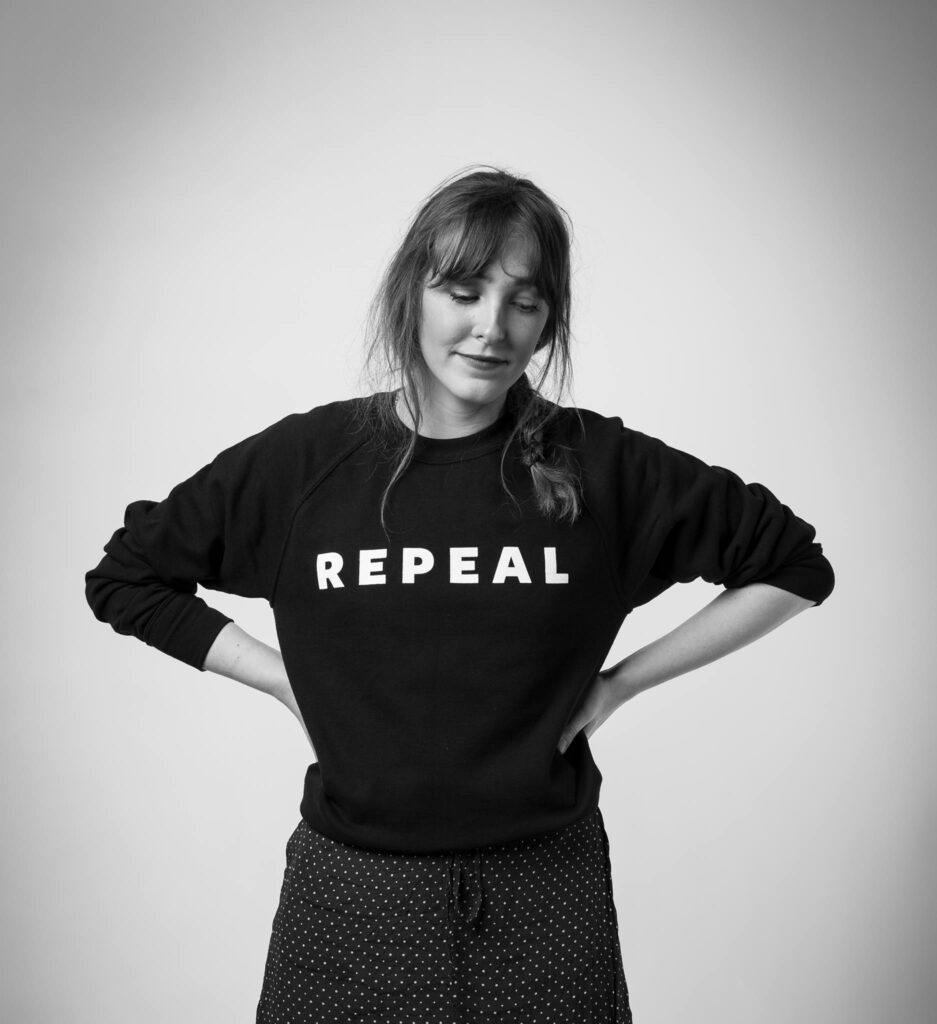
By: Anna Cosgrave
A simple black sweatshirt with plain white lettering came to be one of the most politically significant garments of the late 2010s. Designed in 2016 by activist Anna Cosgrave, they became emblems of the campaign to repeal the 8th Amendment and made visible the solidarity, compassion and momentum of the movement.
Claddagh Scarf
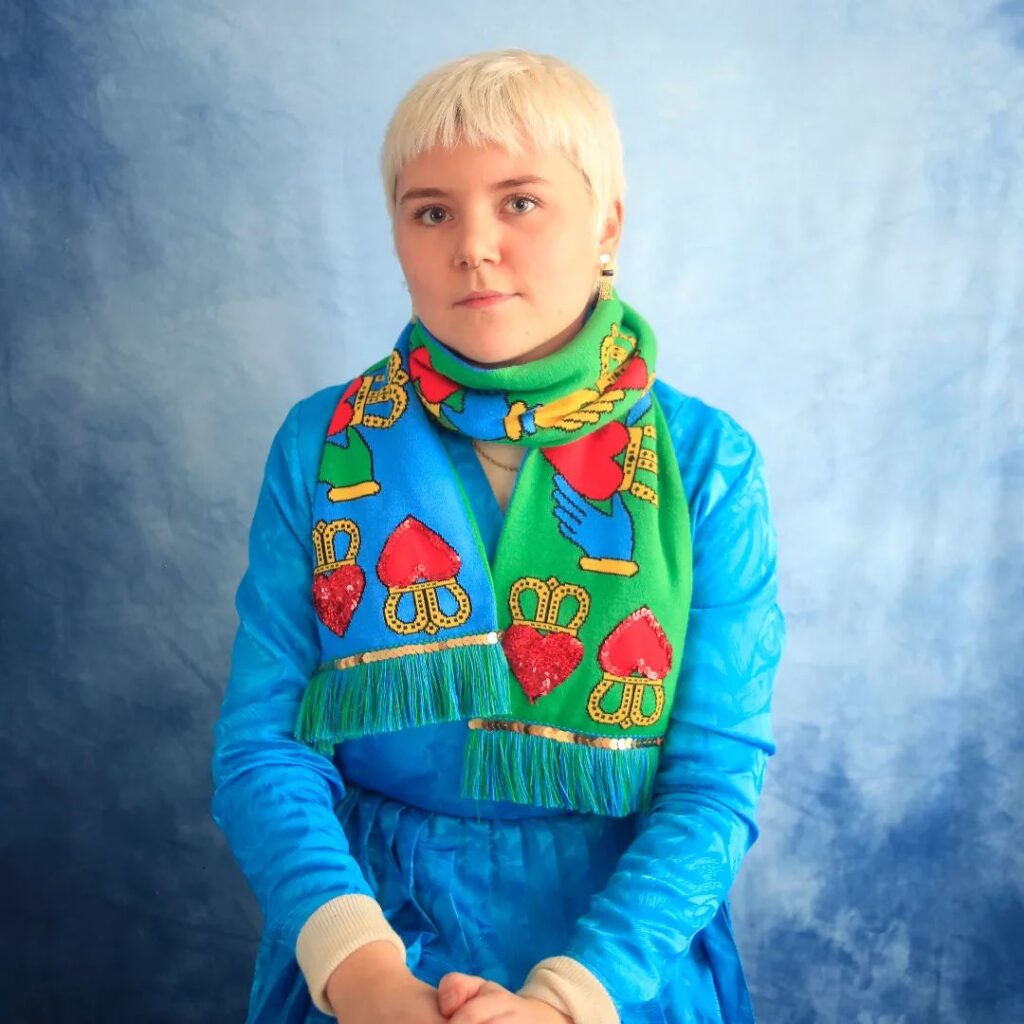
By: Megan Nolan Walsh
A true contemporary Irish icon, MNW’s Claddagh Scarf was at the forefront of the recent Celtic revival. Originally designed in Norway, where the homesick weaver and designer wanted to work with a familiar symbol, it can now be spotted across the world as a shorthand for ‘I’m Irish’, or ‘I’d like to be’.
Image: Issey Goold
Cashmere Aran Sweater
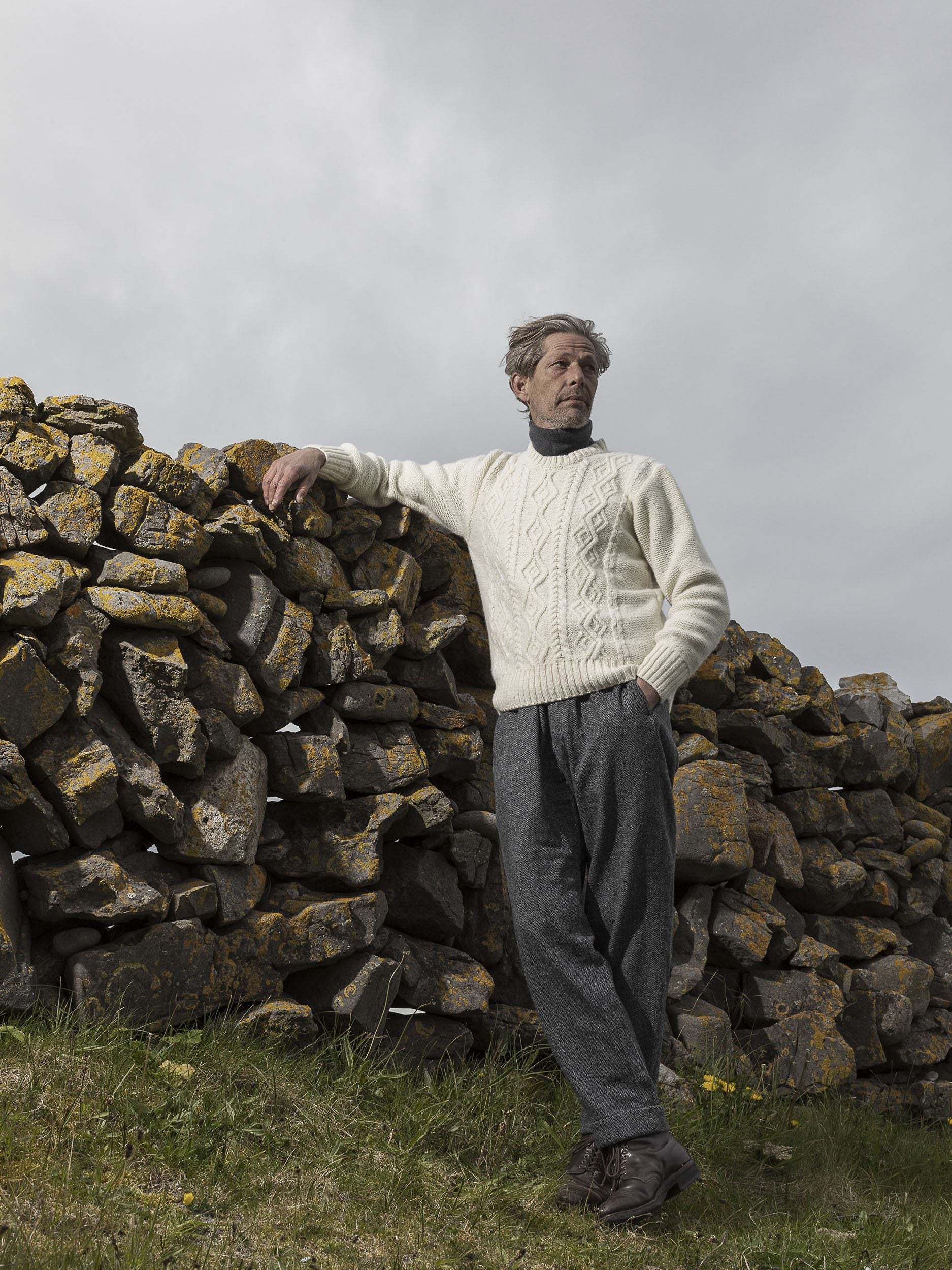
By: Inis Meáin
This luxurious 100% Italian cashmere knit is a modern descendant of the traditional Aran sweater, perhaps Ireland’s most recognised design export. Designed by Inis Meáin on the island of the same name, this sweater’s diamond and cable stitches echo the rugged landscape and homespun heritage of the design.
Beware, Beware
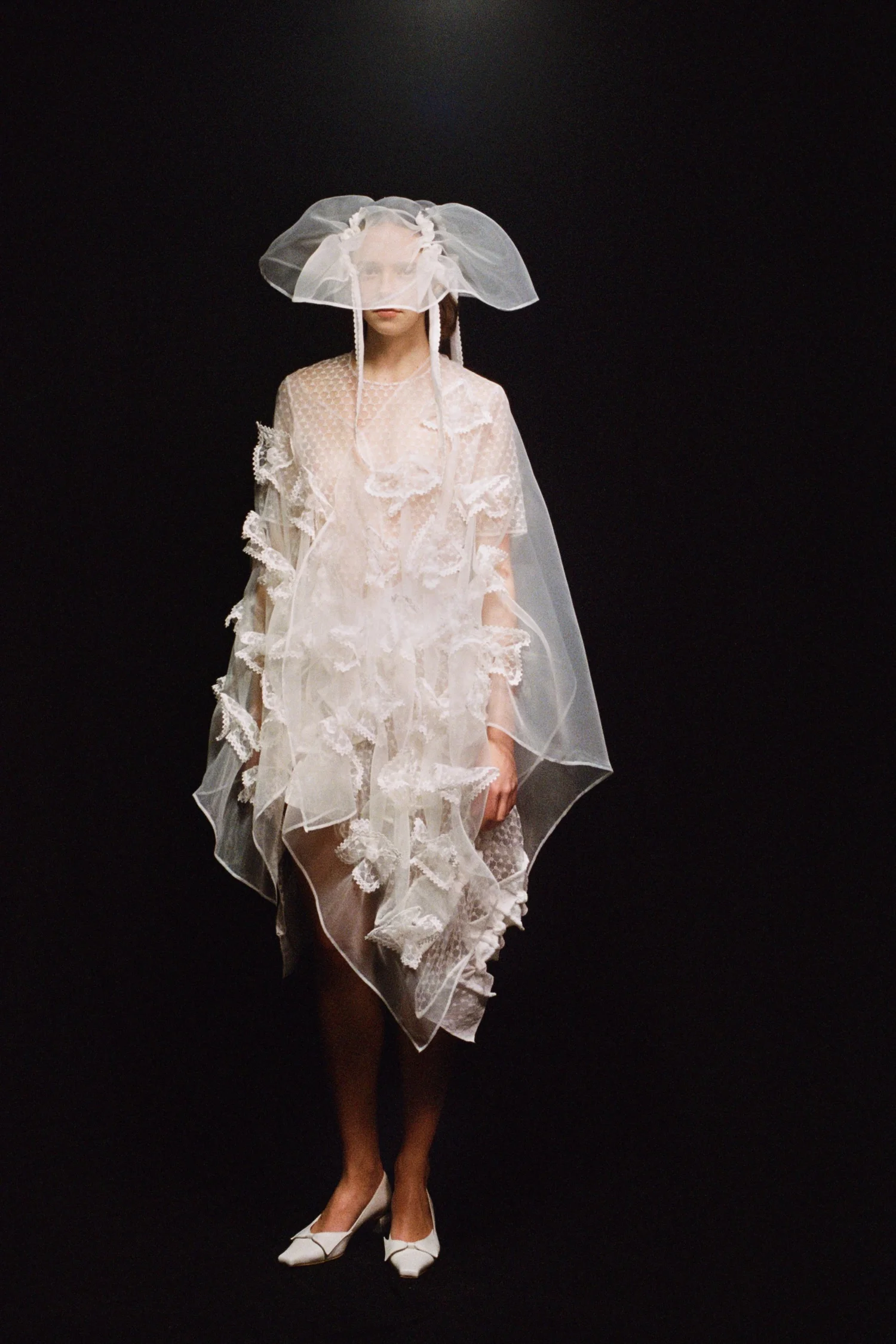
By: Róisín Pierce
Pierce’s dreamlike, tactile designs float between fashion design and sculptures in fabric. The Beware, Beware collection was inspired by the many incarcerated women and girls who worked making Irish lace in Magdalene Laundries. Pierce revived traditional lacemaking and crochet techniques with a zero-waste methodology to create an exquisite all-white collection.
Dior Bar Jacket
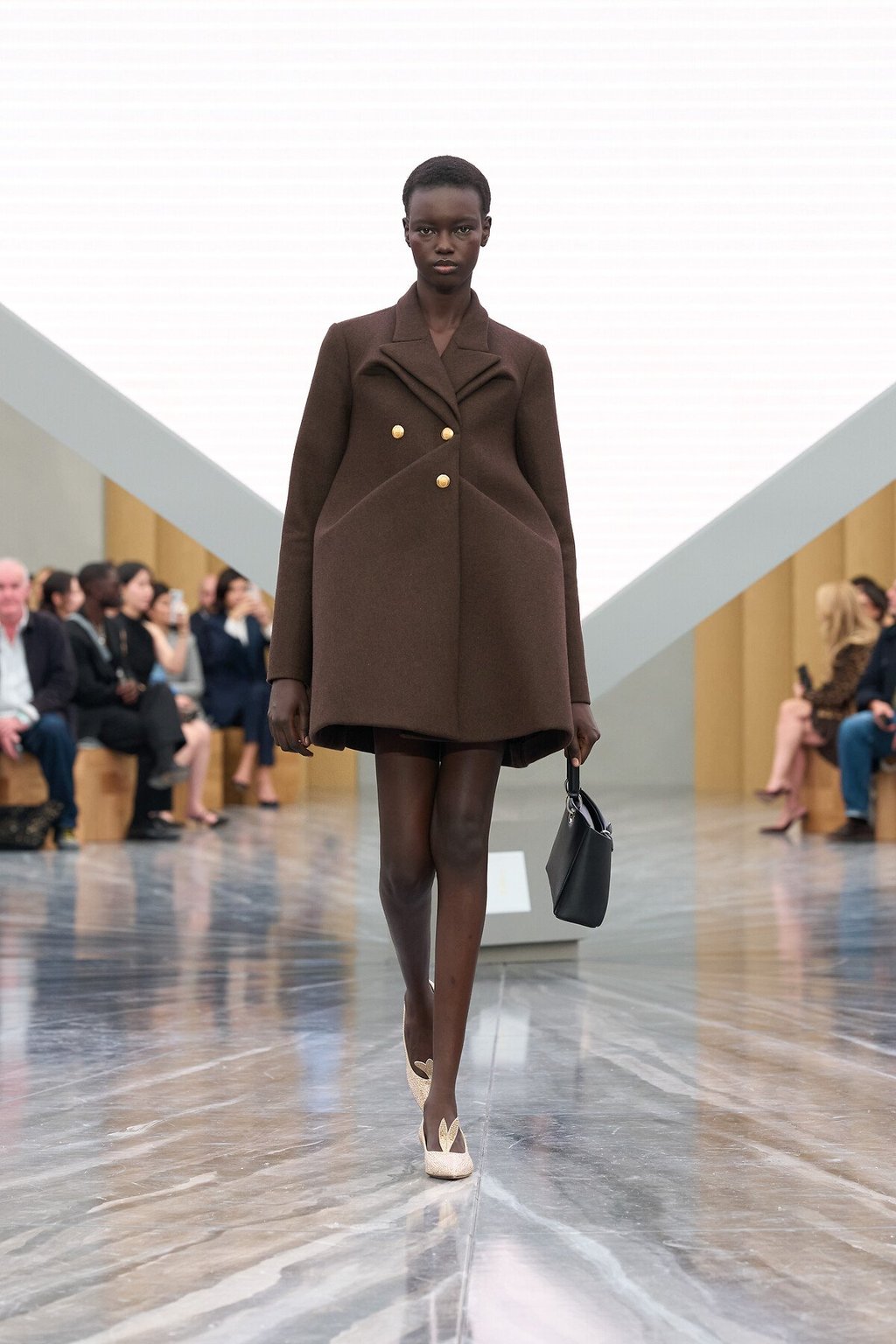
By: JW Anderson at Dior
JW Anderson’s SS26 debut womenswear collection as creative director of Dior included a nod to his Irish roots. He reimagined the French brand’s classic bar jacket in green Donegal tweed, characteristic for colourful flecks throughout the yarn. Producers of this heritage fabric are currently campaigning for protected status.
Diamond Gown
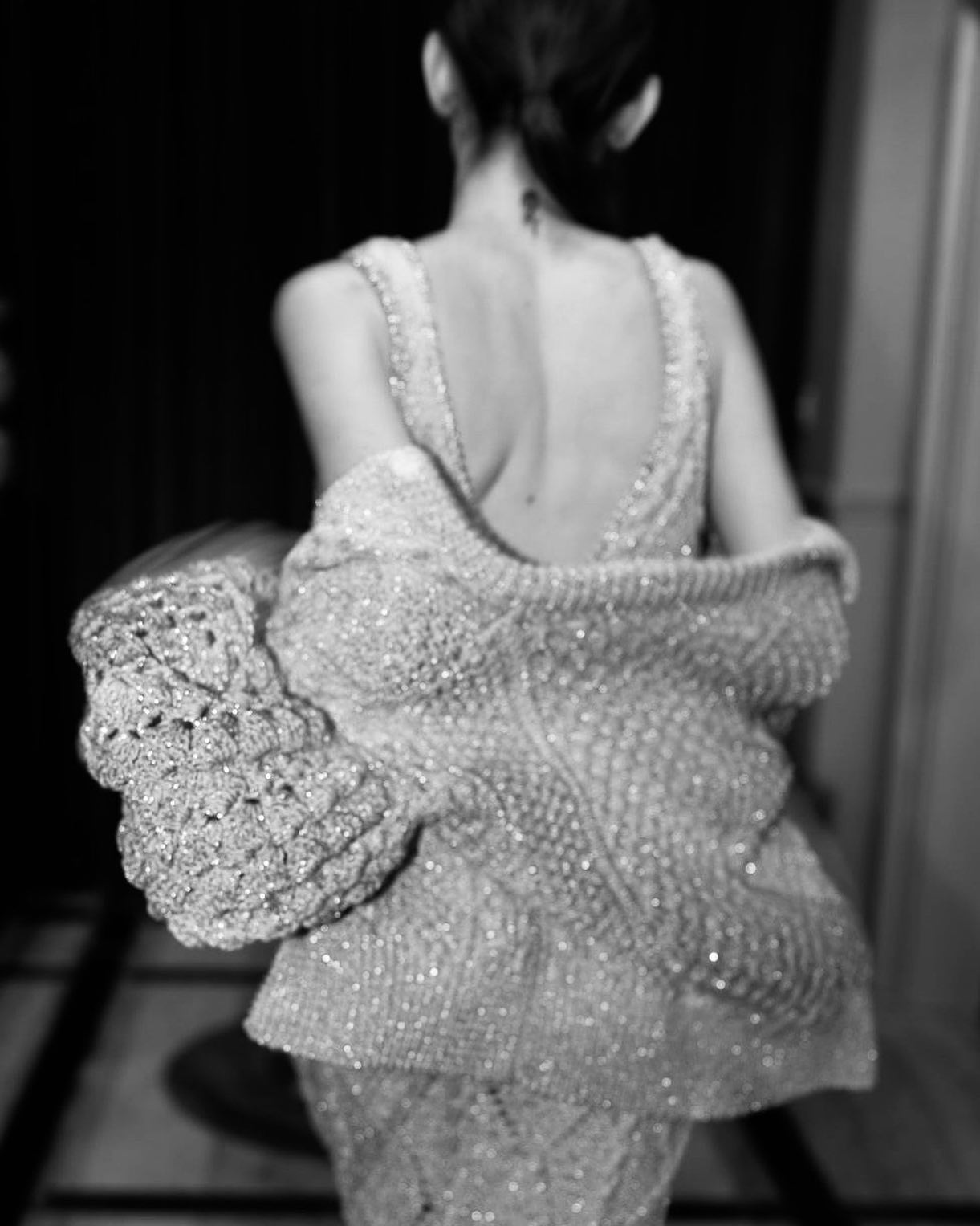
By: Colin Burke
Galway designer Colin Burke is one of the new guard of designers reimagining Irish knitwear. Using traditional Aran knitting techniques taught to him by his grandmother, his recently-released winter collection of hand-knit dresses and sweaters shimmer with metallic lurex threads. The highly engineered silhouettes represent a fruitful blend of history and invention.
The Night Owl Suit
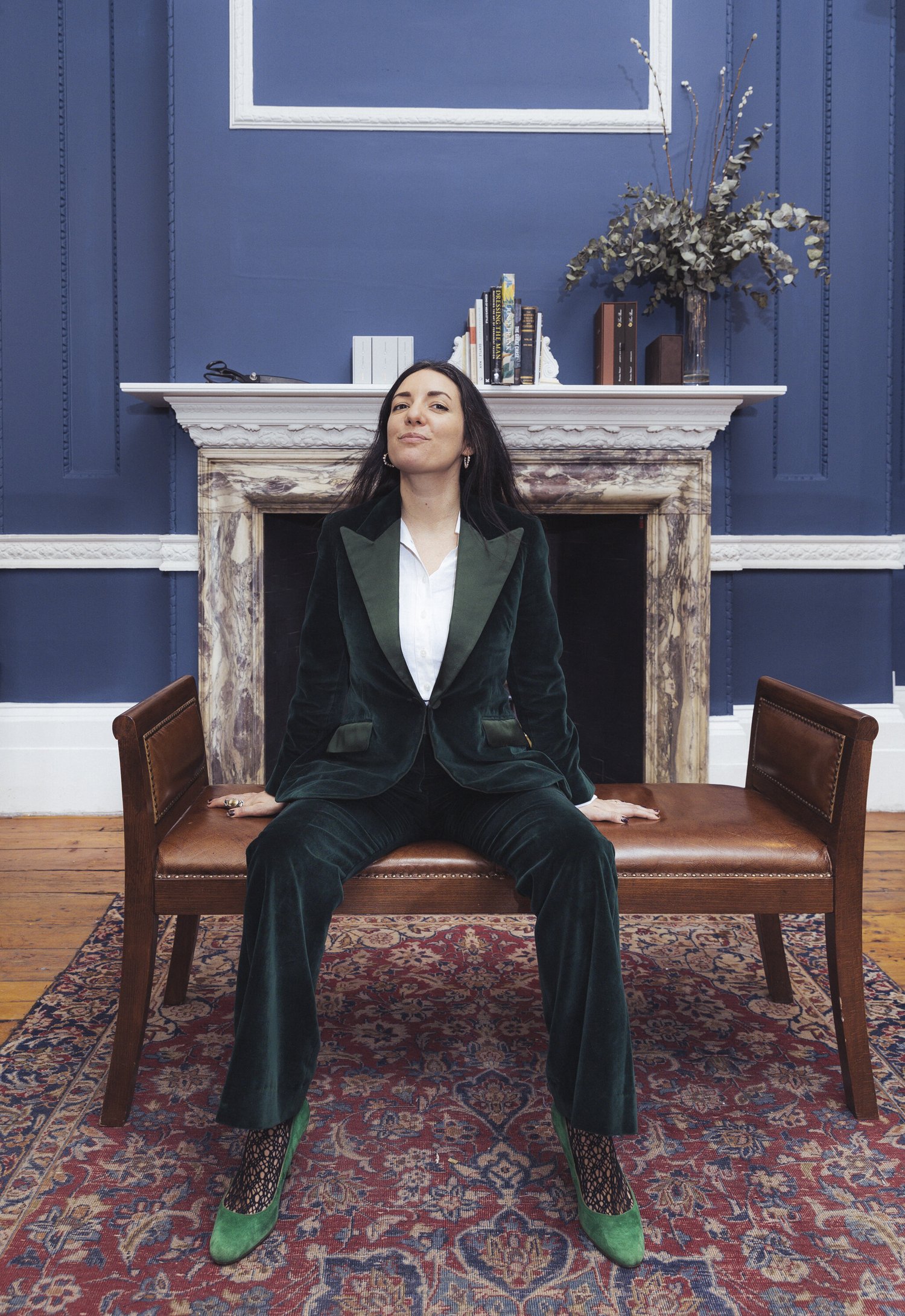
By: Banshee of Savile Row
Irish designer Ruby Slevin opened Banshee of Savile Row on London’s storied tailoring street in 2019, soon becoming the first bespoke tailor for women to show at London Fashion Week. The Night Owl Suit is designed for longevity, blending the precision and craft of traditional men’s suiting with a touch of rebellious flair.
Seeking Judy Travel Bag
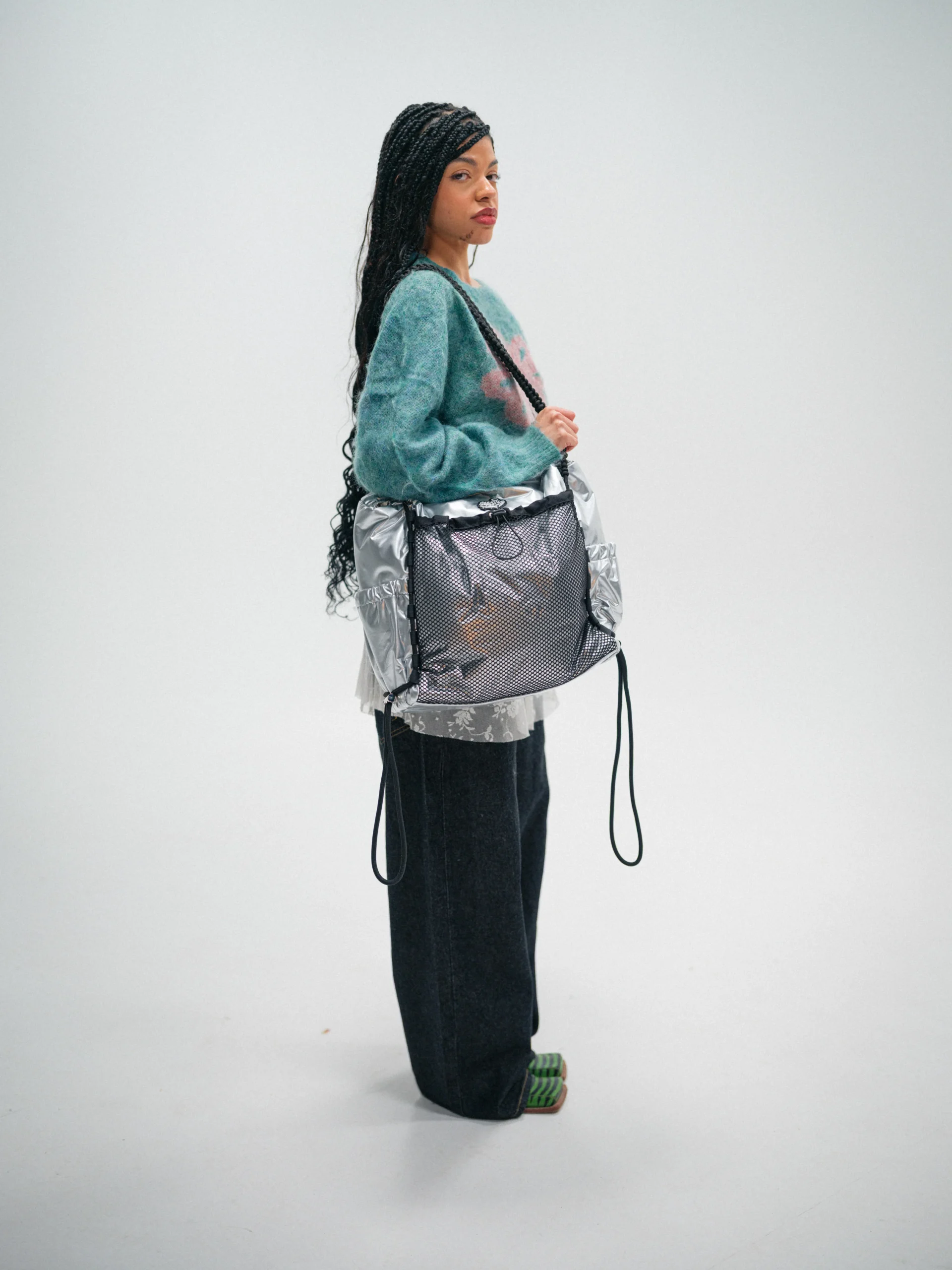
By: Seeking Judy by Megan McGuigan
Beloved Dublin brand Seeking Judy is best known for its vibrant knitwear, but the metallic travel bags offer a solutions-focused design with adjustable straps, plenty of pockets, sealed zips and a showerproof finish. It’s also designed to match current airline cabin bag allowances, making it rain proof and Ryanair proof.
Winnie Linen Skirt
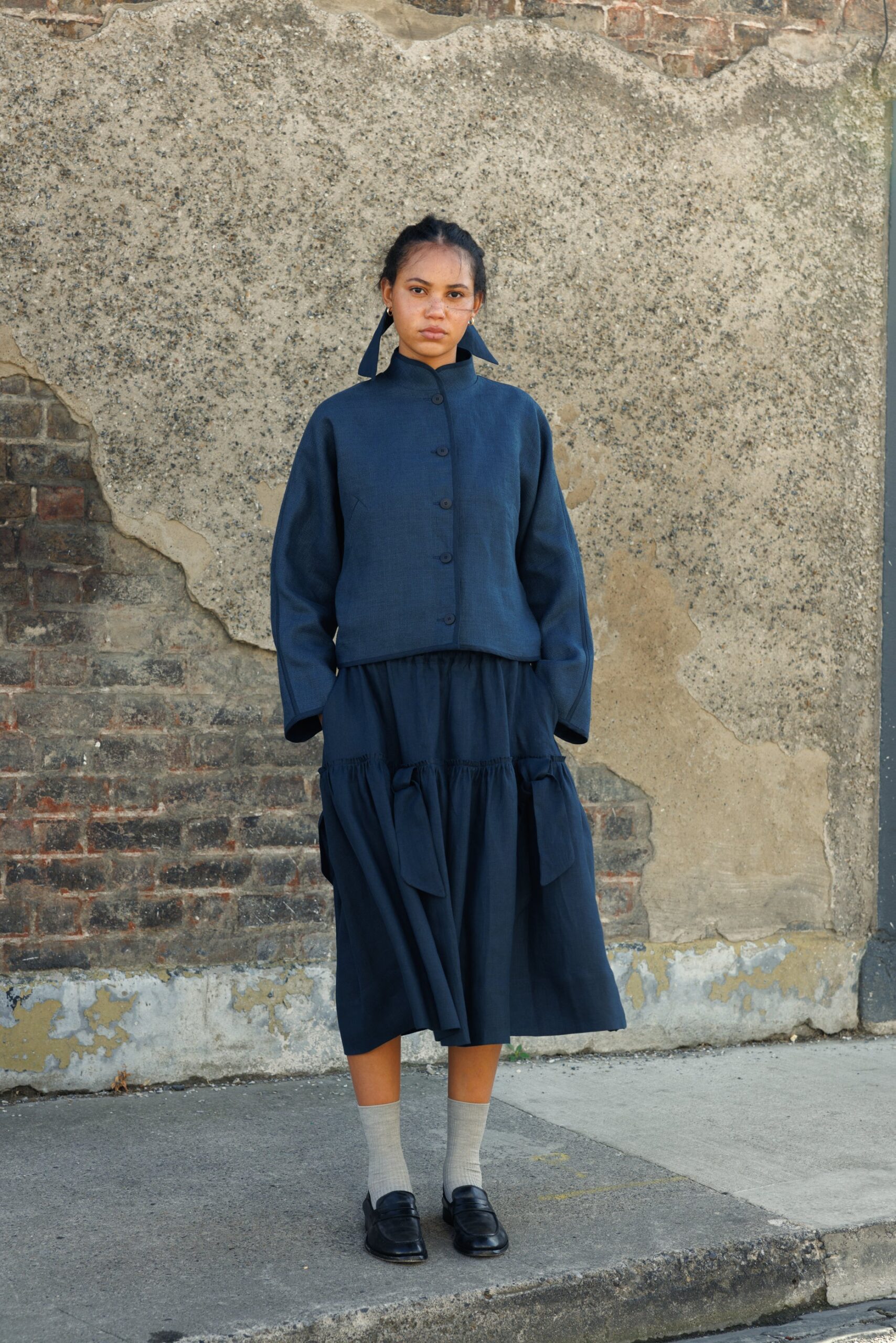
By: Jennifer Slattery
Designers like Jennifer Slattery are bringing a modern design approach to one of Ireland’s ancient fabrics. The midi-length Winnie Skirt is a true future heirloom: a seasonless design made with 100% Irish linen in a comfortable 150gsm weight, meaning it can be layered up for colder weather. It even has pockets.
Sex Before Marriage
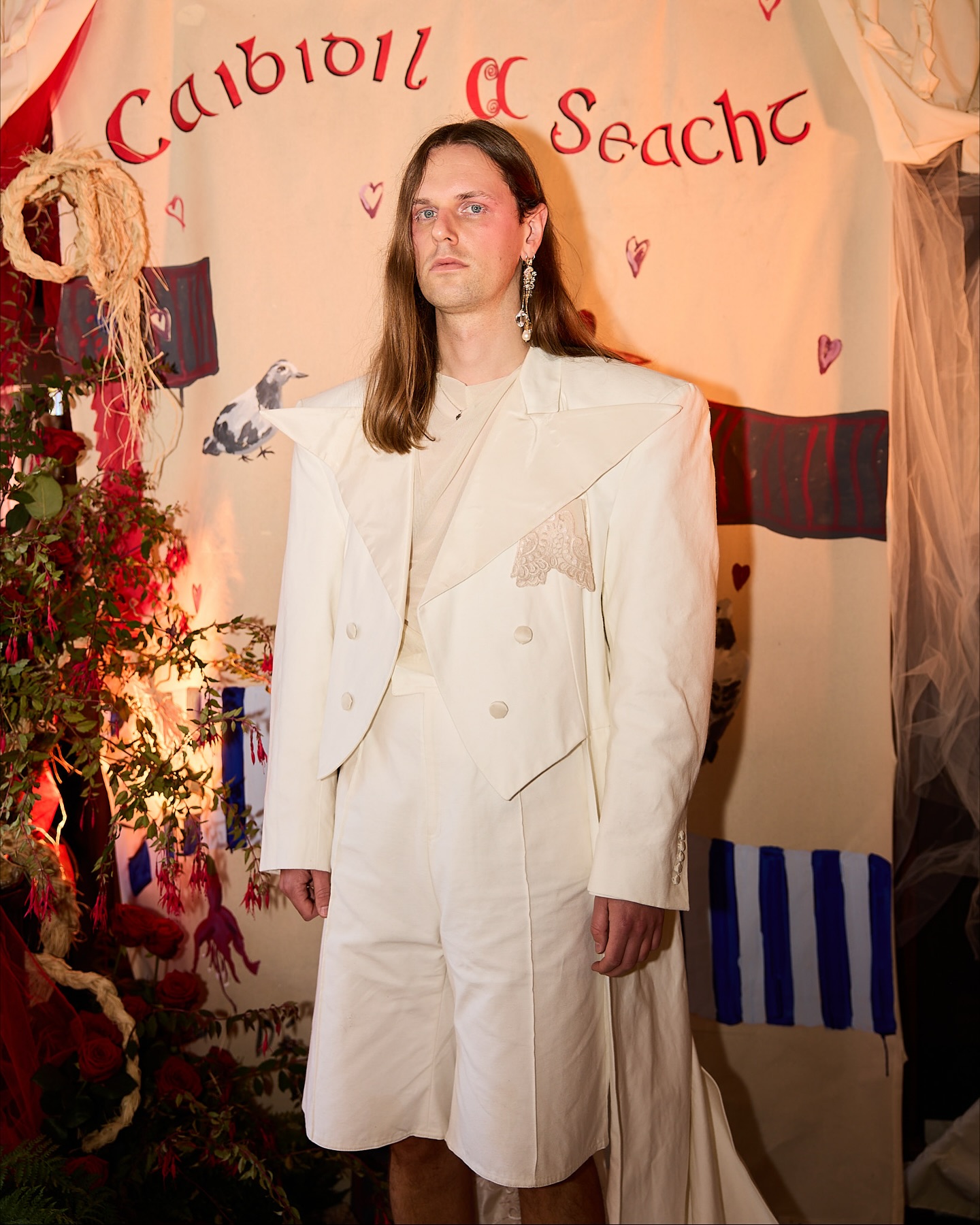
By: Ríon Hannora
Ríon Hannora, a leading voice in Dublin’s thriving independent fashion scene, reimagines bridalwear with her latest collection. Hannora’s slow, sustainable, and genderless designs result in a collection of off-kilter formalwear that refuses any Catholic shame through details like corsetry, peek-a-boo cutouts, and larger-than-life lapels.
Robyn Lynch x C.P. Company
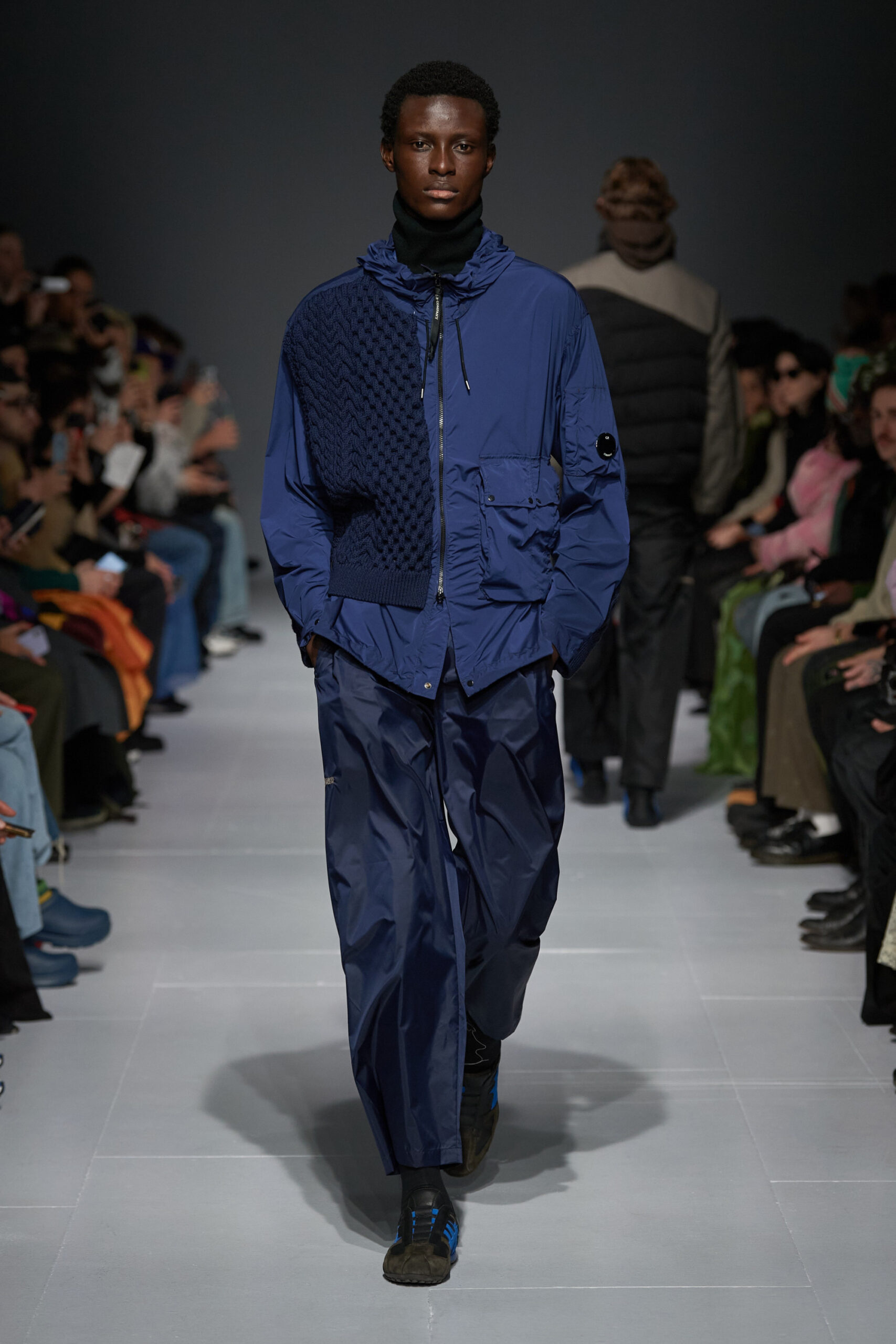
By: Robyn Lynch
Robyn Lynch’s streetwear blends witty Irish references with an experimental, sustainable method of garment-making. For AW24, Lynch was guided by a nostalgia for Irish dancing while upcycling technical outerwear from cult Italian brand C.P. Company. Lynch dissected highly functional garments and reimagined them, adding embellishments like embroidered Celtic knots.
Bláth Báinín
By: Aoife McNamara
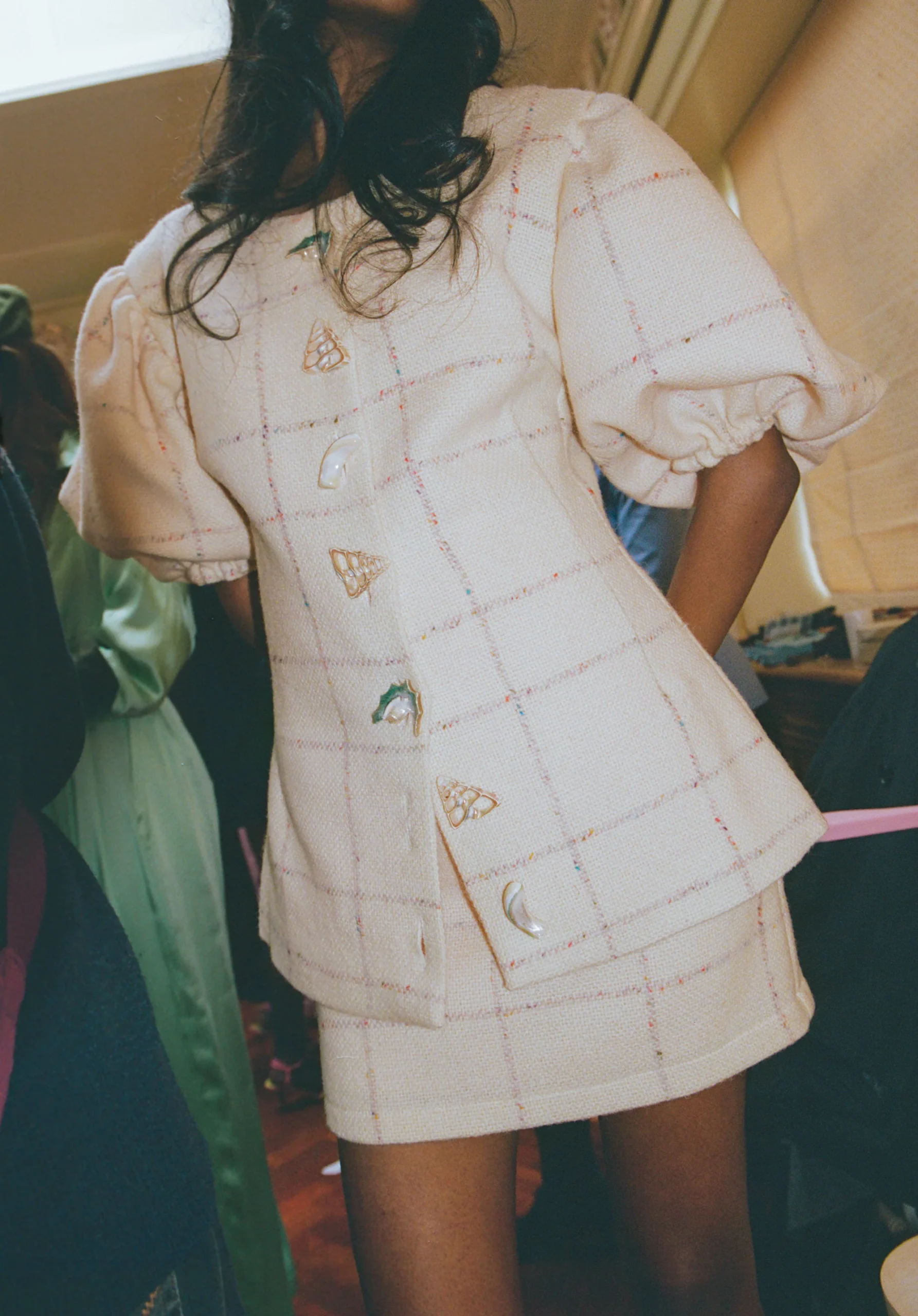
The first B-Corp fashion brand in Ireland, Aoife McNamara collaborates with craftspeople across Ireland to create feminine blazers, dresses and corsets with huge social media appeal. The puff-sleeved Bláth Báinín blazer is the first piece made in the brand’s exclusively-developed woolen yarn, woven by Donegal’s Molloy & Sons.
Croí na Gaeilge Logo
By: Emily Bourke
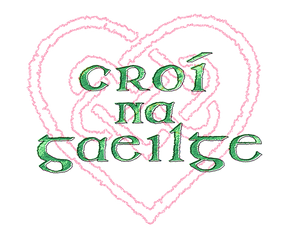
This London-based Irish language collective, founded by graphic and textile designer Emily Bourke, celebrates the rich heritage of both Irish language and design. Its logo, a simple heart outline holding Celtic knots, appears on posters, vocabulary sheets and badges – sometimes set in a club-style crest, or interlocking as a chain of hearts. The simple design evokes the sense of connection and kinship at the heart of the collective.
Kneecap for EP 2025
By: St. Diabhal and Cian Hogan
Kneecap’s summer 2025 tour opened with distinctive graphics by longtime collaborator St. Diabhal, aka Emmett Walsh. Diabhal is known for blending mythical and modern motifs and characters, and here reimagined Lankum’s Radie Peat as a Gaelic warrior. Animated by Cian Hogan, this project is a masterclass in how music and graphic design can work together to revitalise tradition.
Rí-Rá Treasured Tat Print
By: Fiona McDonnell
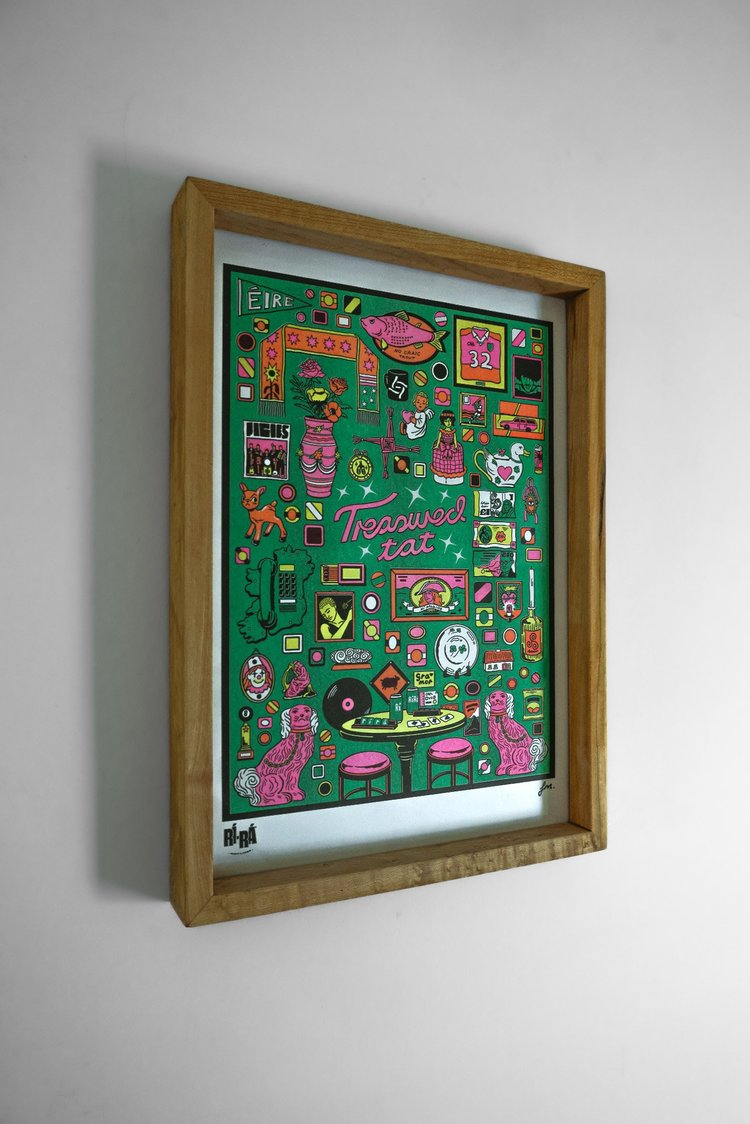
Tasked with designing a limited edition label that captures a sense of cosiness and character for Irish lager Rí-Rá in 2024, Belfast illustrator Fiona McDonnell was guided by her love of ‘Treasured Tat’. Think trinket-crammed shelves of your favourite old pub, with collections of St. Brigid’s crosses, old street signs, and kitsch vintage ceramics.
Dlúthpháirtíocht Poster
By: David Morrison
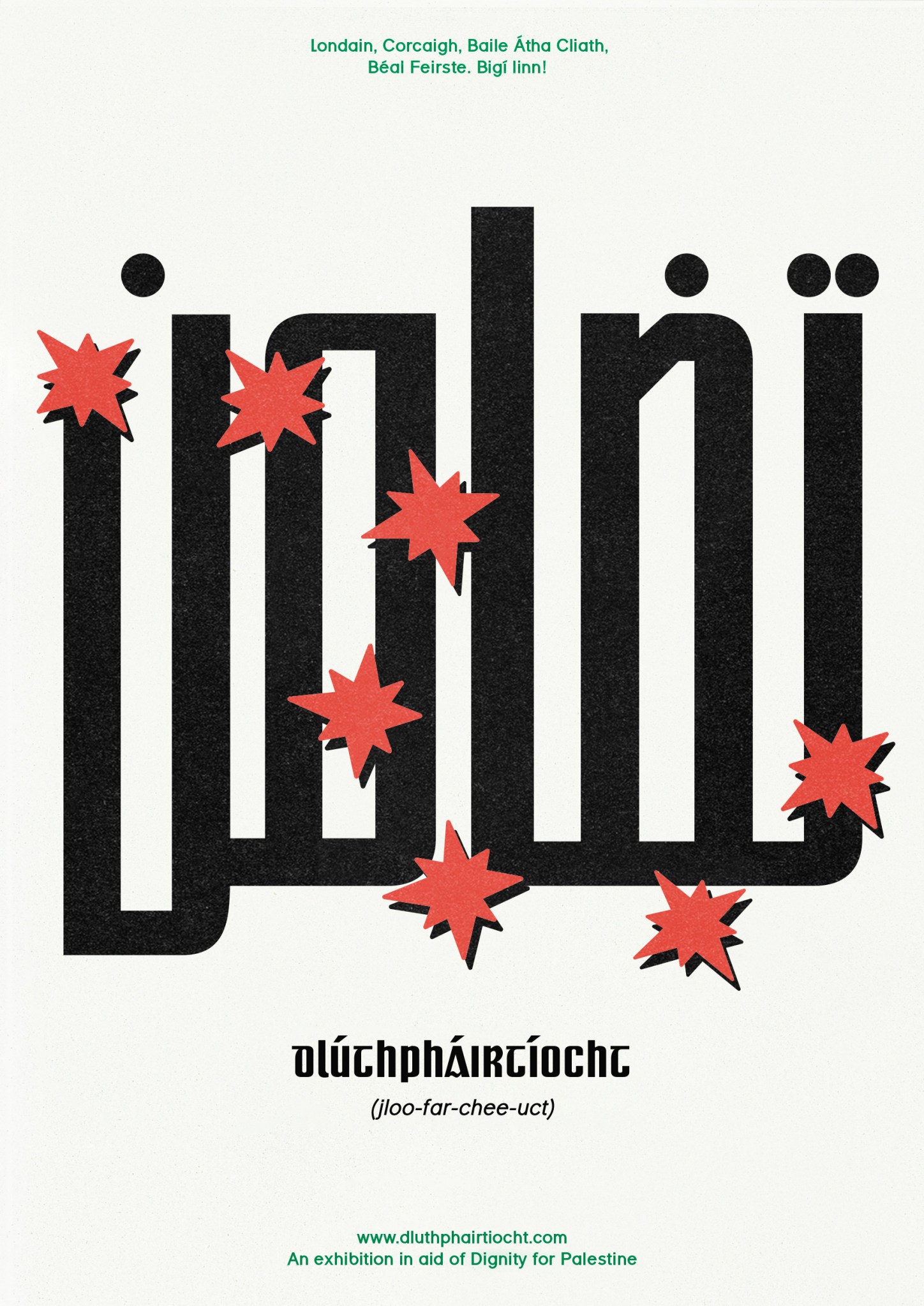
Dlúthpháirtíocht began as a poem, became a collective, and staged an exhibition in 2024. The exhibition poster’s motif includes the Irish word for solidarity and the Arabic translation overlaid with the starry plough, a longstanding Irish symbol of the journey toward a better life for all.
Gentleman of Letters
By: Colin Brady
The art of a hand-painted sign is so easily taken for granted when we primarily read them for information like ‘am I at the right pub?’. A short documentary film made in 2013 tries to remedy this by telling the story of legendary Irish sign-writer Kevin Freeney, who also designed the Manhattan popcorn logo.
The Claddagh Embrace
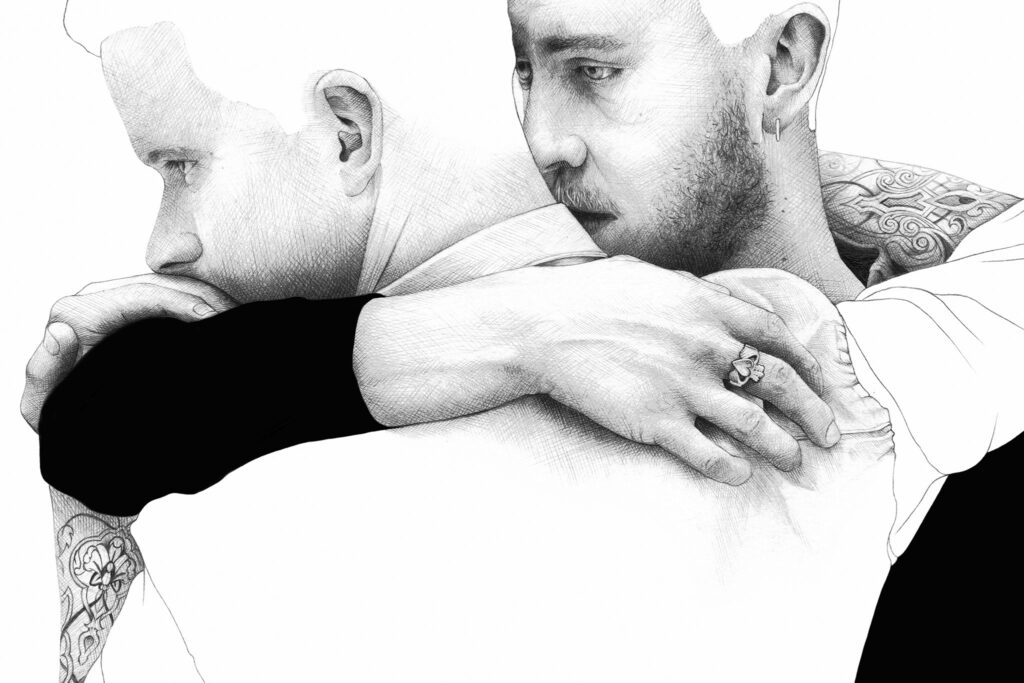
By: Joe Caslin
Joe Caslin might not be a graphic designer, but his 2015 street artwork ‘The Claddagh Embrace’ became the unofficial poster for the marriage equality referendum campaign. The towering paper mural of two men embracing, pasted on a gable wall on Dame Street, proved an emotive symbol of equality and of a new Ireland.
Simone Rocha Logo AW23

By: Oscar Torrans
In 2023, folkloric graphic designer Oscar Torrans was one of six artists invited to reinterpret fashion designer Simone Rocha’s logo for the Lughnasadh-inspired collection. Torrans fashioned the ‘SR’ initials from images of ancient standing stone structures, which represent the same strength and fragility Rocha explores in her work.
High Tides
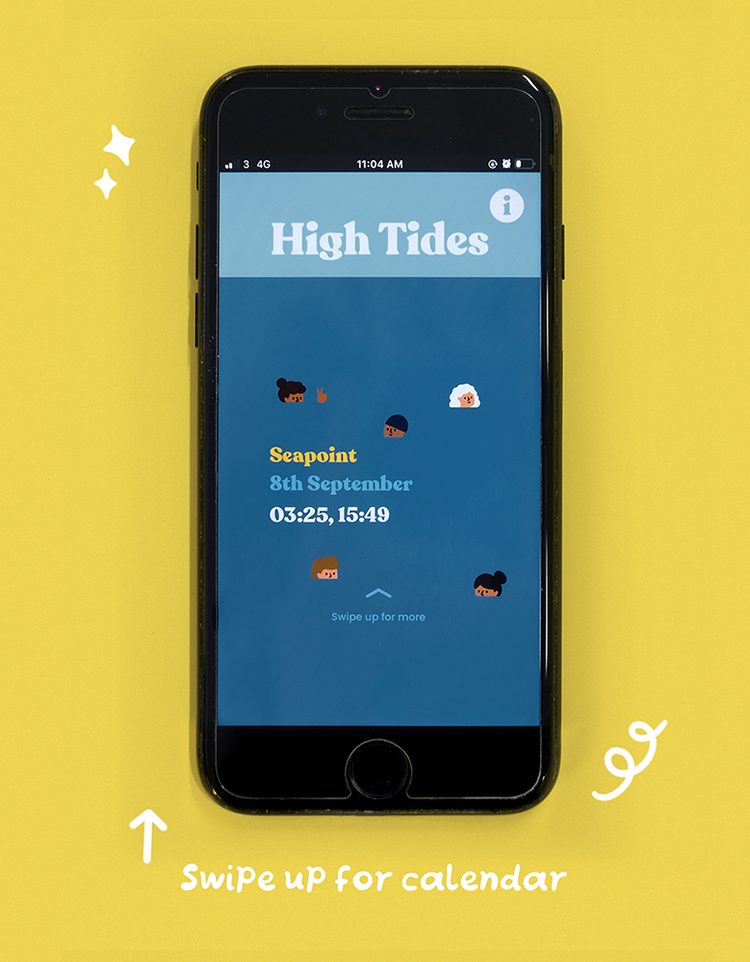
By: Fuchsia McCaree
Graphic designer Fuchsia McCaree launched a High Tides app for the sea swimmers of Ireland in 2020, when connecting with the natural world felt more urgent than ever. The High Tides app was detailed with happy swimmers in a colourful and organic style of illustration for a healthy dose of optimism.
The Perpetual Calendar
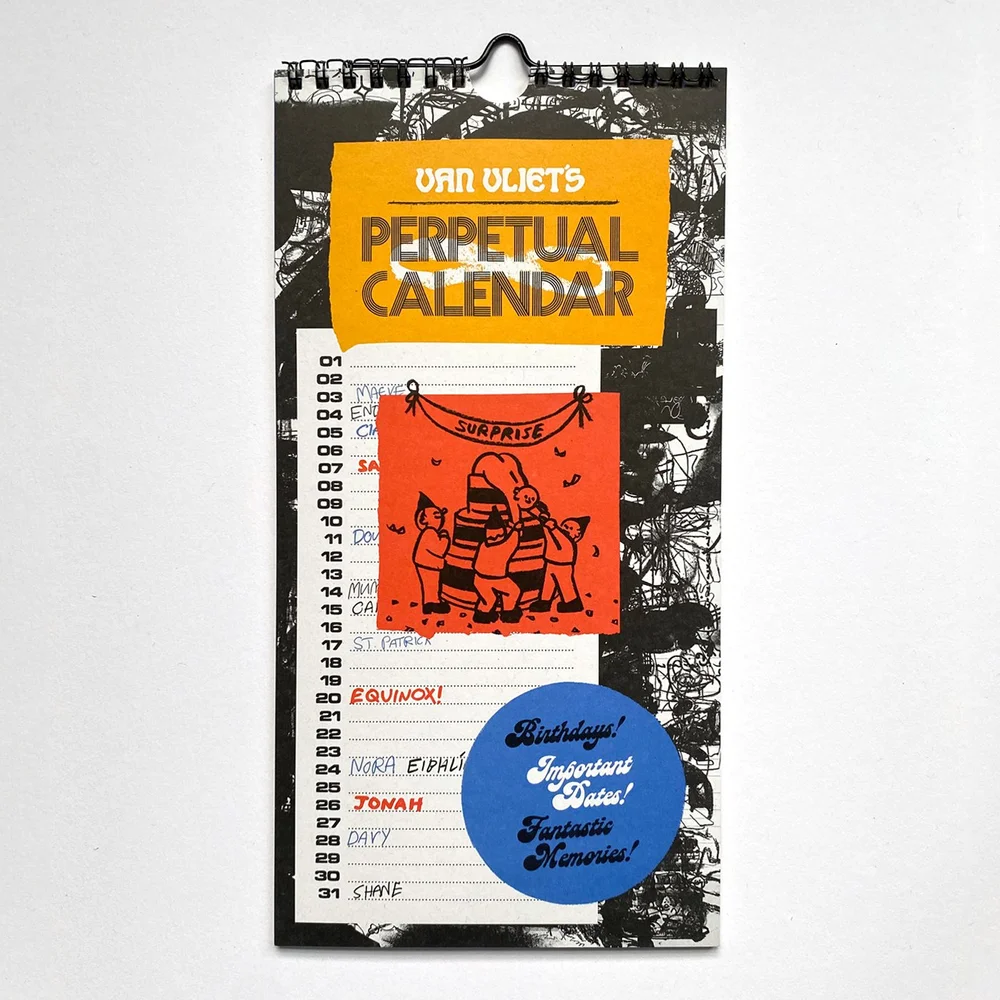
By: Ruan Van Vliet
Joyful design for every day of the year, and many more years after. This calendar is designed to stick around, reminding you of perpetually important dates like birthdays, anniversaries and holidays. Designed by Dublin-based illustrator and comic-maker Ruan Van Vliet, the calendar’s bold 3-spot colours and joyful illustrations are an uplifting antidote to the monotony of repetition.
Catherine Connolly’s Presidential Campaign
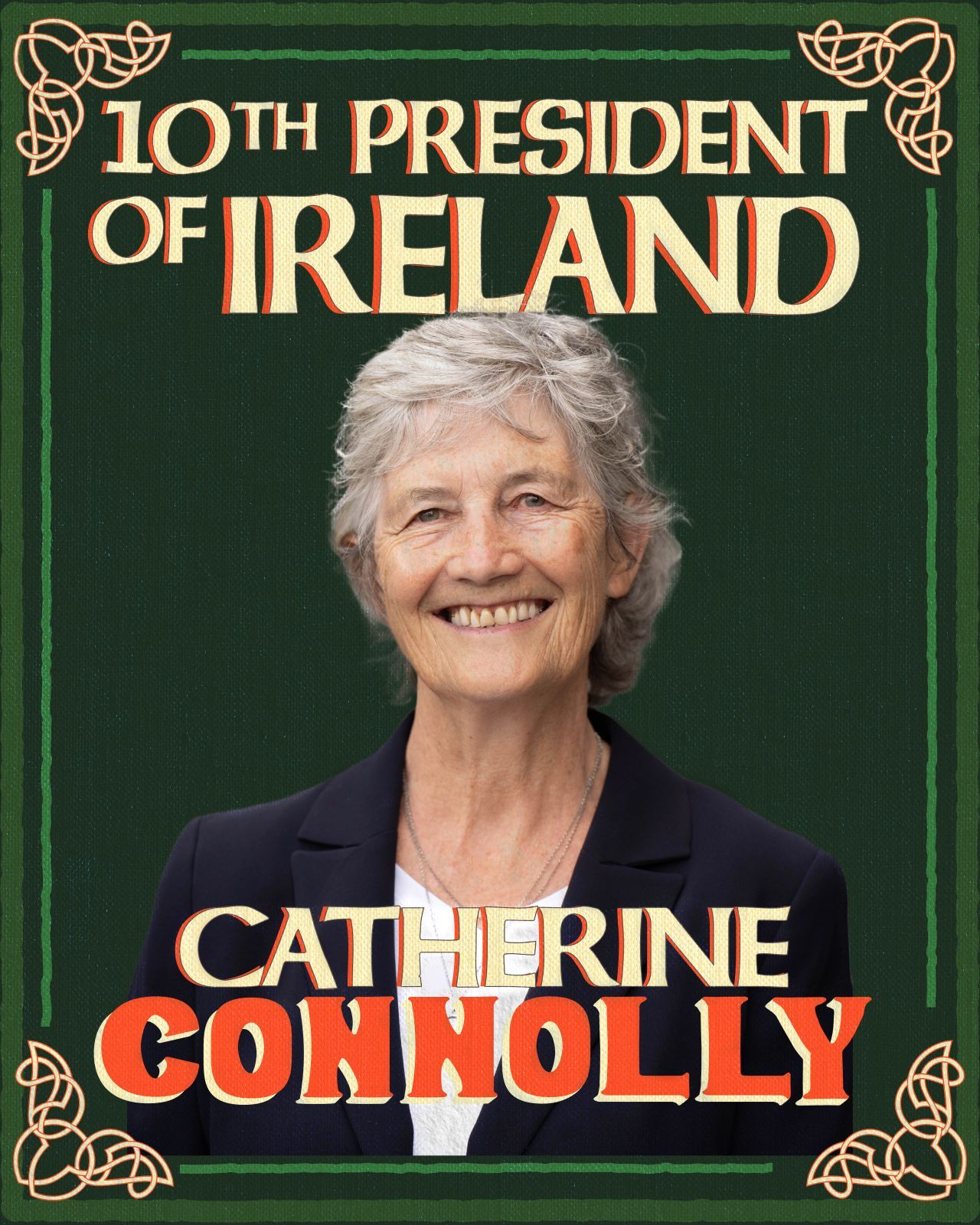
By: Anna Cassidy
One of the many successes of newly-instated President Connolly’s campaign was in proving the communicative power of design. The 26-year-old designer behind Connolly’s campaign identity, Anna Cassidy, used familiar Irish heritage motifs like Celtic knots and hand-painted shop signs to solidify the optimistic and unifying message of CC’s campaign.
The Grand Budapest Hotel
By: Annie Atkins
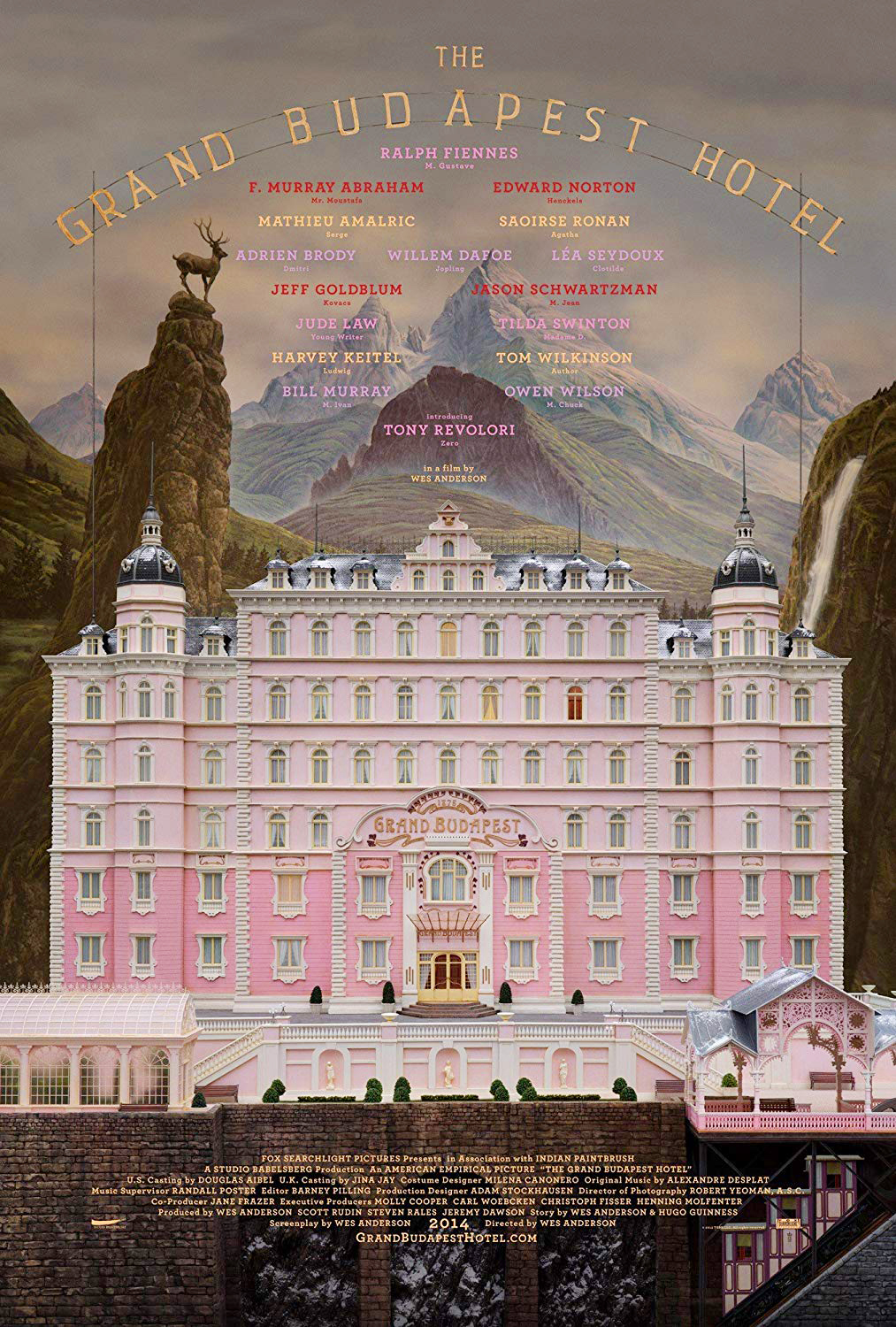
Dublin-based graphic designer Annie Atkins is the mind behind the graphic props and set-pieces in Wes Anderson’s film The Grand Budapest Hotel. Atkins created a vivid, whimsical world of maps, letters and patisserie boxes that strikes the perfect balance of intricate and believable world-building, without taking too much attention away from the action.
Third Floor Espresso Logo
By: David Wall and Conor Nolan at WorkGroup
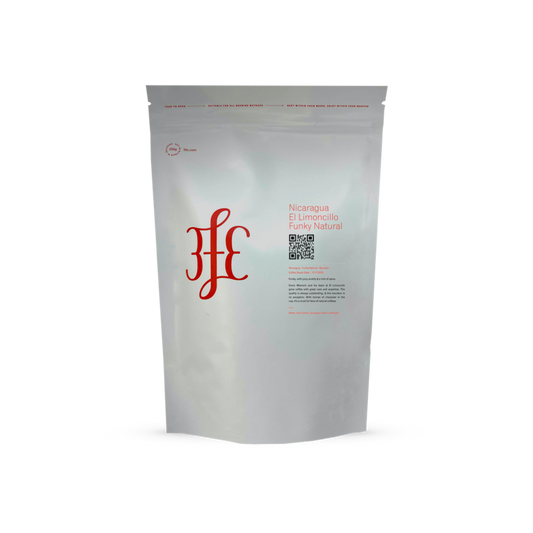
The three intertwined glyphs of the 3fe logo, designed by David Wall and Conor Nolan, have become synonymous with the rise of specialty coffee culture in Ireland. Designed in 2010 for the opening of 3rd Floor Espresso in Dublin, the simple calligraphy-style logo is instantly recognisable whether it’s on a coffee cup, cafe window or merch.
Anthony Timberlands Center
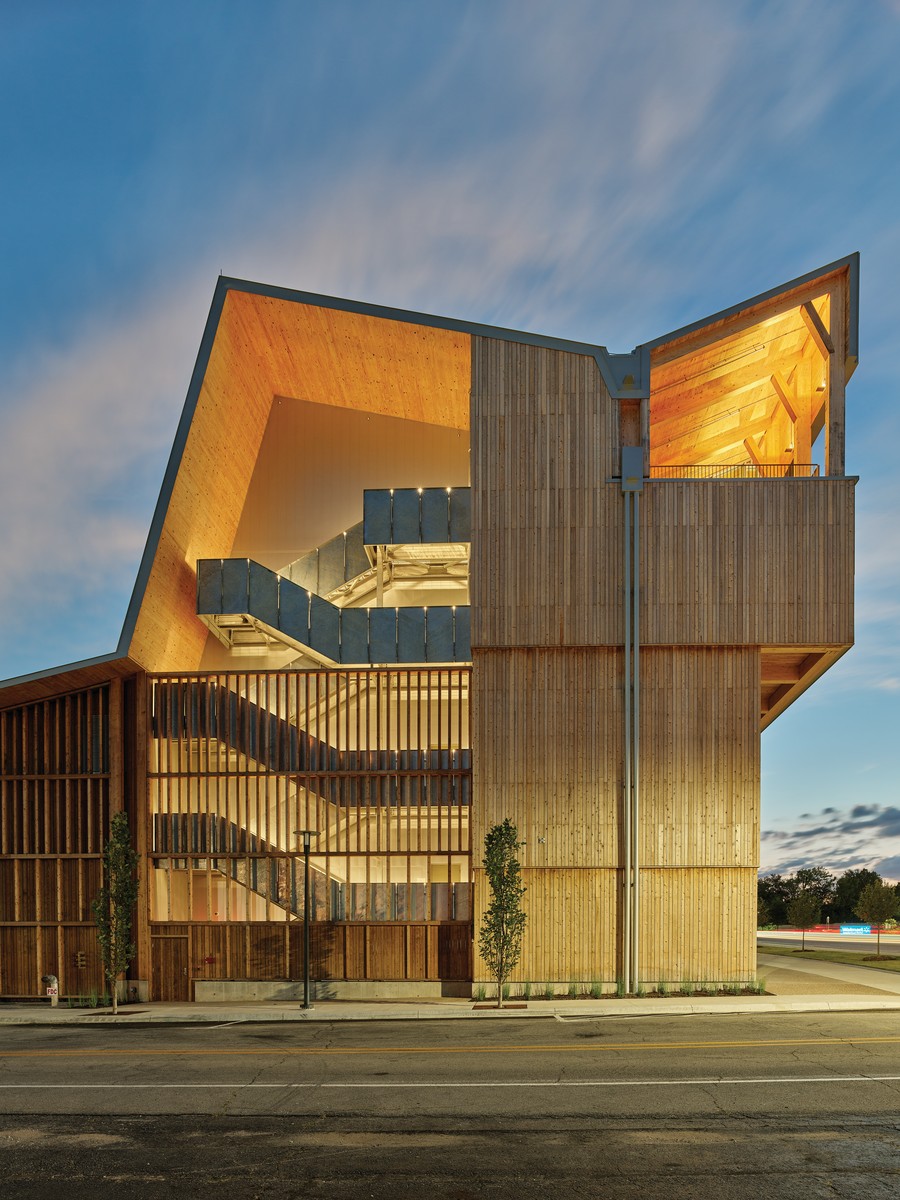
This recently-completed university building in Arkansas is a lilting monument to timber. Its cascading roof offers protection from the local climate and a poetic interpretation of the forested landscape, while the angular structure’s myriad timber finishes marry form and content: it houses a department dedicated to mapping out the low-carbon future of the material’s production.
V&A East Museum
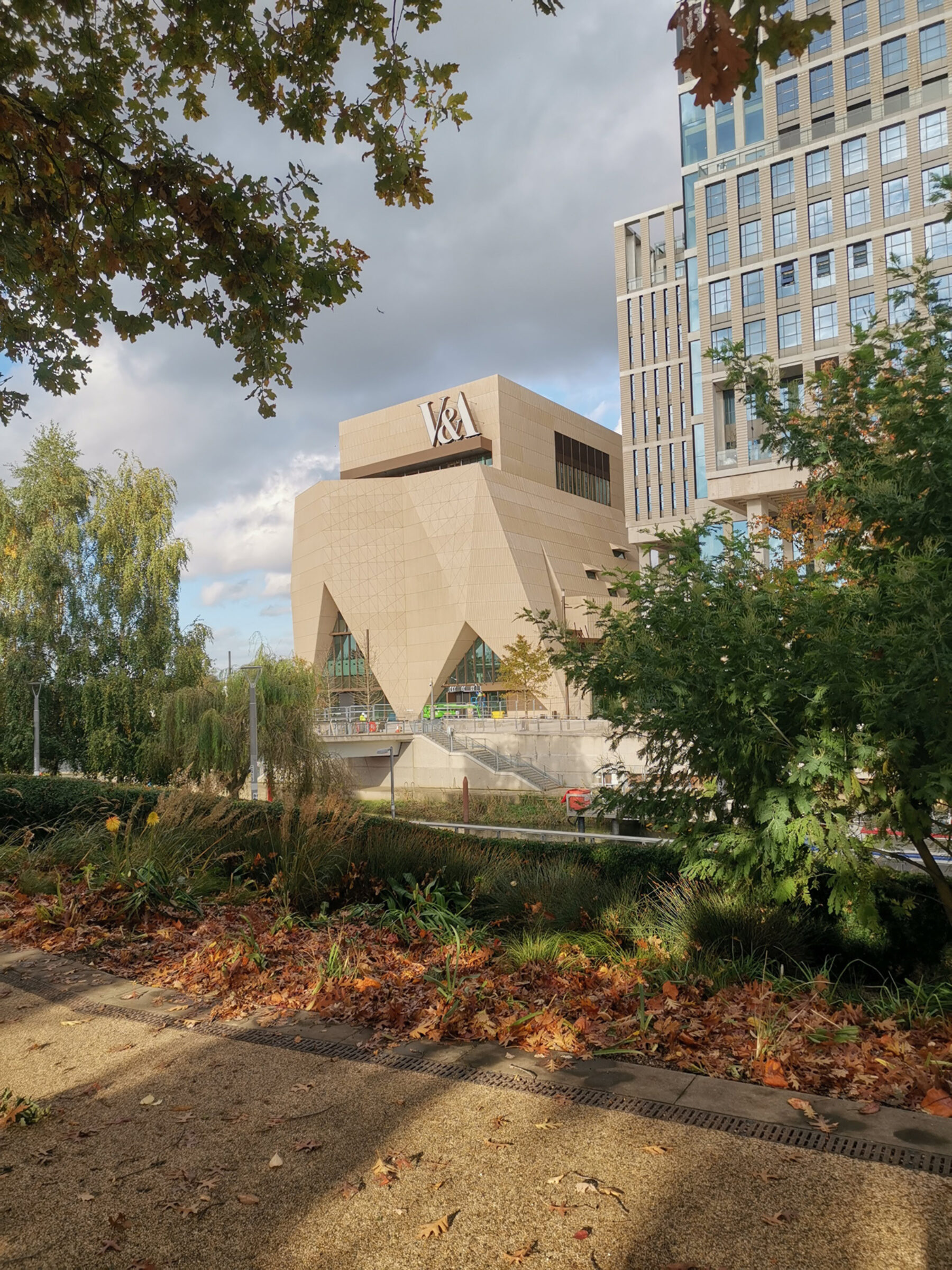
Irish architects O’Donnell + Tuomey are responsible for London’s eagerly awaited V&A East Museum, set to open its doors in 2026. The building was inspired by an X-ray image of a Balenciaga couture silk taffeta dress. The folds of fabric translated into a huge faceted concrete exterior which envelope a five-storey museum dedicated to design and creativity.
(Images: O’Donnell + Tuomey)
Arklow Wastewater Treatment Plant
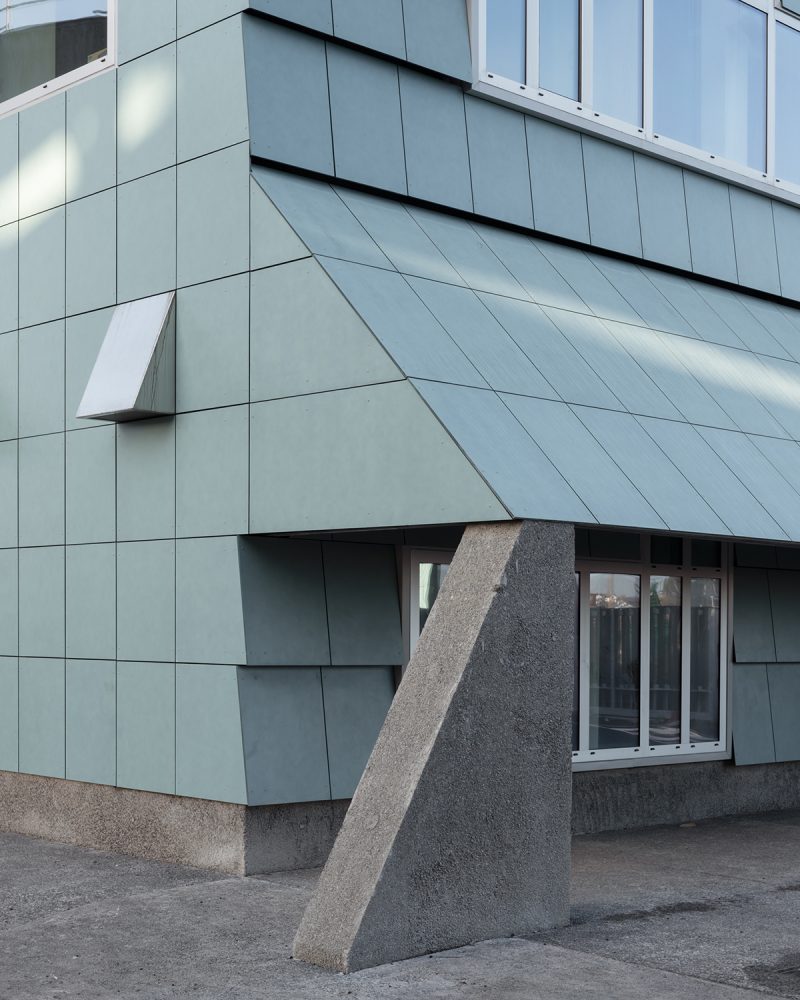
By: Clancy Moore
Sewage treatment might not be the first thing you think of when pondering great design, but this wastewater treatment plant in Arklow deserves the attention. It’s the first civic infrastructure project to include an architect in the building process, and the result is a minty-green feat of collaborative engineering and design.
(Images: Clancy Moore)
Ireland House Tokyo
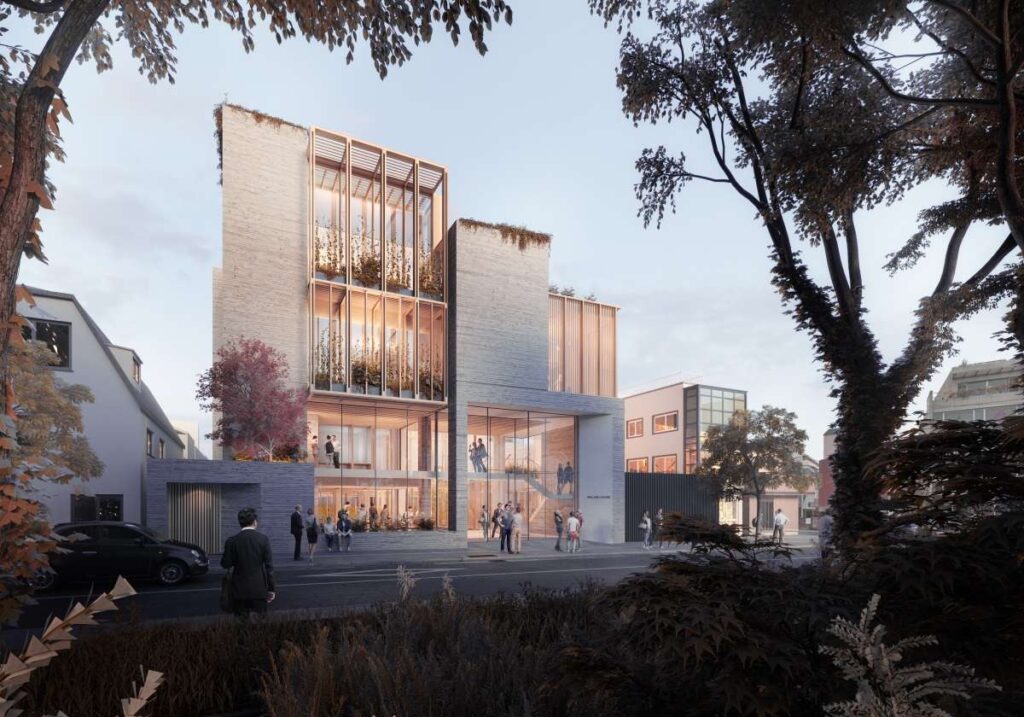
By: Henry J Lyons
Henry J Lyons Architects recently completed Ireland’s new embassy building in Tokyo, which functions as a hub for diplomacy, business and culture – it even contains a purpose-built performance and exhibition space. The building blends the traditions of the sturdy Irish caisleán and the Japanese machiya, or wooden townhouse, using Irish limestone, oak and glass.
Middleton Park Gate Lodge
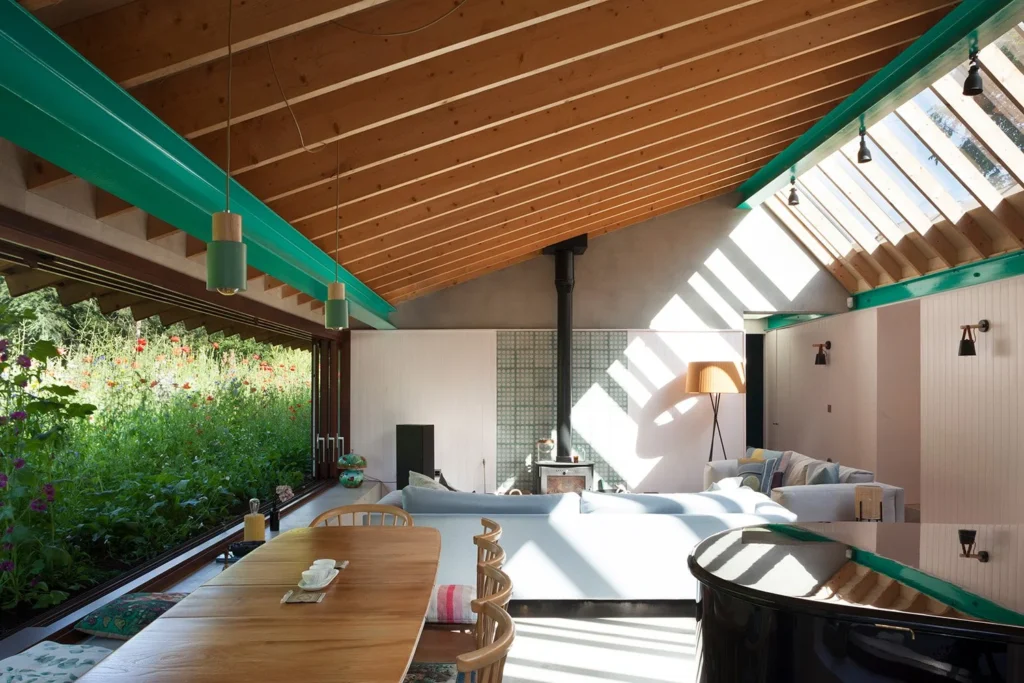
By: TAKA
How do you redesign buildings with protected historic status for living today? TAKA took those limitations in their stride for this acclaimed 2021 residential extension to a small gate lodge, which once belonged to a 19th-century Big House in Westmeath. A partially-sunken floor maximises space while maintaining the original low-lying profile, while the corrugated roof nods to the local agricultural architecture.
Pleasant Street House, Dublin
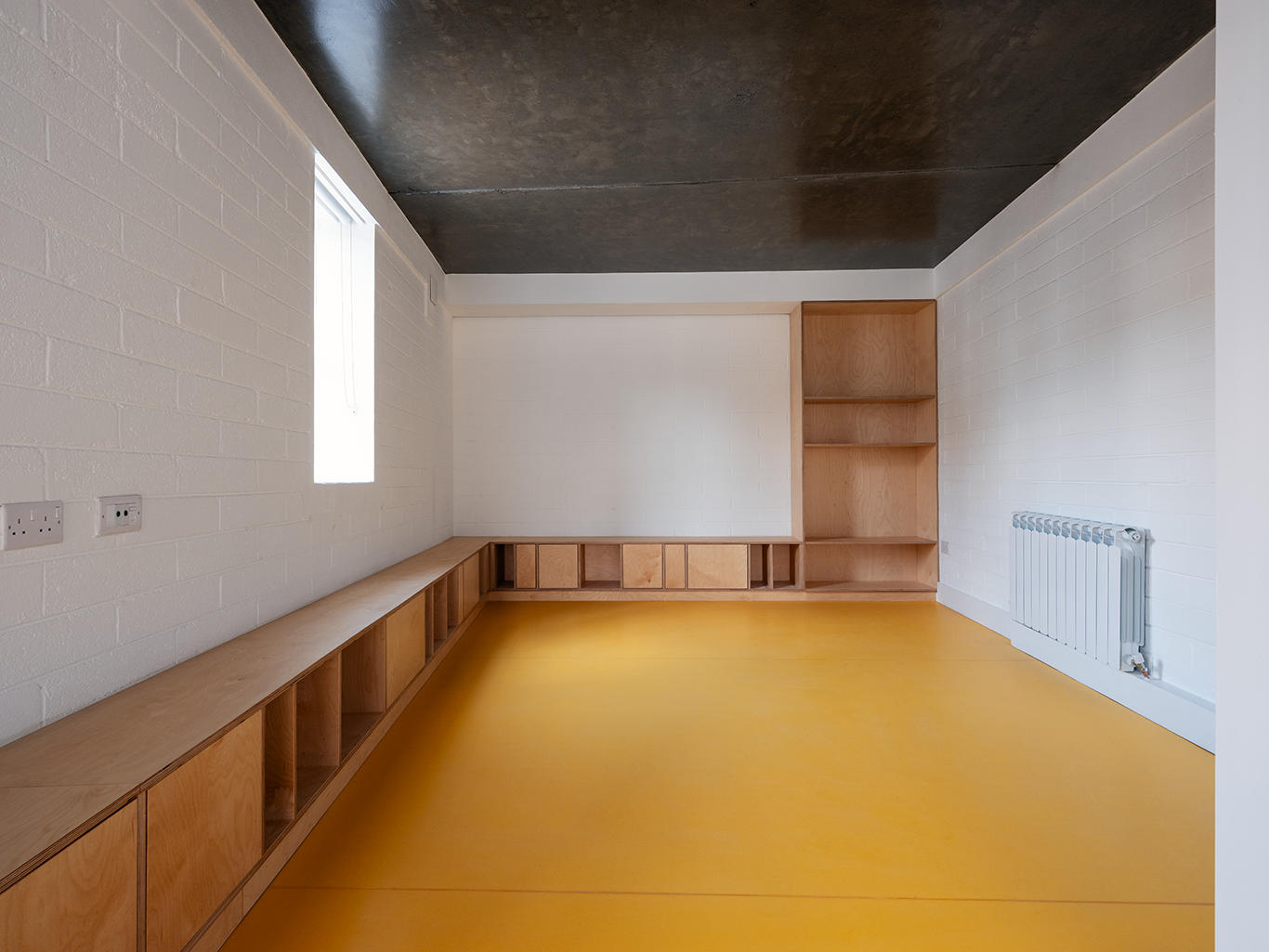
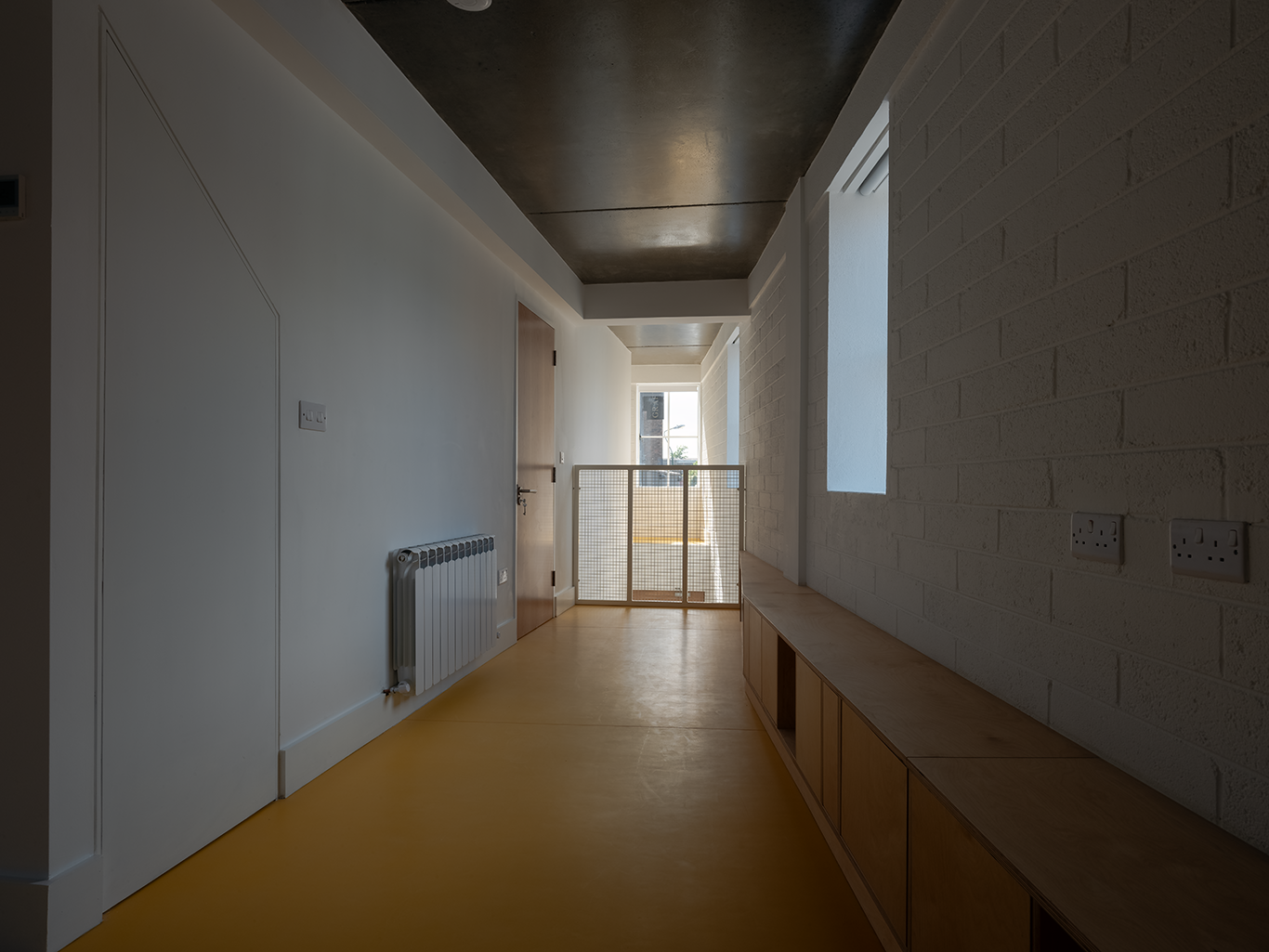
By: Design Architecture Urbanism (DUA)
DUA has a particular knack for designing homes in tight, oddly-shaped spaces. This 2022 project used salvaged brick from the original, derelict building to rebuild a narrow, minimalist home. The studio won the RIAI Emerging Practice Award 2024, in no small part thanks to resourceful and contemporary projects like this.
Lucky Tortoise Restaurant

Designed by JRD in 2022, the interiors of Lucky Tortoise’s Temple Bar location blend the dim-sum restaurant’s distinctive brand and the studios’ future-minimalist aesthetic. The curved lines of its wooden chairs lighting, alongside a bounty of plants and translucent green screens break up the industrial space to create a convivial dining experience.
Lovers Walk Townhouse
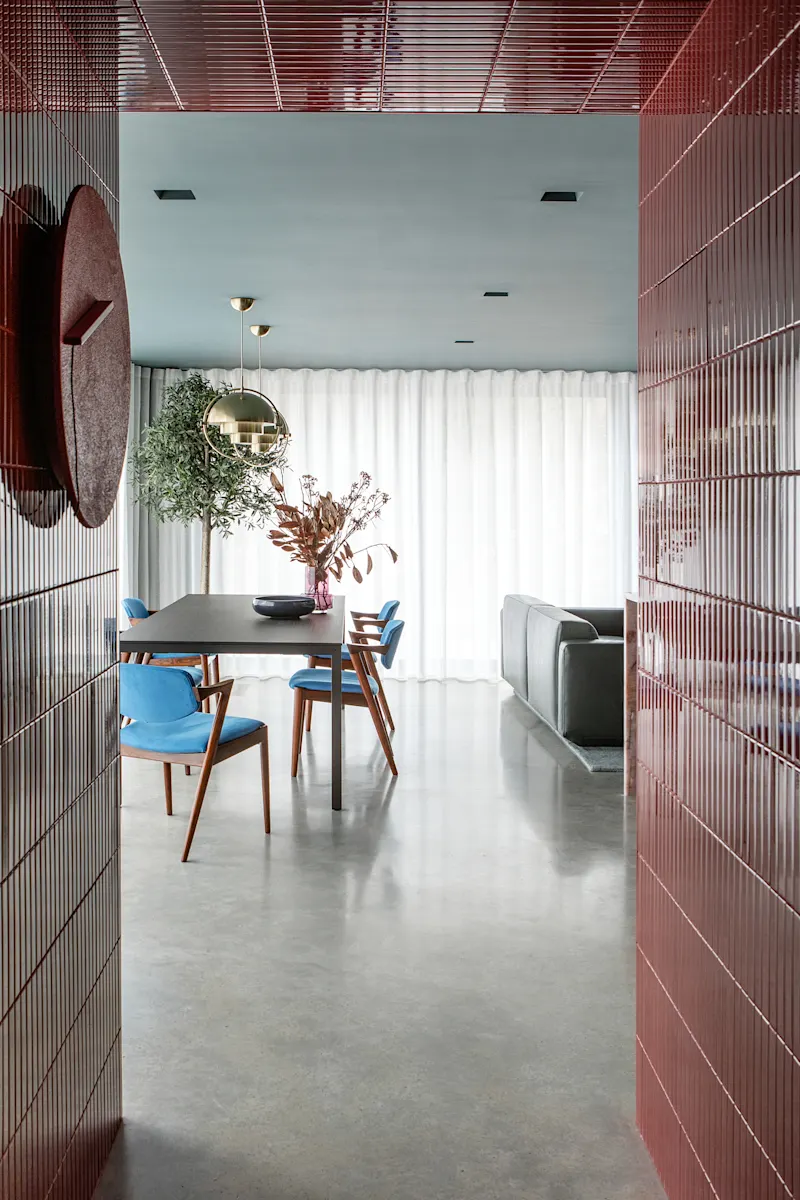
By: Róisín Lafferty
Formerly known as KLD, Róisín Lafferty’s interior design studio blends architecture and art – as seen in this renovated Cork townhouse. Completed in 2022, the project blends original 1970s architecture with key design movements of the 20th century. Lafferty’s use of bold colour combinations, marble fixtures, and geometric shapes make it a high-glamour household.
Wind and Rain Bridge
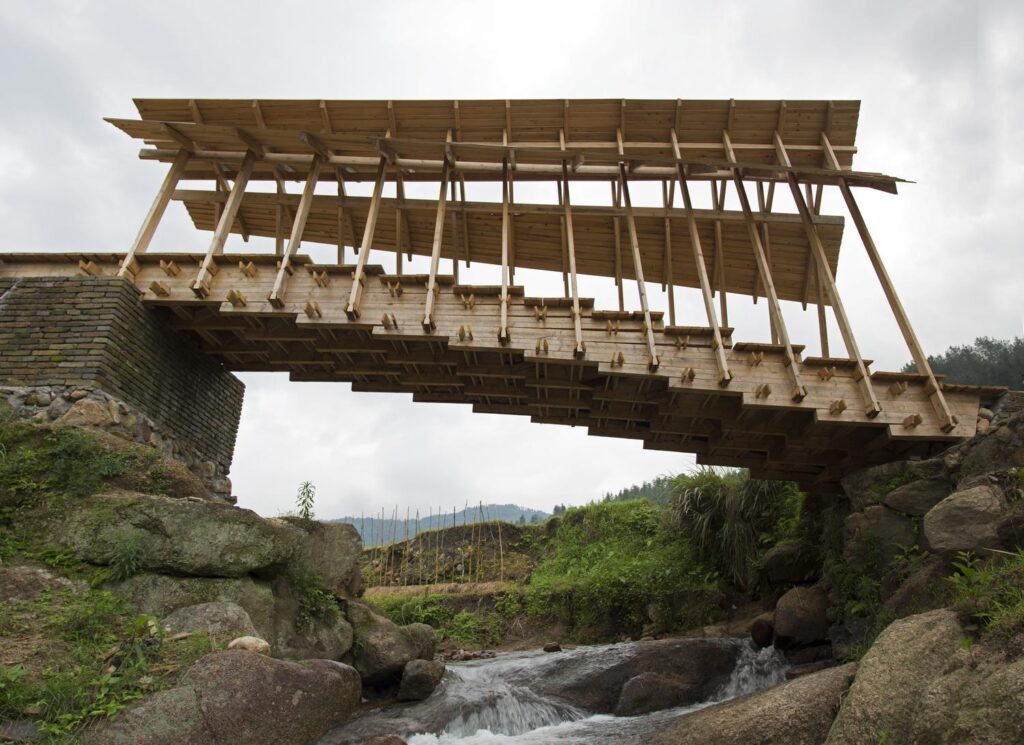
By: Superposition
The Wind and Rain Bridge was made in 2016 without any mechanical fastenings. Instead, it was meticulously assembled from 265 interlocking wooden pieces, a design made possible by the collaboration of local traditional carpenters with experimental architecture studio Superposition. Their ideological aim is always to foster a more thoughtful alternative to today’s construction industry.
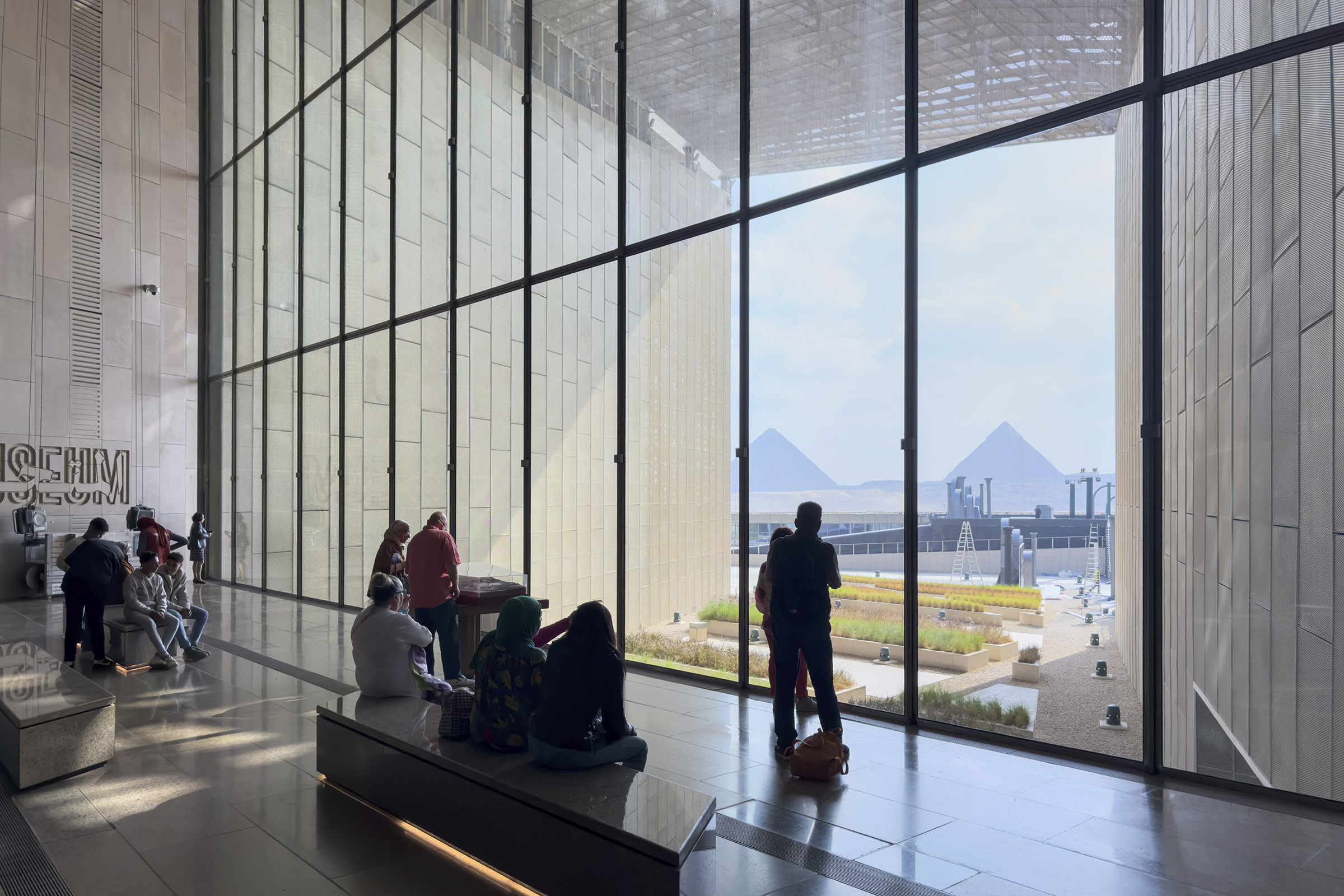
The Grand Egyptian Museum
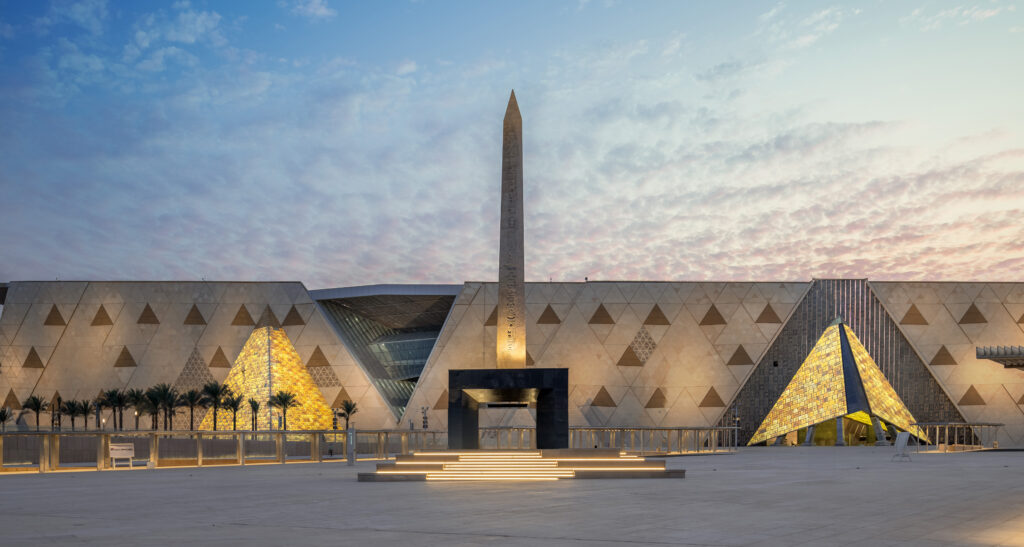
By: Heneghan Peng Architects (hparc)
A museum on the edge of a desert just opened its doors, 22 years after hparc, co-founded by Irish architect Róisín Heneghan, won the competition to design it. The vast building’s interior was designed to guide the visitor through aeons of history, culminating in a view of the spectacular pyramids of Giza at the top of the sloped museum’s grand stair. The scale and prestige of this project shows just how big an impact Irish designers have had on the global stage.
* Image (no actual photos on hparc website)
Twelve Hours of Temporary Pleasure

Born out of a crisis in Irish nightlife, ephemeral architecture and design studio Temporary Pleasure took over The Complex in 2022 for five days to conceptualise, build, and party in a temporary club structure. Bringing the DIY ethos of hedonistic raves together with a thoughtful, experimental design practice, it was a real ‘you had to be there’ moment in recent Irish architectural and club memory.